Showing posts with label Middle East. Show all posts

Thursday, November 15, 2012

Culture and Imperialism, by Edward W. Said

2012 Book 160: Culture and Imperialism

Written by Edward W. Said, Narrated by Peter Ganim

Reason for Reading: Got it on sale from Audible

Review
Culture and Imperialism describes how the language used in literature can powerfully impact our stereotypes of other cultures. Using examples in classical literature (ranging from Jane Austen, to Joseph Conrad, to Albert Camus), Said shows us how imperialism was reinforced by the written word. Then, (using examples including V.S. Naipaul and Salman Rushdie) he illuminates how today's societies - who are so focused on multi-culturalism - read the right books for the wrong reasons. I found this book intriguing. I listened to it on audiobook - Ganim's reading was smooth and engaging - but I'm now tempted to pick up a hard-copy of the book and use it as a reference in my perusal of literature. This book would be interesting to anyone interested in the culture of imperialism or in literary criticism of literature in the imperialist era.

Sunday, November 11, 2012

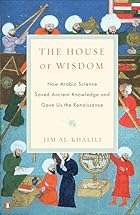
The House of Wisdom, by Jim Al-Khalili

2012 Book 156: The House of Wisdom, by Jim Al-Khalili

Reason for Reading: Science, Religion, and History group read on LibraryThing. 

Review
Many of us were taught that the origins of science were in Ancient Greece but that the Western World fell into the "Dark Ages" where science was lost and no progress was made. This traditional story concludes that the Western world rediscovered the Greek philosophies thus spurring on the Renaissance. A few months ago, I reviewed The Genesis of Science, by James Hannam, which was meant (partly) to dispel our notions of the Middle Ages as a time of darkness, a mire of progress. Hannam then describes how in the early years of the Renaissance, old scientific documents were rediscovered and translated. He only only briefly mentions the fact that those rediscoveries (and the ability to translate them) came from revitalized contact with the Arab world. The House of Wisdom fills that gap, by describing the ways in which the Arab world built upon the science of the Greeks, thus building the foundation for the scientific progress made during the Renaissance. I don't mean to say that Al-Khalili's book is only a gap-filler in the other book, but that the two books complement each other. The weaknesses in each are fortified by the strengths in the other. 

The House of Wisdom is an engrossing description of Ancient Arab history of science. Al-Khalili discusses the development of math, optics, medicine, chemistry, and philosophy by sketching descriptions of major scientific figures and their accomplishments. While Hannam's book tended to have a lot of gossipy digressions about the scholars, Al-Khalili tended to focus on facts that were more to the point. This makes Al-Khalili's book more informative, but less entertaining, than Hannam's book. For relief, All-Khalili inserts little passages about his own experiences in Iraq, which were helpful for lightening the mood. One thing I didn't like about Al-Khalili's book is that he is still stuck on the old-fashioned belief that the Western Middle Ages were dark and progress-free. And neither book covered the development of science in China or India. 

Overall, if you're interested in reading about Arabic science, I think this book is an excellent place to start. :)

Tuesday, October 30, 2012

Assassin's Code, by Jonathan Maberry

2012 Book 150: Assassin's Code

written by Jonathan Maberry, narrated by Ray Porter

Reason for Reading: 4th book in the Joe Ledger series. Figured the brainless action would be entertaining for a long car ride. Also, it fits in nicely with the Halloween theme. :)


My Review
In this fourth installment of Joe Ledger's story, Ledger kicks the @$$ of evil Iranians, a Romanian? weirdo cult, and a group of religious doomsday vampires...all while trying to figure out where the mysterious group of psychotic women fit in to this mess. This book is brainless military sci-fi/horror action at its best. I only gave the book three stars because I started to get bored of all the bad @$$ military action. And it waxed a little too political for me at times. This is also a book that you shouldn't think too deeply about--for instance, why the heck did he bring his DOG for a mission in Iran (when clearly the dog wasn't being used for the mission)? Certainly, the dog HAPPENED to come in handy at times, but it seems poor planning to bring a dog and then leave him pointlessly in the hotel during the mission, so that if things didn't go as smoothly as planned, Ledger would have to go back and get his dog before getting out of harm's way. I also felt some of the "intrigue" plot was rather overcooked. Really? Intrigue in the Catholic Church? Gasp! Never seen THAT in a book before! So, like I said, this book is great if you're interested in some mindless action...just don't think too much. :)

If you liked the rest of the Joe Ledger books, then this is more of the same. If you liked the first and felt "meh" about the rest, then this book is similar to the rest of the sequels. If you haven't read any of the others, pick up Patient Zero (it's good!) and then keep in mind that the rest of the books are less intelligent, but just as much pulpy action.


Sunday, July 29, 2012

A Bottle in the Gaza Sea, by Valerie Zenatti


2012 Book 114: A Bottle in the Gaza Sea, by Valerie Zenatti (7/26/2012)

Reason for Reading: Reading Globally Middle Eastern Theme Read. 

My Review 
As a method of self-defense against increasing Israeli-Palestinian violence, feisty 17-year-old Israeli Tal writes a note and sticks it in a bottle. She asks her brother to throw the bottle in the Gaza sea, with hopes that she’ll meet a Palestinian girl and somehow put a personality to the people she knows must be behind the fence. What she gets is 20-year-old Naim, a scathingly sarcastic, but nice-under-the-surface Palestinian man. The book is a series of emails between the two, and as their understanding of each other grows, so does their affection for one another. This was a really sweet book. It was silly, as are all teenage romances, but actually believable (if you have faith in coincidence). I was surprised while reading because I’d originally thought the author was Israeli, writing for Israeli teens—but the book is written by a French woman who lived in Israel when she was younger. The target audience is therefore teens who do not necessarily know all the background in the Israeli/Palestinian conflict. This is something I appreciated, because I felt like I understood what they were talking about when they mentioned political and historical events. This is a quick, enjoyable read.

I Shall Not Hate, Izzeldin Abuelaish


2012 Book 112: I Shall Not Hate, by Izzeldin Abuelaish (7/23/2012)

Reason for Reading: Reading Globally Middle Eastern theme read

My Review 
In this heartbreaking (yet strangely uplifting) memoir, Abuelaish relates his life—growing up in poverty in a Palestinian refugee camp, slaving so that he could raise enough money to go to medical school, and his rising career coincident with his growing family. Despite losing 3 daughters and a niece to an Israeli military action, Abuelaish preaches that love, not hate, is required to bring peace. Abuelaish’s story is engrossing and tragic, yet I couldn’t help but think about all of the suffering Palestinians who don’t have a voice. If life is so hard for someone who has powerful connections, what must it be like for those who have no one to help them? This is a must-read for people who think Palestinians are all about terrorism and throwing rocks—people who likely wouldn’t touch the book with a 10-foot pole. It’s also a fantastic read for someone who is sympathetic to both sides of the conflict, but who wants to hear a personal story. I DO wish I could read the story of someone who isn’t highly connected, but this is a fantastic start. And Abuelaish’s enduring message of love make a monumental memoir.

Thursday, July 12, 2012

Abraham, by Bruce Feiler


2012 Book 105: Abraham: A Journey to the Heart of Three Faiths, by Bruce Feiler (7/11/2012)

Reason for Reading: It fit into Reading Globally's Middle Eastern literature theme. 

My Review 3.5 stars
In this short work, Feiler reviews the Biblical story of Abraham and then describes how the myth of Abraham has changed over time and between the Abrahamic religions. It is well-written and interesting, and its length is well-suited for the amount of information Feiler wishes to convey. (There were no lengthy speculations in order to add bulk!) I enjoyed it and learned a little bit, too!