Showing posts with label Politics. Show all posts

Thursday, November 15, 2012

Culture and Imperialism, by Edward W. Said

2012 Book 160: Culture and Imperialism

Written by Edward W. Said, Narrated by Peter Ganim

Reason for Reading: Got it on sale from Audible

Review
Culture and Imperialism describes how the language used in literature can powerfully impact our stereotypes of other cultures. Using examples in classical literature (ranging from Jane Austen, to Joseph Conrad, to Albert Camus), Said shows us how imperialism was reinforced by the written word. Then, (using examples including V.S. Naipaul and Salman Rushdie) he illuminates how today's societies - who are so focused on multi-culturalism - read the right books for the wrong reasons. I found this book intriguing. I listened to it on audiobook - Ganim's reading was smooth and engaging - but I'm now tempted to pick up a hard-copy of the book and use it as a reference in my perusal of literature. This book would be interesting to anyone interested in the culture of imperialism or in literary criticism of literature in the imperialist era.

Saturday, September 8, 2012

Creationism: A Worldwide Phenomenon?

I was rather shocked today to see this in my Scientific American newsfeed: Science and Archaeopteryx Overcome Creationism in South Korea, by Soo Bin Park (reprinted from a Nature publication). I had no clue classroom rejection of evolution in favor of creationism is a world-wide phenomenon! I figured it was something that stubborn ultra-Christians clung to only in the US. I suppose that's just my Americentric mind at work again. I wonder how wide-spread this problem is?

This issue reminds me of a forum conversation that's been going on at my favorite book-social-network LibraryThing. We've been discussing the movement of some parents to decline immunization for their children--for fear of unproven (and unlikely) threats like the autism-due-to-vaccination scare. These parents fail to appreciate the pain and suffering and endless fear of their parents' parents during epidemics such as for polio in the early 20th century. Out of sight, out of mind, as it were! By not vaccinating their children, these people are not only risking the health of their own children, they're risking the health of others' children AND the health of our already-fragile medical system here in the US. 

Furthermore, there is a discouraging trend in the US for ultra-conservatives to take an anti-science stance. They want our kids to be world leaders in the classroom, but they also want them to be taught that evolution and global warming are "just theories" for which there is scanty evidence. Furthermore, they often approve of huge funding cuts for scientific research. Although I've posted a couple of times about studies where I asked "really? my tax dollars paid for that?!" I think funding for scientific research is an investment that the US needs to make if we want to continue as a world power. If we don't stoke the fire, it's going to die. I have personally witnessed the changes that have occurred in academia due to the funding lapses during the Bush administration, and the temporary relief that the Obama administration provided. Unfortunately, this relief came too late and academic (rather than for-profit) scientific research is on the decline. It's harder and harder for professors to get tenure, so more and more of them enter "industry," where the "evil" drug companies take over their souls. ;) 

I don't know what the right solution is, but we mustn't let academic science research go on a decline. We must nip the anti-science movement in the bud before it impacts our global position (and the quality of our health system) irrevocably. 

I am also reminded of this article in the Scientific American newsfeed: Obama and Romney Tackle 14 Top Science Questions. Romney isn't as supportive of science as I'd wish, but at least he's not leaning too far in the anti-science direction. There's a (very small) blessing. I DID get a chuckle about how Romney made almost all of his answers about how Obama is a failure, whereas Obama actually focused on the questions at hand. 

Sunday, August 5, 2012

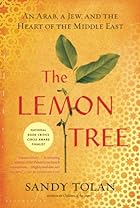
The Lemon Tree, by Sandy Tolan


2012 Book 118: The Lemon Tree: An Arab, a Jew, and the Heart of the Middle East, by Sandy Tolan (8/4/2012)

Reason for Reading: I realized I know much less than I should about this politically vital conflict and am enjoying learning more about it. I read this for the Reading Globally Middle Eastern Literature theme read.

My Review
Ostensibly, this is the (true) biography of the friendship between the Israeli woman Dalia Eshkenazi and the Palestinian man Bashir Khairi. However, the book also focuses strongly on background information--providing a wonderful history of the Israel-Palestine conflict since the 1940's. I was hugely pleased by this book for two reasons. First, the friendship between Dalia and Bashir was touching because they both had such strong nationalistic feelings. Somehow, despite their very different views, they were able to remain on good terms for many years. That's touching to me because many books with this let's-make-peace message tend to be about people who are all about love and peace and aren't as strongly influenced by their negative emotions as Dalia and (especially) Bashir. This is a friendship that was difficult to maintain, and yet it prevailed. The second reason I loved this book is because of the wonderful history of the region it provided. It's supposedly a "balanced" view--and it is, in the sense that it recommends justice (and sacrifice) be made by both sides. However, I'd say the book tended to be sympathetic towards to Palestinians. This SLIGHT bias is necessary in this case because many people in the Western world are over-exposed to the Israeli side and don't realize the Palestinians have a side at all. This book is highly recommended to anyone interested in the conflict.

Thursday, July 26, 2012

Scientific Funding: Where do we draw the line?


Tall, Dark and Stable*, an article in the science and technology section of The Economist ed. July 14 - 20, 2012, discusses a study by David Kille, Amanda Forest, and Joanne Wood at the University of Waterloo, Canada. This team took 47 romantically unattached undergraduates and set half of them on a slightly unstable chair next to a slightly unstable table; the other half sat at identical, though stable, furnishings. They were then given a survey evaluating the perceived stability of various celebrity relationships. The wonky-chaired students perceived others' relationships as less stable than the straight-chaired students did. Furthermore, the wonky-chaired students valued "stable" qualities in potential partners (like being funny or trustworthy) more than "unstable" qualities (like spontaneity and adventurousness). So, apparently, sitting on wonky furniture makes you value stability while enhancing paranoia (i.e. reducing their perception of stability)? 

I was unfortunately unable to find this study in Psychological Science, the journal it will be published in, so I can't evaluate their scientific methods. But I CAN say that I am generally pretty skeptical of such experiments. I'm sure their data turned out exactly as they said it did, but is it repeatable with another set of students from another place? Is it repeatable with non-student volunteers? Did they balance people's opinions out by giving the survey before and after placement on the wonky chair?

Furthermore, this article in The Economist mentions (without reference to the actual study) that people who are sitting in chairs leaning slightly to the left tend to be more receptive to liberal ideas. REALLY?! You mean Obama could rig the election by sending out his supporters on "night patrol" to break into people's homes and sandpaper off a couple millimeters on the left of their chairs? Do right-leaning chairs make people more conservative? I see a huge scandal in the making.

In my search for Kille's study in Psychology Today, I found another study by him: When Social Networking is Not Working (Psychological Sciencevol. 23 no. 3 295-302). In this study, they were trying to determine whether social networks like Facebook were generally beneficial to people with low self-esteem--people who normally feel inhibited about providing personal information, and who therefore have unfulfilled social lives. They found that people with low self esteems generally posted comments with low positivity or high negativity, eliciting "undesirable responses."

I found this interesting, because I have just finished a discussion about "real life" persona versus internet persona on a social network for book-lovers called LibraryThing. One of my online friends on LibraryThing is a very active member of the group and is well-liked. However, he doesn't hide the fact that in "real life" he is anxious in society and is horribly shy. So, again, I have to wonder about the study...how meaningful is it? Certainly, I can see how the study's conclusions would be true of some people, and not of others...but how much should we really trust psychology studies like this? Do they really add something helpful our sociological table? How much of our tax money is going in to paying for these studies?

The House has passed an amendment to cut the NSF funding to political science because they feel that political scientists are generally unsuccessful in predicting huge political changes in the world. (There's a  recent New York Times opinion article by Jacqueline Stevens on this subject.) And I'm sort of starting to agree...perhaps we DO need to be a little more careful about what kind of studies our tax money is going towards. Perhaps we should use some of our money to create a study to determine criteria for potentially useful areas of research, versus potential dead ends.

It hurts me to say that, because I know the pain of trying to get funding for a project that has no immediate medical value. (I DID work in hibernation research for 4 years!) And I certainly don't think huge cuts in scientific funding is what our economy needs right now. And I TOTALLY understand that sometimes studies that don't have much potential (as gauged by the critical eye) serendipitously stumble upon the world's greatest breakthroughs. So where do we draw the line? I don't know, because I'm not an economist. I'm a scientist who really WANTS everyone to be funded...but is that really for the best? 

Ah! The torture of ambivalence! :(


*I can't get the link to work, but you can find it on The Economist's webpage. Just search for the title Tall, Dark and Stable.

Tuesday, May 1, 2012

The Great Fortune, by Olivia Manning


2012 Book 10: The Great Fortune, by Olivia Manning (1/19/2012)

The Great Fortune is the story of Harriet, a young British woman who must learn to know her new husband while thrown into the strange setting of WWII Romania. The characterization on this novel was fantastic—I really felt like I knew all of the characters intimately. However, I can’t really say what the plot was about. It was a very character/setting-centric novel. The writing is superb, but I tend to prefer a little more plot development; therefore, this book gets only 3/5 stars.