Showing posts with label History. Show all posts

Sunday, January 18, 2015

Lecture 1 of The New Testament (The Great Courses), by Bart D. Ehrman


The New Testament (The Great Courses, Course Number 656)

Lecture 1: The Early Christians and Their Literature

This was an introductory lecture which suggested a few ways to study the New Testament: 1) as a faithful believer; 2) From a cultural perspective (e.g. the NT's influence on Western culture and on literature); and 3) From the historical context of the initial audience. Erhman's course intends on studying the NT from the third perspective. 

He gives some background information: there are 27 books in the NT, all written by Christians of the 1st century. Many of these books claim to be written by direct apostles of Jesus (i.e. people who are considered to have been sent directly by Jesus to spread his word). All of the books were originally written in Greek.

The 27 books of the NT comprise 4 major groups. 1) The four Gospels, describing the birth, life, and death of Jesus; 2) The Acts of the Apostles, describing the spread of Christianity around the world; 3) 21 epistles, 13 of which are written by Paul, with a focus on the beliefs and ethics of Christianity; 4) The Book of Revelation, which is a piece of apocalyptic literature, originally thought to have been written by the apostle John, but later revealed to have been written by another John. (The belief that it was written by the apostle is why it attained popularity among early Christians.)

Texts read: 
The New Testament: A Historical Introduction to the Early Christian Writings, by Bart D. Ehrman - Chapter 1
The New Testament: A Student's Introduction by Steven Harris - Chapters 1 - 3
An Introduction to the New Testament, By Raymond Brown - Chapter 1
The New Testament Canon, by Harry Y Gamble

Chapter 3: The New Testament: A Student's Introduction, by Stephen Harris


In my final text for Lesson 1 of: The New Testament (The Great Courses, Course Number 656), I read chapters 1-3 of The New Testament: A Student's Introduction, by Stephen L. Harris. 

I found these notes from chapter 3 worth sharing, since I was unaware of the differences between these groups before reading this text: 

Chapter 3: The Diverse World of Fist-Century Judaism

Sadducees: Priests that conservatively stuck to a literal reading of the Torah, eschewing the "oral traditions" of the Pharisees. The Sadducees were the ones who turned Jesus over to the Romans for execution. They were the ones who stood the most to lose if there was fighting between the Romans and the Jews because the Sadducees seem to have been the chief mediators between the Roman rulers and the Jews. They disappeared after the sacking of Jerusalem by the Romans in 70CE.

Pharisees: These priests were also conservative, but they also had an oral law, which was later recorded as Mishnah in 200CE. Although there seems to be a lot of dispute between Jesus and the Pharisees in the Bible, Jesus most likely got along fine with most Pharisees (as can be seen in some Biblical stories). The disputes between Jesus and the Pharisees may have been biased by problems between the early Christians and the Pharisees around the time the Gospels were written.

Samaritins: This is a group of people (named after their capital city Samaria) related to the Jews by religion, but whom the Jews in Judea regarded as alien. Instead of worshiping at the Temple at Mount Zion, the Samaritins worshiped at Mount Gerizim. The Samaritins recognized only the Mosaic Torah, and not the Prophets or other biblical writings. 

Essenes: These are the people who are thought to have written the Dead Sea Scrolls somewhere between the mid-second century and late first century CE. Little is known about them, but their practices seem to have many similarities to later Christian practices, though Jesus is never mentioned outright. It is supposed by Harris that this is a non-Christian sect that anticipated some Christian rituals, rather than a group of early Christians. There also seem to be some parallels between the Book of Hebrews and Essenes' beliefs. 

Chapter 1: An Introduction to the New Testament, by Raymond E Brown


I've finished reading chapter 1 of An Introduction to the New Testament, by Raymond E Brown for the great course The New Testament (The Great Courses, Course Number 656), by Bart D. Ehrman. 

Notes on Chapter 1: 

The meaning of the word "Testament" has developed over time. At first, it was in reference to deals God had made with Noah, Abraham, David, and Moses - most notably the one to Moses in which the people of Israel were made "God's chosen people." Almost 600 years before the birth of Jesus, the prophet Jeremiah predicted "The days are coming when I will make a new covenant..." (Jer 31:31), where a covenant is a testament, and new means renewed. Then, before Jesus died, he referenced a new covenant/testament in his blood. Through his death and resurrection, therefore, Christians believed that god had renewed his covenant with his people, this time including the Gentiles. Only in the 2nd century do we see the word "testament" referring to a body of literature.

And, in fact, the idea of recording Jesus' story and sayings did not occur until after Jesus' death. Jesus didn't produce any written lectures, nor did he, in any of the Christian writings, suggest that his word be recorded. Letters were the first form of literature on Christian beliefs, and they were meant to answer immediate, pressing problems in the community to which they were addressed. Therefore, the letters of Paul have a different tone and emphasis in each, sometimes to the point of seeming contradictory. 

By the late 60s, anybody who had had direct contact with Jesus had died. The passing of the first generation of Christians led to writings of a more permanent nature. These include the deuteroPauline writings such as II Thes, Col, Eph, I and II Tim, and Titus, which were written after Paul's death. The deuteroPauline letters have a more permanent and universal tone than earlier letters. 

The Gospels also had a more permanent tone than early Pauline letters, but relevance to Christian problems would still have influenced which works were preserved. Mark's gospel emphasized the suffering of Christ on the cross, which would relate easily to the sufferings of early Christian persecution. The gospels of Matthew and Luke, probably written about 20 years later, are much more focused on the Jesus tradition, including sayings of Jesus which are hypothesized to originated in an earlier document dubbed "Q." 

The Acts of the Apostles was probably meant as a continuation of Luke's gospel. It moved the story of Christianity beyond Jerusalem and Judea to Samaria and beyond. 

The Book of Revelation is an example of apocalyptic literature with roots in Ezekiel and Zechariah. Apocalyptic literature was quite common at the time. Unfortunately, many modern readers have forgotten that the book was written to 1st century Christians, who would be quite familiar with the symbolic meaning of apocalyptic literature; they therefore interpret the Book of Revelation literally.

There are three reasons early Christian writings were preserved: 1) Apostolic origin - books that were purported to be written by apostles of Jesus (or Paul) had special place among Christians. 2) Which Christian communities the literature was addressed to - for instance, very little literature survives from Jerusalem or Judea, which was torn apart by the Jewish Revolt in 66-70. 3) Conformity with the rule of faith.

There is also a question of why we need 4 gospels instead of just 1. (This was discussed in my notes on Gamble's book.) Brown suggests that concentration on one gospel could be used to support theology rejected by a large number of Christians. An example of this problem is the beliefs of the Marcionites (also mentioned in detail in my notes on Gamble). The Marcionites believed that the creator God is not the same as the all-loving God of the NT. Therefore, the OT and teachings of Judaism should be rejected. Brown suggests that one reason the Church embraced four gospels was to refute Marcion's belief that only the gospel of Luke and the letters of Paul should be considered as canon. Brown also suggests that the Church embraced the OT to refute Marcion's rejection of it. However, in his book Gamble cautioned against putting too much emphasis on ONE driving factor for the Church's choices, and I agree with him on that.

Sunday, January 4, 2015

The New Testament Canon, by Harry Y Gamble


The New Testament Canon, by Harry Y. Gamble

Reason for reading: This is one of the supplementary books for the great course The New Testament (The Great Courses, Course Number 656), by Bart D. Ehrman. 

Thoughts: This short "guide to biblical scholarship" glossed over some of the reasons certain books, and not others, were chosen for the New Testament canon. This is a very heavy topic with lots of scholarship, and this book tended to disagree with most of the specific theories in favor of the broader theory that there's no evidence that any specific movement had a great impact on the formation of the New Testament canon, but added all together they DID have an impact. I found this book rather dense at times. It assumed prior knowledge of the topic, which I'm only beginning to study. 

Notes
Chapter 2: The History of the New Testament Canon

The history of the New Testament (NT) canon must be pieced together on fragmentary evidence. There are a couple types of evidence that are useful: 1) The contents of the ancient manuscripts of the NT together with scriptural aids like concordances or prologues. This evidence is mainly from the fourth and fifth centuries. 2) The use of early Christian documents written from the second through the fifth centuries. By noting early scholars' allusions to various texts, we can deduce which of these early texts were widely accepted.

The gospels which were incorporated into the NT did not gain clear prominence until the late second century. Mark, written around 65, appears to have been the first narrative gospel. But it originally ended at 16:8 and thus lacked any post-resurrection narrative of Jesus. John, too, was originally lacking sections that were later accepted as gospel - Chapter 21 was not composed by the same person that wrote the rest of the Gospel of John. Additionally, the story of the adulteress (John 7:53 - 8:11) wasn't originally part of the Gospel of John. These discrepancies might have cast doubt on the authoritative truth of these gospels. Furthermore, having too many gospels, especially ones that seem to contradict each other, cast doubt on the adequacy of any gospel. 

The first evidence for a collection of four Gospels was in a document written by Irenaeus, bishop of Lyons in Gaul, writing around the year 180. There is also evidence of a four-gospel collection in the Muratorian canon list, which claims that the diversity of the gospels "matters nothing for the faith of believers." This comment suggests that some people had indeed found the discrepancies in the gospels disturbing.

The formation of a four-gospel collection was neither a necessity nor a natural outcome of the history of gospel literature in the early church. It is a compromise which balances an unmanageable number of gospels and a single self-sufficient gospel. Writers of the period tend to speak of the group of gospels as "gospel" (singular); thus, there are not four gospels but a fourfold gospel. Thus a balance is reached between two extremes. 

There are several theories as to why Paul's letters gained the widespread appreciation that led to their placement in the canon. 

One theory is that because his letters were highly valued by the communities he wrote to, they all sent his letters to neighboring communities so that everyone could share. But if this were the case, why did some letters survive and others disappear? And why did the author of Acts of the Apostles not mention the letters, if they were so important? 

Another theory (Goodspeed's) is that Paul's letters were highly valued by one scholar, who went out of his way to collect as many of them as he could. He then wrote the letter to the Ephesians, in Paul's name, as an introduction to his collection. That would explain the difference in writing styles of that letter to the rest of them. Gamble suggests that this is an extremely romantic theory, but with no evidence to support it.

Another scholar (Schmithals) changed Goodspeed's theory a bit to say that the collector/editor of the letters did so to create a weapon against gnosticism, since many of Paul's letters contain comments that are in opposition to gnostic spirituality. Again, there's no evidence that this theory is true, and it's too complex to accept without evidence. (Occam's Razor and all that jazz.)

Schenke suggested that the letters were collected by a Pauline school of scholars that valued Paul's teaching. This theory seems to be the most attractive to our author Gamble. 

Chapter 3: Factors in the Formation of the Canon

In the early years of Christianity, there were several Christian movements. Many theologians suggest that the New Testament was developed specifically to refute the claims of one or more of these movements. Gamble lists a few of them, and provides the arguments for and against particular groups having strong influence on the formation of the NT. Although Gamble does not support beliefs that any of these groups had much influence on the NT formation, he does suggest that all of them together could have had a larger effect on the NT.

The Marcionite Christians (second century) - movement begun by Marcion, a shipowner-turned-scholar who arrived in Rome in about the year 140. Marcionites Believed that there was an angry Jewish Creator God and a good God that Jesus came to save us from. Since Jesus was not created by the Creator God, he did not have a corporal body - he only appeared to. Thus, Jesus was not human, but he was divine. (This would sorely undervalue Jesus' gift of dying for our sins if he only appeared to suffer.) Because Judaism had nothing to do with Christianity (different Gods) the Jewish scriptures had no place in the Church. 

Marcion was the potentially the first scholar to compile a canon of literature - composed of the letters of Paul and Gospel of Luke. Some theologians believe that the Church adopted Paul's letters into their canon because of pressures from Marcionites, and that it was compelled to compensate for Marcion's bias towards Paul by including a variety of other apostolic writings to the canon. However, this theory does not explain why Paul's letters were widely known before Marcion's time. 

The Gnostic Christians - Believed that the real truth was only revealed to a select few. That when Jesus was baptized, a spirit entered him and he became the savior who taught the way to salvation. This spirit left Jesus and returned to heaven when Jesus was dying on the cross. We, also, are spiritual in nature, stuck in corporal bodies. (This doesn't fit exactly with the way Elaine Pagels described Gnostics in the two books of hers that I've read, but I guess there's room for error in studying a group of people on which so little information is available.)

It is commonly supposed that the NT was developed as an effort to oppose The privacy of many Gnostic beliefs, which were only abailable to the select few, and to oppose the "heretical" literature circulated by the Gnostics. However, Gnostics made free use of canonical literature, too, and it seems that the major difference between Gnotics and the Church was more about interpretation than literature.

Montanism - The Montanists were followers of a charismatic prophet named Montanus who claimed that the Paraclete promised by Jesus in the Gospel of John had come, and the end of times were at hand. (Seems like the end of times was always at hand for millennia on end.) Many theologians suggest that the New Testament was formed as a retaliation against Montanism for two reasons. First, the Montanists created new prophetic documents and claimed authoritative truth that the Church wanted to refute. Second, Montanists claimed prophetic revelation and the Church claimed that all prophetic revelations were in times past - that Jesus was the last prophet. However, as with the Marcionites and the Gnostics, Gamble refutes claim that Montanism had much impact on creation of the NT. First of all, Montanists, like the Gnostics, made free use of the canonical literature, but had different interpretations. Second, at the time that Montanism was popular the Holy Spirit and prophetic charisma were accepted by even the anti-Montanists in the Church.

In addition to the groups above, these Early Christian groups were outlined in Chapter 1 of Bart D. Ehrman's The New Testament: A Historical Introduction to the Early Christian Writings. I thought it would fit in well with these notes on Gamble's book.

The Jewish Christian Adoptionists - Believed that Jesus was born a human of a non-virgin. He was adopted by God as His son upon baptism. Jesus was not, however, divine. (I could believe this pretty easily if I were inclined to have fixed beliefs.)

Proto-Orthodox Christians - These are the ones that modern Christianity sprouted from. They believed that Jesus was divine and human. They believed there was only one God. 

Another factor possibly affecting the formation of the New Testament is that the technology to create a codex large enough to hold the entire NT was not developed until the fourth century.

Monday, March 10, 2014

Practicing Tolerance in a Religious Society: The Church and Jews in Italy - Enrollment!

Practicing Tolerance in a Religious Society: The Church and Jews in Italy
Well, I've shown a terrible lack of discipline this week. Quite against the spirit of Resolution 5: Please, Just Stop! I have signed up for several Coursera MOOCs this year - Practicing Tolerance in a Religious Society begins on March 10, and runs for 6 weeks. I intend to post my thoughts on this course weekly. 

a little later...
I've now looked over all the lecture notes for the first week and I'm so thrilled at all the wonderful supplemental reading suggestions provided by Dr. Cooperman! One reason I only rarely sign up for these Coursera classes is because I have an OCD need to read all suggested readings and totally immerse myself in a subject. And such a thing simply isn't possible within a course's time-frame. And then I get all nervous and shaky and feel overwhelmed. So I tend to focus on Great Courses lecture series instead, because I can go as slowly as I want. But I really love being able to interact and network with people who have similar interests (albeit different opinions) - and that's what I love about Coursera.  

So I've vowed that I will simply move through this entire course and not fret about reading everything. I'll just write down all the suggested readings, and I can get to them later during my personal studies.

Does anyone else have this tendency to get frustrated when you can't read everything, or to over-commit to your passions and interests?

Monday, February 10, 2014

How do we know about Jesus?


As I pointed out in my New Years Resolutions, this year I have decided to explore my relationship with Jesus. Who is Jesus, and what does he mean to me? This has always been a sticky question that I avoided. My first book in my quest is: The Meaning of Jesus: Two Visions, by Marcus Borg and N. T. Wright. Borg is a liberal Jesus historian and Wright a conservative one. The book is a set of essays which outlines an ongoing discussion that these two friends have continued for years. 

In the introduction, they list three target audiences: first, they hope that this book will be of interest to Christians and non-Christians alike. 


"We both believe strongly that what we say about Jesus and the Christian life belongs, not in a private world, inaccessible and incomprehensible except 'from faith to faith,' but in the public world of historical and cross-cultural study, in the contemporary world as well as the church."

Second, they hope that this book will provide new insight into a debate that has become gridlocked among Christians - liberal vs. conservatives.

Third, they hope that their book will speak to people who want to better understand how different visions of Jesus translate into Christian life. This, I suppose, is why I bought the book originally - though the academic arguments will probably be of more interest to me. :)

In their first section, they ask the question: How do we know about Jesus? In their separate essays, Borg and Wright point out the difficulties of deciphering the historical data about Jesus. They agree that everybody's interpretation of history is viewed through the lens of their own perception or worldview. Borg describes four lenses through which he views Jesus: 

  1. Gospels are history remembered as well as history metaphorized
  2. Jesus was a Jewish figure teaching and acting within Judaism
  3. Jesus' legacy was developed by the community of early Christians
  4. Jesus' legacy was developed by a variety of modern forms of Christianity, as well as other religions.
Borg and Wright agree that modern secular culture, which believes that the universe can be studied, understood, and described by natural laws, can be used as a weapon against faith. Borg says that it is easy to lose sight of the divine Jesus when you have a strongly secular worldview. Wright points out that with a secular worldview, you are focused on data and theories. Both scientists and historians ask the questions: 

Does the theory make sense of the available data? Does it have the appropriate simplicity? Does it shed lights on other areas of research? 

History differs from science in that there are no agreed-on criteria for what counts as "making sense" and "simplicity." Therefore, it is very hard to for Jesus historians to come up with any consensus. 

Both Wright and Borg focus on the difficulty of working out the historical evidence of Jesus and the gospels. Borg thinks it is necessary to see and appreciate both the historical Jesus and the spiritual one, lest you lose sight of Jesus altogether. These two entities are not the same - the first is an actual man who was once alive, the second is a concept that has influenced spirituality for thousands of years. 

"When we emphasize his divinity at the expense of his humanity, we lose track of the utterly remarkable human being that he was." 

On the other hand, Borg believes that if you emphasize only historical fact and what Jesus meant in his own time to his own people, you lose sight of how strongly his message has influenced today's culture, and what he means to us today. 

In contrast, Wright says that he doesn't think the early Christians made a distinction between the historical Jesus and the divine Jesus, so why should he? He feels that these "two versions" of Jesus are one and the same, and that whenever he reads literature about the historical Jesus, it reinforces his faith in the spiritual Jesus. 

Personally, I'm inclined to agree with Borg on this subject. I think that he nailed my problem directly on the head: all my life I've tried to combine the historical Jesus and the divine Jesus into one entity. Thus, my faith and my secular worldview were battling for prominence in my perception of Jesus, and I lost sight of Him altogether. If I can separate the two entities in my head, I will be able to appreciate both the wisdom of the historical man and the divine love of the Christ Jesus. 


Monday, May 27, 2013

The Ghost Map, by Steven Johnson

The Ghost Map

Written by Steven Johnson, Narrated by Alan Sklar

Reason for Reading: Science, Religion, and History group read

Genre: Non-fiction - Medicine and History


Review
The Ghost Map follows Dr. John Snow on his quest to discover the cause of a terrible cholera outbreak in Victorian England. Johnson makes investigative epidemiology so interesting that I could almost see it dramatized (and fictionalized) into a TV show - people DO love their investigative TV! :) But that's beside the point, I guess. At the time of this outbreak in 1854, the popular theory for the spread of cholera was miasma - deathly air that carried disease. After a LOT of investigative footwork, Snow drew a map of the cholera outbreak, demonstrating that the pattern followed streets that led to a particular well (the Broad Street pump) rather than following a circular pattern you'd expect with the spread of bad air. This map, and the investigation leading up to its creation, revolutionized epidemiology. In fact, many consider Snow the "first epidemiologist." 

I really enjoyed this book. The writing was engaging (it had a few boring parts in the end when Johnson was describing the map in great detail - I think that may be a problem with listening to the audio book rather than actually reading it, though). The subject was fascinating. Sklar did a good job of narrating the book, and except for the very end with the description of the map, I was quite pleased with the book's audio version. If you have any interest in epidemiology, or the history of medicine, I highly recommend this book.

Saturday, May 11, 2013

How the Catholic Church Built Western Civilization, by Thomas E. Woods

How the Catholic Church Built Western Civilization

Written by Thomas E. Woods, Narrated by Barrett Whitener

Reason for Reading: I have an interest in Church history and history of religion. 

Review
How the Catholic Church Built Western Civilization is an apologetics treatise about how the Catholic Church contributed to the development of science, philosophy, art, and culture. For someone who has not read a lot of books on the subject - who wishes to be disabused of the belief that the Catholic Church shunned science and tried to halt the progression of culture - this book is an excellent introduction. It covers a wide variety of topics in a superficial survey of how the Church changed and promoted civilization. On the other hand, if you're like myself and are well-read on the subject, this book lacks depth. Although there was a wide variety of information discussed, there was very little that it discussed in greater detail than I already knew. Therefore, I would highly recommend this text to someone who'd like an introduction to the topic - it's well-written, well-researched, and interesting. But if you're looking for depth and detail, this may be worth just a quick read. 

This audiobook was well-narrated by Barrett Whitener. No complaints there! :)

Saturday, April 20, 2013

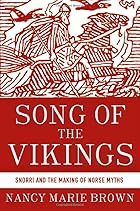
Song of the Vikings, by Nancy Marie Brown

Song of the Vikings: Snorri and the Making of Norse Myths

Written by Nancy Marie Brown

Reason for Reading: This book was provided by the LibraryThing Early Reviewers program in exchange for an honest review. 

Review
This engaging biography describes the life of Snorri Sturluson, a powerful 12th-century Icelandic chieftain and the author of the poetic Edda - one of the oldest surviving documents of Norse mythology. As a novice of Viking history, I found this book fascinating and informative - though I suspect that there is much speculation and Brown isn't always clear when she is speculating and when she has hard evidence for her claims. As such, I think this biography would be enjoyed by people who are interested in learning a bit about the Vikings, but not experts on the subject. 

Brown started each chapter out with a legend out of Snorri's Edda. Often, she told how this legend differs from other known versions and/or how it has affected modern culture. The rest of the book describes Snorri's life - his youth in the household of "the uncrowned King of Iceland," his marriage, his rise to political power, and his downfall. She seemed to get most of her hard evidence from a few primary documents and an outwardly biased biography written by Snorri's nephew, so often she had to fill in the gaps by saying "it's possible it happened more like this, since his nephew's story doesn't really jive with Snorri's personality." Of course, that makes me wonder if she had just as much positive bias towards Snorri as his nephew had negative bias. :) Overall, though, I'd say this biography was a success. When there is so little information available, and when the book is intended for a popular crowd rather than an academic one, such speculation is necessary - it makes the book more fun. 

Monday, March 25, 2013

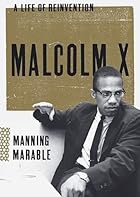
Malcolm X: A Life of Reinvention, by Manning Marable

Malcolm X: A Life of Reinvention

Written by Manning Marable, Narrated by G. Valmont Thomas

Reason for Reading: This was one of the books I'd listed as potential reading for my Social Justice Theme Read in February. I chose it because it won the Pulitzer Prize for History in 2012 and was a finalist in the National Book Award.


Review
In Malcolm X: A Life of Reinvention, Manning Marable set out to honestly portray a man and to humanize an icon. Marable intended on filling in holes left by truth-bending and necessary lack-of-future-knowledge in The Autobiography of Malcolm X. Since I am not an expert on the subject, I have to say that Marable's book seemed very thorough and well-researched. It was also an engrossing narrative. I feel it well-deserves its Pulitzer Prize. My only complaint was towards the beginning of the novel, Marable inserted some innuendo about Malcolm X's sexuality - which was unnecessary, and rather rude since he didn't have any hard evidence to support his claims. That innuendo was referenced obliquely a few times in the first quarter of the book. Luckily, those references stopped for the last three quarters of the book, or I would have been left with a very bad taste in my mouth.

The only reason I bring up that complaint is because I was looking for hints to why there's a controversy about this book. I was wondering if there was anything I, personally, could pick up. I'm not very familiar with what the controversy is about - and I haven't seen any controversial reference to the innuendo that bothered me. Mostly, the controversy seems to be about Marable's lack of respect for the impact Malcolm X had on the Black Liberation Movement. If you're interested, here's an interesting article on the topic. There's also a book entitled A Lie of Reinvention: Correcting Manning Marable's Malcolm X, if you really want to delve into the issue. However, I am satisfied that Marable did a lot of really good research, and wrote an interesting and informative book. The issue of exactly what long-term impact Malcolm X had on the Civil Rights Movement and the country as a whole is an opinion, in my opinion. 

G. Valmont Thomas did an excellent job of narrating this book. Quite enjoyable. :)

Wednesday, December 5, 2012

The Rape of Nanking, by Iris Chang

2012 Book 165: The Rape of Nanking

Written by Iris Chang, Narrated by Anna Fields

Reason for Reading: Reading Globally group on LibraryThing's China and surrounding countries theme read. 


Review
In the early 1930's the Chinese city of Nanking was occupied by Japanese soldiers. Tens of thousands of civilians were killed by Japanese soldiers to save money for supplies. Women were brutally raped and mutilated. But the stories of these victims and the foreigners who risked their lives to help them are not often told. Iris Chang wanted the world to know about these atrocities. Her brutal history was very difficult for me to read because the atrocities were described in such detail that I felt sick. I had to take frequent breaks. But it was a very engaging narrative, so I always wanted to pick it back up again. Chang certainly knew how to write an interesting story! Several times while reading the book, though, I felt as though Chang was too emotionally involved to write a completely reliable narrative. I'm not denying the massacres at Nanking, mind, but I think Chang had a very anti-Japanese view which would have made her prefer the larger estimates for death numbers, made especially-brutal rapes sound more common than they may have been, and made the Japanese sound purely evil as a whole group without exception. Nevertheless, this book taught me a lot about the relationship between the Chinese and the Japanese. As long as the readers keep in mind Chang's emotions, they can learn a lot from this engaging history.

I now have a hankering for a nice book about friendly, likable Japanese people. If you have any suggestions, let me know! :)


Thursday, November 15, 2012

Culture and Imperialism, by Edward W. Said

2012 Book 160: Culture and Imperialism

Written by Edward W. Said, Narrated by Peter Ganim

Reason for Reading: Got it on sale from Audible

Review
Culture and Imperialism describes how the language used in literature can powerfully impact our stereotypes of other cultures. Using examples in classical literature (ranging from Jane Austen, to Joseph Conrad, to Albert Camus), Said shows us how imperialism was reinforced by the written word. Then, (using examples including V.S. Naipaul and Salman Rushdie) he illuminates how today's societies - who are so focused on multi-culturalism - read the right books for the wrong reasons. I found this book intriguing. I listened to it on audiobook - Ganim's reading was smooth and engaging - but I'm now tempted to pick up a hard-copy of the book and use it as a reference in my perusal of literature. This book would be interesting to anyone interested in the culture of imperialism or in literary criticism of literature in the imperialist era.

Sunday, November 11, 2012

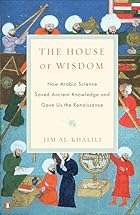
The House of Wisdom, by Jim Al-Khalili

2012 Book 156: The House of Wisdom, by Jim Al-Khalili

Reason for Reading: Science, Religion, and History group read on LibraryThing. 

Review
Many of us were taught that the origins of science were in Ancient Greece but that the Western World fell into the "Dark Ages" where science was lost and no progress was made. This traditional story concludes that the Western world rediscovered the Greek philosophies thus spurring on the Renaissance. A few months ago, I reviewed The Genesis of Science, by James Hannam, which was meant (partly) to dispel our notions of the Middle Ages as a time of darkness, a mire of progress. Hannam then describes how in the early years of the Renaissance, old scientific documents were rediscovered and translated. He only only briefly mentions the fact that those rediscoveries (and the ability to translate them) came from revitalized contact with the Arab world. The House of Wisdom fills that gap, by describing the ways in which the Arab world built upon the science of the Greeks, thus building the foundation for the scientific progress made during the Renaissance. I don't mean to say that Al-Khalili's book is only a gap-filler in the other book, but that the two books complement each other. The weaknesses in each are fortified by the strengths in the other. 

The House of Wisdom is an engrossing description of Ancient Arab history of science. Al-Khalili discusses the development of math, optics, medicine, chemistry, and philosophy by sketching descriptions of major scientific figures and their accomplishments. While Hannam's book tended to have a lot of gossipy digressions about the scholars, Al-Khalili tended to focus on facts that were more to the point. This makes Al-Khalili's book more informative, but less entertaining, than Hannam's book. For relief, All-Khalili inserts little passages about his own experiences in Iraq, which were helpful for lightening the mood. One thing I didn't like about Al-Khalili's book is that he is still stuck on the old-fashioned belief that the Western Middle Ages were dark and progress-free. And neither book covered the development of science in China or India. 

Overall, if you're interested in reading about Arabic science, I think this book is an excellent place to start. :)

Monday, October 29, 2012

The Poisoner's Handbook, by Deborah Blum

2012 Book 149: The Poisoner's Handbook 

written by Deborah Blum, narrated by Coleen Marlo

Reason for Reading: October Halloween theme

My Review

This fascinating book outlines the development of forensic science in the 1920's. It begins by describing the poor state of forensics the late nineteen-teens, and pointing out WHY it was so necessary to develop a proper procedure for determining cause of death. I've always taken such things for granted and never even thought about the effort it would take to develop the science--not only scientifically, but also as a social movement. Although the Prohibition theme resonates throughout the book, each chapter focuses on a different poison--including the background/development of the poison, the effects it has on the victim, and the measures taken by forensic scientists to discover cause of death. This book was fascinating on so many different levels. It's interesting as a Prohibition-era history, but it would also be interesting to lovers of popular science. Highly recommended for a little light reading.


Thursday, September 6, 2012

Man's Search for Meaning, by Viktor Frankl


2012 Book 130: Man's Search for Meaning, by Viktor Frankl (9/5/2012)

Reason for Reading: One of the essays in Fantasy Media in the Classroom, talked about a fusion class which combined Man's Search for Meaning and The Lucifer Effect with science fiction books like The Invisible Man and The Strange case of Dr Jekyll and Mr Hyde in which men choose "evil." I thought since I've been reading a lot of books about men who choose "evil" that I'd try out Man's Search for Meaning. I'll try to fit in The Lucifer Effect soon. It gives an interesting perspective on why some people choose "good" and other choose "evil." Frankl's message was that people can choose to be "swine" or "saints," but they make this choice over and over throughout their lives and their search for meaning is the motivation behind each decision.

My Review
In the first half of this fascinating little book, Frankl describes his years in the concentration camps (including Auschwitz) with the purpose of analyzing the behavior of people in extreme situations. He admits that someone who wasn't there can't give a very detailed or personal account, but a person who WAS there can't give a detached account because they were emotionally involved. I think he did an excellent job of viewing the situation with detachment, considering the situation. This was a really interesting little memoir. The second half of the book introduces his theory of psychoanalysis: logotherapy. Logotherapy is focused on man's search for meaning; in contrast to Freudian theory focusing on man's search for pleasure and Adlerian theory focusing on man's search for power. I think Logotherapy is the most sensible form of psychotherapy I've ever heard of. How can I argue that our happiness depends on our perceiving our own purpose? I admit I felt a little skepticism when he kept bringing up examples of how he'd "cured" someone after only one session--he must have been a particularly clever person to manage that so often. ;) But that aside, I think the technique of finding meaning in a patient's life is rather useful. :)

Sunday, August 5, 2012

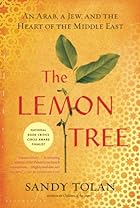
The Lemon Tree, by Sandy Tolan


2012 Book 118: The Lemon Tree: An Arab, a Jew, and the Heart of the Middle East, by Sandy Tolan (8/4/2012)

Reason for Reading: I realized I know much less than I should about this politically vital conflict and am enjoying learning more about it. I read this for the Reading Globally Middle Eastern Literature theme read.

My Review
Ostensibly, this is the (true) biography of the friendship between the Israeli woman Dalia Eshkenazi and the Palestinian man Bashir Khairi. However, the book also focuses strongly on background information--providing a wonderful history of the Israel-Palestine conflict since the 1940's. I was hugely pleased by this book for two reasons. First, the friendship between Dalia and Bashir was touching because they both had such strong nationalistic feelings. Somehow, despite their very different views, they were able to remain on good terms for many years. That's touching to me because many books with this let's-make-peace message tend to be about people who are all about love and peace and aren't as strongly influenced by their negative emotions as Dalia and (especially) Bashir. This is a friendship that was difficult to maintain, and yet it prevailed. The second reason I loved this book is because of the wonderful history of the region it provided. It's supposedly a "balanced" view--and it is, in the sense that it recommends justice (and sacrifice) be made by both sides. However, I'd say the book tended to be sympathetic towards to Palestinians. This SLIGHT bias is necessary in this case because many people in the Western world are over-exposed to the Israeli side and don't realize the Palestinians have a side at all. This book is highly recommended to anyone interested in the conflict.

Thursday, July 12, 2012

Abraham, by Bruce Feiler


2012 Book 105: Abraham: A Journey to the Heart of Three Faiths, by Bruce Feiler (7/11/2012)

Reason for Reading: It fit into Reading Globally's Middle Eastern literature theme. 

My Review 3.5 stars
In this short work, Feiler reviews the Biblical story of Abraham and then describes how the myth of Abraham has changed over time and between the Abrahamic religions. It is well-written and interesting, and its length is well-suited for the amount of information Feiler wishes to convey. (There were no lengthy speculations in order to add bulk!) I enjoyed it and learned a little bit, too!

Friday, July 6, 2012

Cleopatra: A Life, by Stacy Schiff


2012 Book 99: Cleopatra: A Life, by Stacy Schiff (7/4/2012)

Reason for Reading: I needed to buff up my "Memoir and Biography" category in 12 in 12 group, and this book fit into the Reading Globally theme read for Middle Eastern literature since it took place in Egypt.

My Review: 3.5/5 stars
Cleopatra: A Life is a light biography which is appropriate for the popular reader...not so much for historians or people who have already read a lot on the subject. There is a lot of speculation (Schiff admits as much) because there is not a contemporary information on the topic. Schiff's thesis is that Cleopatra is not the conniving seductress that historians have suggested. The first third of the book covers her early life and relationship with Julius Ceasar, but this part not well organized. Schiff's narrative jumps from subject to subject and does not do a very good job of explaining the political background. In fact, this section focuses mainly on how rich Cleopatra was and dwells in great detail on opulence. The last two thirds of the book come together in a tighter, more interesting narrative, however. This is where Schiff discusses Cleopatra's relationship with Antony and its political ramifications. This is a good book to read for the "popular" reader who does't have a specific interest in the subject. However, I 'm guessing there may be biographies that better describe her relationship with Ceasar and the political ongoings at that time.

Monday, June 25, 2012

Cro-Magnon, Brian Fagan


2012 Book 93: Cro-Magnon, by Brian Fagan (6/24/2012)

Categories: Science

Reason for Reading: Interest in the evolution of humans

My Review 4/5 stars
Cro-Magnon, by Brian Fagan introduces what is currently known (and speculated) about Cro-Magnons and Neanderthals. Fagan spices up his narrative with imaginative vignettes of Neanderthals and Cro-Magnons as they may have lived. I imagine such vignettes would appeal to most everyone in the general public, including teens, though they may be a little irritating to a hard-core scientist who isn't interested in imaginative speculation (just a guess...I loved them!). Another excellent feature of this book is that it has incorporated historic scientific discoveries about prehistoric peoples with modern science like mitochondrial DNA tracing. Again, this feature would be of interest to most of the general public, but isn't meant for experts--there are a lot of simplifications for the sake of clarity. I think this book is an excellent introduction to prehistoric peoples that could be enjoyed by both adults and teens (even precocious pre-teens).

Sunday, June 17, 2012

Revelations, by Elaine Pagels


2012 Book 85: Revelations: Visions, Prophecy, and Politics in the Book of Revelation, by Elaine Pagels (6/17/2012)

Reason for Reading: General interest in Church history and apocalyptic literature

My Review: 4/5 stars
In her newest book, Pagels explores the history of John of Patmos' Book of Revelation. She outlines what we know about John of Patmos, what he was trying to say with his preaching, and how contemporaries may have responded. The second half of the book covers the history of Christianity in the first two centuries C.E., with emphasis on Pagels' favorite topic of disparate beliefs among early groups. She completes the book with a description of how the Bible Cannon was chosen, with some suggestions about why John of Patmos' Book of Revelation was the only apocalyptic literature included. Pagels' writing is clear and interesting, though a bit repetitive--especially if you've read some of her earlier works. If you're interested in early church history, especially the disparate groups of Christians, then this is the book for you. If you're interested in apocalyptic literature in early Christian history, then the first half of this book, and the tail end, is for you.