Showing posts with label Horror. Show all posts

Sunday, January 25, 2015

The Coldest Girl in Coldtown, by Holly Black


2015 Media #6 / Book #3: The Coldest Girl in Coldtown, by Holly Black 

Reason for reading: This was the January pick for my bookclub.

Summary: In this near-future book, vampires have emerged into the public eye due to an outbreak started by a sloppy newly-made vampire who left his victims living instead of completely draining them. Vampires, and the Cold (people infected with the vampirism disease, but who haven't yet tasted the blood of humans and so haven't turned) are forced to live in ghettos called Coldtowns. In this setting, the story starts out with Tana waking up to a vampire-related disaster, which begins both a physical journey away from the disaster and a spiritual journey of self-discovery.

What I thought: This book was fast-paced and difficult to put down. It asked some interesting philosophical questions. Do we all have monsters within us? Do we crave immortality and beauty at the price of humanity? If not, why are so many people attracted to paranormal romances? Is it because we want the ultimate bad-boy? Or, in the opposite line of questioning, why do so many people seek good in what seems evil?T

Wednesday, January 7, 2015

Fire & Ash


Fire & Ash, by Jonathan Maberry

Reason for reading: This is the fourth and final book in a series that I've been reading. I'm making a goal this year to get farther in / finish as many series as possible

Summary: In this fourth and final book in the Rot & Ruin series, Benny, Chong, Lila, and Nix battle the genocidal Reapers while keeping the zombies at bay. But they might have to become monsters to fight monsters. And who is more of a monster: The zombies or the humans? 

Thoughts: This book was filled with action and adventure with a dash of intrigue. Like most Maberry books that I've read, the action got a little too much at times, to the point of feeling a little B-rate. But Maberry has some interesting plots and his philosophy about who really is the monster is quite interesting. Overall, a good finale. If you liked the first three books, you'll like this one as well.

Saturday, August 2, 2014

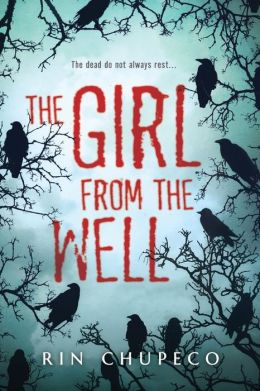
Girl from the Well, by Rin Chupeco


The Girl from the Well, by Rin Chupeco 

Genre: Teen Horror / Suspense

Reason for Reading: This book was provided by the publisher, Sourcebooks Fire, through Netgalley in exchange for an honest review. 

SummaryTarquin (Tark) Halloway has been haunted his entire life. With a mentally ill mother and a caring father who works too much, he feels he has no one to talk to about the strange lady that slinks through mirrors and makes Tark do terrible things. But when he meets a roaming spirit, Okiku, they both begin to remember what it is to be human. With the help from Tark's cousin Callie, Okiku and Tark must rid himself of his haunting. 

My Thoughts: Let me tell you, if I had read this book when I was 14, I would have been sleeping with the lights on for weeks. The spookiness / imagery is reminiscent of Japanese horror films that The Grudge (Ju-On: The Grudge) and The Ring (Ringu) were based on. (Have you seen the originals? Not the American remakes. Watch the real thing. Darn spooky! That's what The Girl From the Well is like.) Same evil-ghost-child-with-long-creepy-hair-staring-at-you-in-crazy-fast-did-that-actually-just-happen-flashes feel to it. 

Part of Rin Chupeco's spooky genius is her narration style. The story is narrated from the POV of the ghost, Okiku. Often, it reads like a 3rd person omniscient narrative, because Okiku mostly observes rather than acting. I often forgot I was reading a first person POV, and then suddenly Okiku would say something in the first person, and it was like she had just appeared out of nowhere. Like a ghost. Spooky. And then, sometimes Okiku would describe herself in the third person - a description of a ghost as Callie or Tark would have seen. This gave Okiku's character a sense of otherness. She felt inhuman. Ineffable.

Overall, I think this was an fantastic book, and I look forward to reading more of Chupeco's works. I miss the old days when ghosts were ghosts and monsters were monsters. I applaud Chupeco's work as one more for the #reclaimhorror team. (Ok, I just made that hashtag up, so technically she's the first on the team. But it's all good.)


Rin Chupeco: Despite uncanny resemblances to Japanese revenants, Rin Chupeco has always maintained her sense of humor. Raised in Manila, Philippines, she keeps four pets: a dog, two birds, and a husband. She’s been a technical writer and travel blogger, but now makes things up for a living. The Girl from the Well is her debut novel. Connect with Rin at www.rinchupeco.com.

Saturday, February 15, 2014

The Drowning Girl, by Caitlin R Kiernan


The Drowning Girl, Written by Caitlin R. Kiernan, Narrated by Suzy Jackson

Genre: Dark Fantasy

Reason for Reading: This was one of the nominations last year for the World Fantasy Awards

Synopsis: In The Drowning Girl a young schizophrenic woman, Imp, tells the story of her meetings with Eva Canning - a ghost? a mermaid? a werewolf? a normal, disturbed young woman? As Imp's mind roils in schizophrenic fantasy, the readers are left wondering how much of the story is reality and how much is fantasy. 

My thoughts: I'm having a hard time coming up with viable thoughts about this book. I just don't know what to think! I was interested throughout; I always cared about Imp - and about her girlfriend Abalyn - but I never knew quite what to think. Which, I suppose, is the point of the book? Kiernan did a fantastic job of spiraling Imp's writing in and out of control, and the pacing of the spirals was quite amazing. This is a skilled bit of writing. Likewise, Jackson was a superb narrator for this role. Her inflections were perfect for hinting at whether Imp was "in control" or "out of control" when certain passages were read. I would recommend this book to people who enjoy open-ended stories, especially those stories with an aura of unreality. 

Tuesday, May 28, 2013

Anna Dressed In Blood, by Kendare Blake

 Anna Dressed in Blood

Written by Kendare Blake, Narrated by August Ross

Reason for Reading: I wanted to check off category 12 in Reading Outside the Box

Genre: YA Paranormal Romance / Horror

Review
Cas Lowood has always worked alone on his quest to dispatch murderous ghosts and discover the demon who killed his father. But when he moves to Thunder Bay everything changes - first, he has an explainable fascination with Anna, the ghost he's come to kill; second, he accidentally picks up a team of teenagers who insist on tagging along as he rids the world of Anna's horror. And Cas isn't quite sure he wants to kill Anna anymore...

I picked this book up because of the fascinating cover art. (Yup! I'm one of those people.) I'm glad the cover was so awesome, because I enjoyed the book. Yes, it was sort of a copy of the TV show Supernatural, but that's ok. Every story has its origins in another story, right? This book was fun and quick - I enjoyed the mystery and characters. If you like teen ghost stories, this would be a good book to pick up. But I recommend you pick up the physical book and not the audio book. Ross annoyed me with his too-clear annunciations, his pauses, and his slow reading. It ruined the rhythm of the narrative, and made the dialog fall flat. There were several times I wanted to give up on the book just because the narration was annoying me - and I generally am pretty laid back about audio books.  

Tuesday, May 21, 2013

John Dies at the End, by David Wong

 John Dies at the End

Written by David Wong, Narrated by Stephen R. Thorne

Reason for Reading: Real Life bookclub

Genre: Quirky adult horror


Review
This book is the king of unreliable narration. Presumably, this book is about David and John, two friends in a Midwestern town who need to fight off evil forces when a new drug (soy sauce)  opens a door to a parallel universe. Although it's clear that David exaggerates a good deal for the sake of story-telling, it is up to interpretation whether David and John are really kicking the EF from PU butt, or if they're hallucinating. Either way, it's a wild, crazy, and very humorous ride. The humor is very dark, dry, and sometimes witty. It was my favorite part of the book. The plot was fairly non-existent, though. The book was more about action and weirdness - the story was just too wild to actually have a coherent plot. During the middle of the book, I was starting to regret that it was so long because I'm more of a plot-driven than situational-driven reader. But I'm glad I hung in there, because I got some great laughs and may view the world a tiny bit differently after listening to this book. 

You wouldn't think this book would lend itself well to audio format, but Stephen R. Thorne did an amazing job. His delivery of the dry humor and action was spot on. I'm happy that I took the risk on audio. :)

Monday, April 15, 2013

Deadly Offer, by Caroline B. Cooney

Deadly Offer, by Caroline B. Cooney

Reason for Reading: This book was provided by the publisher through Netgalley in exchange for an honest review. When I was a teenager, I read the second book in this trilogy, and I was curious what I would think of the first.

Review
Althea craves popularity. She wants to be a cheerleader - swooned over by all the jocks and the envy of all the girls. When, against custom, she opens the shuttered tower room in her house, she releases a vampire who makes a deal with her: If she brings him victims, he will give her popularity. Althea finds herself spiraling out of control as the vampire asks for more and more - and she feels she has to give it to him or suffer public humiliation. 

Looked at from a superficial point of view, there's really not much to this book. It's barely 200 pages long, and has little plot or character development. It's pretty standard for those Point Horror books that were being pumped out in the '90s. Teen readers should be wary - this is a quick, fluffy read with a (how dare Ms. Cooney?!) BAD vampire. Yes. That's right. His skin looks and smells like soggy mushrooms. He feeds on the weakness of teenagers. And he doesn't sparkle. He is in no way, shape, or form romantic. It was SUCH a wonderful change. :) As long as bad vampires don't insult your intelligence, you'll enjoy this book if you're 11-14ish. Or you might enjoy it if you're older and enjoy exploring ideas.

What I liked about this book was that it was more meaningful on a deeper level. There were hints all along that Althea could have made herself popular on her own - that her own attitude ensured her unpopularity. She assumed no one knew she existed, so she hid from everyone. Result - nobody paid her any attention. This is also a story about how far some people are willing to go in order to gain what they want. She sacrificed her morals and trampled on other people in order to achieve her goals - and then she was dissatisfied with the results. It's a story about being true to yourself and how your goals will be more lasting when you achieve them through hard work instead of back-stabbing. Any book that makes me think earns points with me! :) 

Another thing that made me think: where the heck were her parents through all of this?! They weren't mentioned even once! Did Cooney mean to do that? I read the second book in the trilogy many years ago, and I remember THAT protagonist had parents...

Wednesday, March 27, 2013

Wanted! by Caroline B. Cooney

Wanted! by Caroline B. Cooney

Reason for Reading: This book was provided by the publisher through Netgalley in exchange for an honest review

Review 
When Ally gets a phone call from her dad asking her to grab a couple of discs and drive (without a license!) in his corvette to "the place where she gets ice cream," she knows something is wrong. But when someone breaks into the house while she's in it, Ally makes a run for it - only to find out that her dad has been murdered and she's the prime suspect. Will she be able to evade the police AND prove her innocence? 

This was a fun, fluffy, and clean teen thriller published back in the late '90s and recently re-released. I read it practically in one sitting. There are certain aspects of the book that didn't translate well to the 21st century. For example, this was written in a day when most people didn't have a cellphone -  is that something today's teenager can even fathom? :) Ally made some stupid choices in this book (let's face it, it's hard to prove you're innocent when you're running away!), but in the end she managed to stay true to herself. This book would be appropriate for 11-14 year olds, and could be enjoyed by either boys or girls (i.e. it's high on suspense and low on romance). In fact, it made me miss the day in which the love triangle wasn't a required plot device for YA. Oh, those were the days!

Friday, March 15, 2013

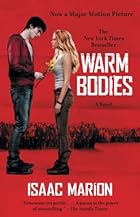
Warm Bodies, by Isaac Marion

Warm Bodies, by Isaac Marion

Reason for Reading: Loved the movie and trying to kill reading slump.

Review
R is an above-average-intelligence zombie (he can speak 4-6 syllable sentences!) who is living a doll-drum life in an abandoned airplane - but his un-life gets a sharp slap in the face when he meets Julie, who by all rights he should have eaten. Instead, he takes Julie home and tries to communicate with her. This small act of curiosity on R's part ignites a chain event of new perceptions. The world must crawl out of it's stagnant existence and remember what it was to live.

I admit that I watched the movie first. I generally don't do that, but it just happened that way. I LOVED the movie and had to rush out to get the book. This is one example where I'd say I liked the movie and the book equally. :) Warm Bodies is unquestionably a retelling of Romeo and Juliet (right down to the balcony scene), but it was certainly the most unique retelling I've read. Additionally, I interpreted the book as a parody of YA paranormal romance - I took it very tounge-in-cheek. So I got a LOT of laughs while reading it. But what I thought was most interesting was the allegory. The zombies symbolized passionless people who have simply accepted life as directed by the ruling body (Bonies, in this case). And R was a zombie who just couldn't quite conform. I loved the idea that a renewal of passion (and I don't just mean romantic passion) could revive R's potential as an individual. One simple act of individuality could change the course of history. On the other hand, I got a little tired at the end of the book of the cheesy internal dialog (and I DO mean internal dialog and not monologue). I think Marion was laying on his philosophy a little too thick. It would have been much more elegant to leave these philosophical discussions out - anybody who was willing to see Marion's philosophy would be able to do so without cheesy dialog. But that was my only complaint about this funny, quirky, and delightful story. :)

Friday, January 18, 2013

The Sandman - Preludes and Nocturnes, by Neil Gaiman

Preludes and Nocturnes, by Neil Gaiman

Reason for Reading: Group read on LibraryThing

Review
In this classic graphic novel, Dream (The Sandman) is captured by a sinister magician and remains trapped for decades. While he is gone, his kingdom falls apart and dreams on Earth are disrupted. I'm not very experienced with graphic novels, having only read Satrapi's Persepolis before this, so reading Preludes and Nocturnes took some getting used to. But I'm glad I decided to climb out of my comfort-zone for a while - I was REALLY enjoying the book by the time it ended. Neil Gaiman's mind never ceases to amaze me. He's so darkly creative. There are a few issues I had with this book, though. I thought the tie-in to DC superheroes was a bit cheesy - though I recognize that this cheese was do to the development of the graphic novel as a genre. I hear these elements disappear later in the series to leave only the good stuff. :) Also, I found one incident at the end of the book darkly depressing. It made me very sad to see the dark insides of humanity (as Gaiman and his illustrators see them)...but I guess my emotional reaction is exactly what Gaiman was going for. So, points to him. ;) Overall, this was a promising beginning, and now that I am more used to the graphic novel style, I'm looking forward to enjoying the rest of the series much more - after all, it's only supposed to get better from here!

Thursday, January 3, 2013

Losing Christina: Fog, by Caroline B. Cooney

Losing Christina: Fog, by Caroline B. Cooney

Reason for Reading: I had hit a reading slump and wanted to perk myself up by reading something "exciting." I was browsing through the ebooks at my library, and found this. I remembered how much I loved it when I was a child and thought "I wonder how bad it could be?" So I borrowed it. :) I'm rather glad I did!

Review
Christina is excited because this year she is 13 and she gets to leave the island she grew up on and attend junior high on the mainland in Maine. Despite her excitement, she is torn by worry about whether she'll be bullied by the mainland kids, who think islanders are stupid and poor. But those worries soon take second place when she realizes that the owners of the bed and breakfast where she and her islander friends lodge are using psychological torment to suck the souls out of girls. She's terrified as she watches the beautiful and brilliant senior Anya fade away. And soon the psychopaths are after her own mind. 

When I was pre-junior high I used to gobble up these Point Horror books like a turkey dinner. (haha. ok, I know that wasn't funny. Just work with it.) There are very few of those books that I actually remember liking though. This is one that has really stuck with me through the years. When I found it in the library recently I thought: "I wonder..." And I'm glad I did, because I found this book terrifying. When I was a teenager, I think I found the spooky psychological aspects of going insane scary. Now, the book is even more terrifying, but for a different reason. Those psychopath adults who have FULL control over those poor children were horrible! They were charming, and fantastic liars, and those kids' parents weren't around to see what was going on. They just believed whatever the adults told them rather than believing their own children. And the things those psychopaths said to the kids! Ohhhhh shudder. Yes, the book lacked subtlety. But the fact that it terrified me even now gets it four stars in my blog! My only complaint (besides the lack of subtlety - which is really due to its target audience) is that it ended in a cliffhanger. This is a trilogy of short books. It really should be one longer book. Even combined, I think the book would still be reasonably short. But it WAS Point Horror, after all. They had to be short.

Monday, December 3, 2012

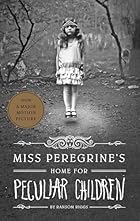
Miss Peregrine's Home for Peculiar Children, by Ransom Riggs

2012 Book 163: Miss Peregrine's Home for Peculiar Children, by Ransom Riggs

Reason for Reading: I was originally going to give it to my dad for Christmas, but it wasn't as amazing as I thought it would be

Review
Jacob has grown up believing that his grandfather's tales of adventure and magical children were a fantasy. However, when Jacob's life is suddenly turned upside down, he must go on a quest to a tiny island off Wales to see the orphanage his grandfather grew up in. There, he discovers that there was some element of truth in his grandfather's stories...and he finds out that his life is in danger. This book was a fantastic idea. Riggs used some unique vintage photographs that he'd borrowed from a few collectors and built a story around the weird images. The photos were fascinating...I really loved looking at them. And I was excited to see what sort of story was built around them. However, the story was a bit contrived. I suppose that it would have to be, given that it's built around some randomly rescued photos...So Riggs deserves some credit for a good eye and a creative idea. His writing was a bit lack-luster...as I said, it was a bit contrived, and it leaned too heavily on formulaic fantasy. Shades of X-men, Groundhog Day, etc. abound. Nothing wrong with using old formulas, of course - no concept is every fully new - but overall the writing just didn't hold its own. I might or might not pick up the next book in the series...we'll see. :) I'll probably read it eventually because I imagine Riggs' writing might improve on the second book, and it will seem less contrived if it's based on plot development instead of photographs. :)

Tuesday, October 30, 2012

Assassin's Code, by Jonathan Maberry

2012 Book 150: Assassin's Code

written by Jonathan Maberry, narrated by Ray Porter

Reason for Reading: 4th book in the Joe Ledger series. Figured the brainless action would be entertaining for a long car ride. Also, it fits in nicely with the Halloween theme. :)


My Review
In this fourth installment of Joe Ledger's story, Ledger kicks the @$$ of evil Iranians, a Romanian? weirdo cult, and a group of religious doomsday vampires...all while trying to figure out where the mysterious group of psychotic women fit in to this mess. This book is brainless military sci-fi/horror action at its best. I only gave the book three stars because I started to get bored of all the bad @$$ military action. And it waxed a little too political for me at times. This is also a book that you shouldn't think too deeply about--for instance, why the heck did he bring his DOG for a mission in Iran (when clearly the dog wasn't being used for the mission)? Certainly, the dog HAPPENED to come in handy at times, but it seems poor planning to bring a dog and then leave him pointlessly in the hotel during the mission, so that if things didn't go as smoothly as planned, Ledger would have to go back and get his dog before getting out of harm's way. I also felt some of the "intrigue" plot was rather overcooked. Really? Intrigue in the Catholic Church? Gasp! Never seen THAT in a book before! So, like I said, this book is great if you're interested in some mindless action...just don't think too much. :)

If you liked the rest of the Joe Ledger books, then this is more of the same. If you liked the first and felt "meh" about the rest, then this book is similar to the rest of the sequels. If you haven't read any of the others, pick up Patient Zero (it's good!) and then keep in mind that the rest of the books are less intelligent, but just as much pulpy action.


Wednesday, October 17, 2012

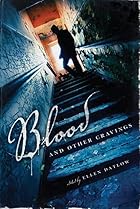
Blood and Other Cravings, ed. Ellen Datlow

2012 Book 147: Blood and Other Cravings, ed. Ellen Datlow

Reason for Reading: This seemed like a good book to read in October. I chose it because it's currently being considered for the World Fantasy Award.

My Review  
This is an anthology of vampire stories...but not just ANY vampires.Vampires are inundating the market these days, and they're beginning to get a tad predictable and boring. This new collection is meant to delight the reader by displaying the variety of thirsts that plague vampires (and humans). There are your classic blood-sucking varieties, but there are also soul-sucking vampires, and vampires from different folkloric traditions, and vampires that...well, ARE they vampires, or are they humans...or...are humans really vampires at heart?

Although I thought the theme of this anthology was creative, and I generally enjoyed the stories, I wasn't wowed. I'm not a huge short story reader because I really like plot and character development, and short stories simply don't have the space for such development--unless they really pack the info in. And in the case of THOSE stories, I tend to feel a little bogged down and need to read very slowly to pick up all the information. For me, these stories were either too insubstantial or too substantial. ;) Being unaccustomed to reading anthologies, I don't know if this issue was because I have difficulty with short stories, or if it was because the anthology was less than fantastic. Either way, I thought the anthology was interesting, but I'm glad to be moving on to other books. 

I was originally going to share a mini-review of each story. But these stories are so short, and the joy (for me) depended entirely on not knowing what sort of "vampire" I was reading about. There's just not much to say about the individual stories without giving spoilers. 

All You Can Do Is Breathe, by Kaaron Warren: When a mine collapses, a minor is trapped for several days. He keeps himself alive by remembering the good things in life. But he keeps a dark secret from the media-craze that descends upon him when he is rescued. A scary "long man" came to him while he was trapped...a man who didn't want to rescue him. 

Needles, by Elizabeth Bear: Two vampires descend upon the home of a tattoo artist. Do they want more than just a tattoo? 

Baskerville's Midgets, by Reggie Oliver. A boardinghouse landlady befriends a set of 7 midgets and pays a dire price.  ***This one was darkly funny. One of my three favorites.

Blood Yesterday, Blood Tomorrow, by Richard Bowes: A woman in need of money seduces her rich ex-lover to come back to the dark-side.  

X for Demetrious, by Steve Duffy: This is a fictional story based on the true-life news story of a man who, in January 1973, was found dead on his mattress--having choked on a bulb of garlic. The room was filled with crucifixes, sprinkled with salt, and "protected" with salt-laced urine and garlic-laced excrement. ***This was one of my three favorite stories in the anthology. It was thoughtful and a bit frightening.

Keeping Corky, by Melanie Tem: A mentally disabled woman who believes that she has the power to "punish" people by sucking away bits of themselves becomes angry when she is not allowed to write a letter to her biological son Corky, who'd been adopted by a couple years ago. But does she really have the power to punish?

Shelf Life, by Lisa Tuttle: While rummaging through her parent's attic, a woman finds a dollhouse that she'd become obsessed with as a child. She takes it home and gives it to her daughter--with disastrous results. Some people just shouldn't have dollhouses. 

Caius, by Bill Pronzini and Barry N. Malzberg: Caius is a radio talk-show host who has an almost magical power to resolve people's internal conflicts and make them feel satisfied. They flock to him. But what's really going on?

Sweet Sorrow, by Barbara Roden: When a little girl disappears in a quiet neighborhood, her friend Brian feels that his elderly neighbors are acting suspiciously. They seem to thrive on the grief around them.

First Breath, Nicole J. LeBoeuf: A mysterious narrator goes on a trip to "find herself." 

Toujours, Kathe Koje: After dedicating the later years of his life to help a young fashion designer become famous, Gianfranco jealously guards the young man from encroaching threats--like love interests.

Miri, by Steve Rasnic Tem: Ricky is a devoted husband and father, but something is lacking. He constantly seems drained and distracted. He spends a lot of time thinking about a woman from the past...

Mrs. Jones, by Carol Emshwiller: Two old-maid sisters entertain themselves through a long, dreary life by intentionally annoying one another. Then one day, a little demon shows up in their lives...and everything suddenly changes. 

Bread and Water, by Michael Cisco: The story of a vampire plague from the perspective of one of the original hospitalized patients. 

Mulberry Boys, by Margo Lanagan: Fifteen-year-old John helps hard-hearted Phillips track down and surgically care for a Mulberry Boy. As talks to Phillips for the first time in his life, he learns more about who the Mulberry Boys are and begins to wonder who's the REAL monster. ***This was my third favorite story...and it was definitely the most memorable for me. I'll probably look for more works by this author.

The Third Always Beside You, by John Langan: Weber and Gertrude suspect that there is another woman involved in their parent's marriage. When curiosity finally overcomes Gertrude and she asks a family friend, she finds out much more than she'd bargained for.  


Sunday, October 7, 2012

The Little Green God of Agony, by Stephen King


"The Little Green God of Agony," by Stephen King 

(Found in A Book of Horrors, ed. Stephen Jones)


In the introduction to his new anthology, Stephen Jones expresses dismay at the overpowering onslaught of horror-lite which has obliterated the good old-fashioned horror story from the market. The purpose of this anthology is to take back the market with some bad-@$$ creepy stories. He opens his anthology with "The Little Green God of Agony," a story by the well-known master of horror, Stephen King.

Newsome, the sixth richest man in the world, is a man in agony. A plane crash has left him scarred all over his body, and unable to get out of bed due to neuropathic pain. After exploring all the traditional medical procedures for freeing himself of this burden, he cashes in for the non-traditional treatment--a reverend who claims that Newsome is possessed by a god of agony, and that he (the reverend) has the power to expel the demon. Is the reverend a charlatan? Or is Newsome really possessed by a demonic agony?

This is the first Stephen King story I've read in quite a long time. I've always felt that he has an incredibly creative mind, and an amazing power to delve the reader into the darkness of his stories. On the other hand, the almost-book-snob in me cringes at his metaphors sometimes. (eg. "she...laced her hands together on the hanging hot-water bottles of muscle beneath his right thigh." I'm sorry. That just really falls flat for me.) Once I'd managed to rid myself of the sharpened pencil stabs of distaste for SK's continued use of unsatisfactory metaphors, however, I enjoyed the story quite a bit. His dark imagination was the perfect taster for the savory horrors to come in this anthology. ;)

Wednesday, October 3, 2012

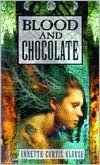
Blood and Chocolate, by Annette Curtis Klause


2012 Book 141: Blood and Chocolate, by Annette Curtis Klause

Reason for Reading: This is my second post for Book Journey's Banned Books Week 2012 blog tourBy reading banned books, I feel that I'm expressing my freedom of speech (or in this case, the author's freedom of speech), but I'm also interested in learning more about WHY people ban books. I don't approve of banning most of the books on ALA's top banned books lists, though for some of them I can empathize with the objections. In the case of this particular book, I understand the objections, though I think banning it only gives the book added attention. Blood and Chocolate is #57 on the ALA's list of Top 100 Banned/Challenged Books 2000-2009.

My Review 

Vivian is a 15-year-old werewolf living happily with her pack in the country when a murder destroys the world she loves. In tragic disarray, her pack moves to the suburbs and tries to get reorganized. In the midst of this chaos, Vivian has an identity crisis and falls for a human "meat-boy." Her experiences trying to fit in with meat-people teaches her a lot about herself. Meanwhile, the grisly murders continue, and the pack must hunt down the killers before they, themselves, become hunted. This book was very engaging. It was interesting and suspenseful enough that I really wanted to know how it ended, despite the fact that I disliked all the characters. Vivian was manipulative and conceited. Her mother had little character other than expressing concern for her daughter and being obsessed with sex. Vivian's meat-boy boyfriend seemed likable enough at first (though not particularly alluring), but then his qualities took a nose-dive towards the end of the book. Honestly, I'm not sure why this book gets such good reviews, but I suppose it's simply because the narrative is so engaging. 


My feelings about why this book was banned

I had the feeling while reading Blood and Chocolate that Klause intended this book to be a slap in the face to prudish book-banners. For me, that took a lot of the enjoyment out of the book because I felt like I was being beat over the head with a Message. Even if I agree with the Message, I think a novel's MAIN objective should be to tell a story. If the story is told well, the message comes through in a smooth allegory. This book seemed like Klause was going for shock-value to pump up her sales. The reason I believe that this slap-in-the-face was purposeful and not simply part of the story is because Klause included a conversation between Vivian and her boyfriend about adults that objected to certain types of behavior and wanted to burn his books. 


Klause included almost all of the qualities that our book-banners of America hate: explicit sexualization of everything, the occult, disrespect for religious symbols, obscenties, violence, age-inappropriate relationships, and an entire page musing about different ways to commit suicide. None of this was bad enough to scar a child or young teen. However, I feel she REALLY overdid it with the sexualization. You'd think from this book that the defining characteristic of werewolves is that they were unabashedly and continuously horny. This seems to be the defining trait of teen-aged boys and middle-aged men as well ;). It was a bit obnoxious. The randiness of every character was SO overdone that it distracted from the story. So in the end, no, I don't think this is subversive literature. But I have no respect for Klause's ability to portray a message with finesse.


Wednesday, September 26, 2012

Zone One, by Colson Whitehead


2012 Book 138: Zone One

written by Colson Whitehead, narrated by Beresford Bennett


Reason for Reading: I read Zone One for A More Diverse Universe blog tour, which aims to increase awareness of authors-of-color...-of-speculative-fiction. (Is that the correct punctuation for that term?) Zone One is particularly fitting for this blog tour, since it is being considered for this year's Hurston/Wright Legacy Award. Though this book is a "literary" zombie novel, so of course it is, by definition, genre defying. ;) I also read this book for a the Surreal September LibraryThing theme read, and for the  R.eaders I.mbibing P.eril VII challenge.


My Review

This post-apocalyptic book takes place in on Manhattan Island (Zone One), where Mark Spitz and his colleges work as "sweepers." Their job is to remove all the straggler-zombies from the area and bag them for disposal. This book isn't plot driven so much as world-building-driven. Whitehead uses beautiful prose to describe the "reconstruction" of America. As spell-binding as his sentences are, however, this flowery language distracts from the few action scenes...making this book not so much about zombies as about compulsive and overwhelming mediocrity. I don't mean that Whitehead's writing is mediocre--not in the slightest!--but that the book is about mediocrity. The mediocrity of Mark Spitz is described in beautifully pregnant prose. In fact, Mark had "unrivaled mediocrity" and all the "advantages this adaptation conferred in a mediocre world." The zombies themselves were a metaphor for the mediocre masses of Manhattan. Many of them harmlessly flipped non-existent burgers over ovens that had broken down long ago. They window shopped in front of boarded up displays and vegged in front of dead televisions. Thus, the book had a rather dark view of humanity...that we are descending irrepressibly into mediocrity. 


On top of that mediocre metaphor, Whitehead flirts with an allegory for the post-Civil War reconstruction. He compares the "untold Americans" who were not a part of the reconstruction to "slaves who didn't know they'd been emancipated." I pondered the meaning of this slave metaphor for a long time. Did Whitehead mean that these slaves hadn't been told about the reconstruction? That there were untold numbers of them? That nobody would ever tell their story? Maybe he meant all of that? Following through with his mediocre-zombie metaphor, it seems that Whitehead meant that America is filled both with mediocre masses who live like zombies and their slaves...slaves of technology, slaves to the whim of the mediocre masses, slaves to the unpredictability of a fickle universe. 


I had a hard time reading this book because of all the flashbacks and literary musings--I don't recommend people listen to the audiobook version due to these unexpected and frequent changes. I probably would have enjoyed it much, much more if I had physically read it. :) I think this is an excellent work for its meaning and its prose, but it's going to get bad reviews from the zombie-fiction-lovers out there, because, in the end, it's not really about zombies. 


P.S. After writing that review, I've decided to give it 4 stars because it made me think...I was originally going to give it 3.5 stars because it was difficult for me to get through, and I didn't immensely enjoy it. :) But that may have been the fault of my choice of medium (audiobook).

About the Author
Colson Whitehead was born in New York City in 1969, and he grew up in Manhattan. After graduating from Harvard, he wrote for magazines and has published five novels. On top of that, he's quite handsome. :D


Monday, August 20, 2012

The Bells, by Edgar Allan Poe

Listen to The Bells


The first of Poe's poems that I've read (recently) is The Bells (you might want to listen to it before reading my commentary). This poem was written in 1948, in the year following his wife Virginia's death of consumption at the age of 25. Wikipedia suggests that the poem depicts a man mourning his lost wife. He courted her at Christmas to the sound of sleigh-bells in stanza one, married her in the second stanza, and then she dies in a fire as the husband watches in the third stanza. In the fourth stanza,  the grief-stricken husband goes mad. This is certainly an approachable interpretation. I think a life-cycle interpretation is more interesting though. In my opinion:

The first stanza is about the playful innocence of childhood. The merry tinkling of sleigh bells suggests a care-free mood--pure enjoyment of the moment. Even the Heavens twinkle with delight at the youthful merriment. But the poem also suggests that time is passing: 

              Keeping time, time, time
              In a sort of Runic rhyme 

"Runic rhyme" suggests an occult influence...perhaps a spell is cast over the innocents, trapping them in a ghoulish foreplay for the dance that lay ahead.

In the second stanza, the poem has matured. It is no longer care-free, since it is motivated by love for a new spouse, rather than by simple delight at existence. The bells are now "mellow" with "molten-golden notes." These words suggest a sunset. Immediately following this symbolic sunset, the moon rises:

              What a liquid ditty floats
              To the turtle-dove that listens while she gloats
              On the moon!

Notice in this stanza the Heavens no longer join in the celebration, instead they are admired from afar. The universe has distanced itself from the poem. 

The third stanza tells of torture in the eve of death. This torture could represent a plethora of pains. To me, the fire recollected the turbulence of war and politics. Throughout Poe's life he would have experienced the tortuous birth-pains of a new nation in a world at war. It could also symbolize the suffering of someone dying of disease--such as consumption, like his wife. Or the "deaf and frantic fire" could be the moral or religious guilt of a man who has lived a life of profligacy and regrets his youthful vices. He might be overcome by waves of self-abhorrence.

             Yet the ear, it fully knows,
             By the twanging 
             And the clanging,
             How the danger ebbs and flows--
  
In this third stanza the poet is "now to sit, or never / By the side of the pale-faced moon." No longer does the poet admire the splendor of the moon. It is pale--it has lost its glory. Now, or never, he must sit and mourn by the Heavens which have deserted him.

In the final stanza Death (or perhaps Satan) triumphs. There are people--ah, the people! that dwell up in the steeple...all alone. These are spirits separated from their bodies. 

             They are neither man nor woman--
             They are neither brute nor human,
             They are Ghouls:

These ghouls have lost their identities. They are now simply servants of the king, Death. With finality they: "Feel a glory in so rolling / On the human heart a stone--" This is a tombstone, rolled over their hearts so they can no longer love. And the king's merry bosom swells as he dances and yells

             Keeping time, time, time,
             In a sort of Runic rhyme
             To the throbbing of the bells--

Again, the "Runic rhyme" casts its spell over the ghouls. And they are captured for eternity.

Similarity to Paradise Lost:

While writing my interpretation of The Bells, I was reminded of my studies of Milton's Paradise Lost. In lecture 18 of his series Why Evil Exists, Professor Charles Mathewes suggests that the difference between Satanic sin and human sin is that Satan sins out of a self-aware wish to rebel against God; Adam's sin is that he loves Eve more than he loves God. He eats the forbidden fruit because Eve has already partaken. If he denies her, she will be "dead" to him, and he can't handle that loss. So human sin ropes in feelings about other people. (See my full summary of the lecture here.)

While I was pondering how to express my feelings on Stanza II, I thought that this second stanza could represent Adam's choice of Eve over God. It represents his marriage to her, and his subsequent separation from the Heavens--which, now, he could only admire from afar instead of living in its presence as in the first stanza. Following this train of thought, the third stanza would represent a human's life on earth after the fall--filled with waves of earthly disaster. The final stanza would be the torment of Hell. 

Of course, I'm not suggesting that this is what Poe had in mind when he wrote the poem. But I think it's interesting how such themes recur in literature. They are very powerful images that resound throughout time. Perhaps I'll even wax Jungian and suggest that they are an archetype of our collective consciousness. ;)

Successors?

Another issue that struck me while I was reading this poem is thematic similarities between Poe's poem and Quasimodo's song about his bells in Notre Dame de Paris. I wonder if the playwright was influenced by Poe when he wrote this song? :)


Image taken from: http://schoolworkhelper.net/2011/06/edgar-allan-poe%E2%80%99s-the-bells-summary-analysis/

Friday, August 17, 2012

Dracula, by Bram Stoker


2012 Book 123: Dracula, by Bram Stoker (8/15/2012)

Reason for Reading: Coursera Fantasy and Science Fiction Course. Listened to it on my car ride to MN. :) Didn't finish it in time for the assignment though!

My Review
This review is for the Audible Edition of Dracula, narrated by Alan Cumming et al. (Wow, I just used et al. in a review. That makes me pretty darned special.) 

In this classic novel, a group of acquaintances must rid themselves of the sinister Count Dracula who has descended upon London with the eager desire to create a flock of bloodsucking fiends. This is my second reading of the novel--the first being when I was a young teenager. This time, I was impressed by Stoker's ability to set a dark mood and maintain it through the entire book. There was always some creepy fog or a terrified dog or a creepily sleep-walking woman to spook the reader. The full-cast performance was delightful. It really brought the various characters to life. The end of the book dragged for me a little because I was on a long car trip, counting down the last 6 hours in 10 minute intervals. But that's not really the fault of the book. :)

Friday, June 22, 2012

The Last Vampire, by Christopher Pike


2012 Book 89: The Last Vampire, by Christopher Pike (6/20/2012)

Reason for Reading: I used to read Christopher Pike when I was in middle school. Around the 7th grade, I decided he wrote trash and moved on to bigger and better books (literally). A few years back, I saw this book and whimsically bought it. I've finally gotten around to it...and come to the conclusion: My 7th grade self was very discerning. And my 30-something self should be ashamed of not trusting 7th grade self. Serves me right for reading a book entitled Thirst No. 1.

My Review 1/5 stars
Thirst No. 1 is a compilation of the first three books in a series written by Pike in the mid-90's. I only made it through the first book, The Last Vampire, so that's what I'm basing this review on. The basic plot-line is that a 5000-year-old vampire falls in love with a teenager and fights for her life against another 5000-year-old vampire. At first, I was impressed that Pike incorporated Hindu mythology into his plot (albeit with no dedication to the spirit of Hinduism). And the writing wasn't as bad as I thought it would be. But then I realized how flat the characters were and how many loopholes the story had. I remembered why I didn't like Christopher Pike--he scandalized me with his sexually active teenagers. I was less scandalized at 32 than I was at 12, but I still feel the casual "of course they're sexually active" style was inappropriate for teen literature. I simply don't think writers of teen books should make sex look like such a casual, unimportant act. However, I was prepared to finish Thirst No. 1 until the end of the first book. Total cliffhanger! And unnecessarily so. The only purpose of this cliffhanger was to leave the readers incomplete so that they'd rush into the next novel. One or two more sentences would have left the reader feeling complete. Personally, I feel authors should FINISH THEIR BOOKS!!!! What trash! Blagh!