Showing posts with label Paradise Lost. Show all posts

Sunday, September 2, 2012

The Invisible Man, by H. G. Wells

2012 Book 128: The Invisible Man, by H. G. Wells (9/1/2012)


Reason for Reading: Coursera fantasy and science fiction course


My Review
In H. G. Wells' classic novel, a scientist turns himself invisible and wreaks havoc in rural England. This book is a versatile classic because it could be read by someone who is young or who simply wants to read fluff, but it can also be appreciated by more careful readers who are looking for undercurrents of meaning. It's a tragi-farcical romp in 19th century England, but it's also a warning about what people might do simply because they can get away with it. This is a classic that anyone interested in science fiction should read.


Essay on The Invisible Man, by H.G. Wells for Coursera Fantasy and Science Fiction. May contain spoilers!!!

In his 1897 novel The Invisible Man, H. G. Wells portrayed a tragic anti-hero, a trend which had become popular among romantic writers following in the footsteps of Milton. Well's character Griffin isolated himself from humanity at first because he wanted all the glory of his discoveries. Later, he was driven to isolation by a fear of discovery. Finally, he was driven mad by the effects of his self-imposed isolation. 

Wells used two narrative styles for this novel. One style was Griffin's first person narrative. This style not only established Griffin as the protagonist of the story, but it also painted him in a tragic light: he was naked, hungry, and alone; facing the unforeseen difficulties of invisibility. He had striven diligently for success only to have it wrenched away as he recognized his own impotence in isolation. Only upon this dreadful realization did he seek out compatriots. However, he faced rejection not only from the general populace, but also from his chosen companions. Like Satan in Paradise Lost, Griffin had rebelled against the social order, and been mortified by his own failure. Like Satan, he failed to recognize his own fault in his fall, and instead sought revenge.

The other narrative style used in The Invisible Man was that of a semi-omniscient reporter/observer who told the story as seen through the eyes of individual characters. This style was distanced from the motivations of characters, resulting in the farcical effect of watching people rushing after flying objects and thrashing wildly at thin air. This narrative style made Griffin's plight seem pathetically silly. It is reminiscent of the comic debasement of Satan at the end of Paradise Lost. It suggests that Griffin doesn't deserve the tragic grandeur of a real hero--because he's just a sad little man with poor morals and no friends.


Thursday, August 30, 2012

The literary background of Paradise Lost


The Great Courses
Western Literary Canon in Context
Lecture Twenty-Two 
The Rebel as Hero—Milton’s Paradise Lost

The purpose of this course is to introduce readers to pivotal works in the Western Literary Canon. Professor Bowers focused a good deal of his lecture on outlining the literary sources that Milton referenced when writing his epic:

Milton was a very well educated man. He is said to have read every book available, usually in its original language. Many of these books were used as the framework for Paradise Lost. Milton based his epic loosely on the Book of Genesis, but changed a few incidents and added many of his own invention. 

Much of Milton's inspiration came from the the Greek and Roman ancient texts. He very likely considered Aeschylus’s Prometheus for his model of Satan revolting against divine law. Likewise, Sophocles’s Oedipus served as a model for the suffering and fall of Adam. And Virgil's Aeneas is called to mind when, in the end, Adam sees a vision of the future. 

Satan uses Athenian rhetoric when he twists logic and makes the worse situation seem better. Milton's God imposes order on the universe with the scientific precision of an Aristotelian God. Professor Bowers says: "Aristotelian notions of pattern, logic, connection, and plausibility hold the whole epic together. "  

Milton also relied heavily on medieval theology. Milton's avowed purpose for the epic was to "justify the ways of God to men." Early on, he sets a theme that even very bad situations result in good with God's plan. He seems to support the medieval Christian concept of felix culpa: "the happy fault" which suggests that the seemingly disastrous fall of Adam was, indeed, good because it necessitated the coming of Christ. This philosophy is in keeping with Boethius’s notion of theodicy in The Consolation of Philosophy. (Theodicy attempts to resolve the problem of evil by suggesting that in God's omnibenevolence all evil leads to good.) Another theologian we are reminded of by Milton is Augustine--Milton's portrayal of original sin as a fall into sexual depravity has a distinct Augustinian ring to it. And Milton got many of his notions of Heaven and Hell and of the war between Satan and God's angels from Dante. 

Finally, Bowers suggests that Milton may have wanted to model Satan's craving for revenge on Shakespeare's Hamlet, but "in the end, Satan lacks the grandeur of Shakespeare’s tragic characters; instead, he suffers a kind of comic debasement also found in Shakespeare."

Milton's learnedness extended beyond just literature. He studied all maps of Africa, Asia, and the Americas which were being produced during his time. Paradise Lost can be considered an allegory for British colonization. Each mention of modern-day places could be a reference to a British colony, or a place which Milton imagines the empire might soon set its boots upon. 

Milton also intended Paradise Lost to be an allegory for the failure of Oliver Cromwell's rebellion. This allegory led to one of the many paradoxes of Paradise Lost. Milton was a very voluble supporter of Oliver Cromwell throughout the rebellion and right on to the Cromwell's terrible end. Milton only escaped execution because he was seen as a "harmless" blind man. Although in life he was a champion of freedom from tyranny and a supporter of the fallen rebel, he outwardly condemned Satan's revolt. Because Milton could sympathize with Satan's injured pride, he made Satan into an alluring character--so charismatic that many people thought (and some still think) that Milton was on Satan's side without knowing it.  

This view led to a romantic view of Milton which strongly influenced literature for the following centuries. Wordsworth and Keats both longed to emulate Milton. Lord Byron emulated Milton, but chose a comic epic: Don Juan. However, none of the emulations reached the literary sublimity of Paradise Lost, which was the last great epic Poem of English literature. However, the epic style was soon adopted in a new format: the novel. James Joyce carried on the epic tradition, while Virginia Woolf introduced lyrical novels. Milton's rebel-as-a-hero tradition was picked up in the 19th century in Lord Byron's Manfred and Shelley's Prometheus Unbound. Heroes like Bronte's Heathcliff, Goethe's Faust, and Melville's Captain Ahab are anti-heroes. 

Professor Bowers even suggests that in a twist of mimesis, the cultural climate created by this barrage of Satanic heroes opened the door for a real-life Satanic hero: Napoleon. The rise of Napoleon later influenced writers like Tolstoy and Stendhal. Life imitates art, and art imitates life. :)

(TO SEE MORE ABOUT PARADISE LOST, GO TO MY MASTER POST)

Monday, August 27, 2012

The Philosophy of Composition, by Edgar Allan Poe

Gustave Dore


I just finished reading "The Philosophy of Composition," by Edgar Allan Poe, which is an essay published in 1846 in response to nasty critiques and parodies of his poem "The Raven." Keep in mind, Poe was himself a rather feisty critic, so he probably needed to take a little of what he'd been dishing out. The purpose of the essay was to show the modus operandi by which he assembled his poem. 
It is my design to render it manifest that no one point in its composition is referable either to accident or intuition--that the work proceeded step by step, to its completion, with the precision and rigid consequence of a mathematical problem [1].
If I hadn't been forewarned by G. R. Thompson that this essay may have been half tongue-in-cheek [2], I might have been quite confused. In his essay, Poe provides a step-by-step description of the birth and growth of "The Raven." 
  1. Consider length: "there is a distinct limit, as regards to length, to all works of literary art--the limit of a single sitting...can never properly be overpassed in a poem" [1] (Here, he inserts an aside suggesting that Paradise Lost, by John Milton, is half-poetry/half-prose, since it is too long for one sitting.) However, "a certain degree of duration is absolutely requisite for the production of any effect at all." Thus, approximately 100 lines was chosen for his new poem.
  2. Consider effect to be conveyed: Poem should be universally appreciable. "Beauty is the sole legitimate province of a poem." 
  3. Consider tone: "Beauty of whatever kind, in its supreme development, invariably excites the sensitive soul to tears. Melancholy is thus the most legitimate of all poetical tones."
  4. Artistic piquancy: here, he realized that refrains as an artistic effect were vastly underused.
  5. Refrain choice: Limited to lyric verse. Depends on the force of repetition for its effect. Decides to diversify by changing the context, but leaving the answer the same. Refrain must be brief. Must form the end of each stanza. Must be "sonorous and susceptible of protracted emphasis." The long "o" is the most sonorous vowel, and "r" is the most producible consonant. Hmmm, what word has a long "o" and an "r" in it, but keeps the tone of the poem? Oh, of course! "Nevermore!"
  6. Pretext for refrain: A human being wouldn't say "nevermore" over and over again, but an unthinking being might. Like a talking parrot, or better, a raven (for they talk too, and ravens are fitting for the tone). 
  7. Subject: "I asked myself--'Of all the melancholy topics, what, according to the universal understanding of mankind, is the most melancholy?' Death--was the obvious reply. 'And when,' I said, 'is this most melancholy of topics most poetical?'" This was also obvious: "death...of a beautiful woman is, unquestionably, the most poetical topic in the world--and equally is it beyond doubt that the lips best suited for such topic are those of a bereaved lover."
  8. He then wrote the denouement because "nothing is more clear than that every plot, worth the name, must be elaborated to its denouement before any thing be attempted with the pen.
And the poem continued to be written through the same process. Without Thompson's forewarning, I would have been shocked and skeptical that Poe actually wrote his poems in this way. This mechanical process might pump out a poem-esque work, but would it have any soul? The whole process seems rather art-defying. According to enotes, critics have suggested that "The Philosophy of Composition" was anything from a deliberate hoax to "possibly half tongue-in-cheek [2]." However, I have also noticed quite a few people on the internet who find it inspirational and say that it really helps them to compose their own works. I'm sure these people really DO find the structure helpful. It is very sensible. But I imagine, if anything, that Poe came up with the idea of "The Raven" and THEN went through a rigorous process of refining it. 

That said, I think the essay is a fantastic look into the mind of Poe. It explains why the majority of his poems are about dead women--because he felt that melancholy is the most legitimate of poetic tones, and that the most melancholy of all themes is the death of a beautiful woman. My dad disagrees with Poe here and says that the death of a child is the most melancholy topic. Personally, I think that doubt in God's existence or in his love for me would be the most melancholy. But I agree that the death of a child is more melancholy than the death of a beautiful woman. 

Out of curiosity, what do other people think the most melancholy theme is?


Find all of Gustave Dore's illustrations for The Raven here: http://www.artsycraftsy.com/dore_raven.html


[1] The Philosophy of Composition, by Edgar Allan Poe. Reprinted in: The Selected Writings of Edgar Allan Poe (Norton Critical Edition). Ed. G.R. Thompson. New York: W. W. Norton and Company, Inc. pp675-684. 


[2] The Selected Writings of Edgar Allan Poe (Norton Critical Edition). Ed. G.R. Thompson. New York: W. W. Norton and Company, Inc. pp57.

Monday, August 20, 2012

The Bells, by Edgar Allan Poe

Listen to The Bells


The first of Poe's poems that I've read (recently) is The Bells (you might want to listen to it before reading my commentary). This poem was written in 1948, in the year following his wife Virginia's death of consumption at the age of 25. Wikipedia suggests that the poem depicts a man mourning his lost wife. He courted her at Christmas to the sound of sleigh-bells in stanza one, married her in the second stanza, and then she dies in a fire as the husband watches in the third stanza. In the fourth stanza,  the grief-stricken husband goes mad. This is certainly an approachable interpretation. I think a life-cycle interpretation is more interesting though. In my opinion:

The first stanza is about the playful innocence of childhood. The merry tinkling of sleigh bells suggests a care-free mood--pure enjoyment of the moment. Even the Heavens twinkle with delight at the youthful merriment. But the poem also suggests that time is passing: 

              Keeping time, time, time
              In a sort of Runic rhyme 

"Runic rhyme" suggests an occult influence...perhaps a spell is cast over the innocents, trapping them in a ghoulish foreplay for the dance that lay ahead.

In the second stanza, the poem has matured. It is no longer care-free, since it is motivated by love for a new spouse, rather than by simple delight at existence. The bells are now "mellow" with "molten-golden notes." These words suggest a sunset. Immediately following this symbolic sunset, the moon rises:

              What a liquid ditty floats
              To the turtle-dove that listens while she gloats
              On the moon!

Notice in this stanza the Heavens no longer join in the celebration, instead they are admired from afar. The universe has distanced itself from the poem. 

The third stanza tells of torture in the eve of death. This torture could represent a plethora of pains. To me, the fire recollected the turbulence of war and politics. Throughout Poe's life he would have experienced the tortuous birth-pains of a new nation in a world at war. It could also symbolize the suffering of someone dying of disease--such as consumption, like his wife. Or the "deaf and frantic fire" could be the moral or religious guilt of a man who has lived a life of profligacy and regrets his youthful vices. He might be overcome by waves of self-abhorrence.

             Yet the ear, it fully knows,
             By the twanging 
             And the clanging,
             How the danger ebbs and flows--
  
In this third stanza the poet is "now to sit, or never / By the side of the pale-faced moon." No longer does the poet admire the splendor of the moon. It is pale--it has lost its glory. Now, or never, he must sit and mourn by the Heavens which have deserted him.

In the final stanza Death (or perhaps Satan) triumphs. There are people--ah, the people! that dwell up in the steeple...all alone. These are spirits separated from their bodies. 

             They are neither man nor woman--
             They are neither brute nor human,
             They are Ghouls:

These ghouls have lost their identities. They are now simply servants of the king, Death. With finality they: "Feel a glory in so rolling / On the human heart a stone--" This is a tombstone, rolled over their hearts so they can no longer love. And the king's merry bosom swells as he dances and yells

             Keeping time, time, time,
             In a sort of Runic rhyme
             To the throbbing of the bells--

Again, the "Runic rhyme" casts its spell over the ghouls. And they are captured for eternity.

Similarity to Paradise Lost:

While writing my interpretation of The Bells, I was reminded of my studies of Milton's Paradise Lost. In lecture 18 of his series Why Evil Exists, Professor Charles Mathewes suggests that the difference between Satanic sin and human sin is that Satan sins out of a self-aware wish to rebel against God; Adam's sin is that he loves Eve more than he loves God. He eats the forbidden fruit because Eve has already partaken. If he denies her, she will be "dead" to him, and he can't handle that loss. So human sin ropes in feelings about other people. (See my full summary of the lecture here.)

While I was pondering how to express my feelings on Stanza II, I thought that this second stanza could represent Adam's choice of Eve over God. It represents his marriage to her, and his subsequent separation from the Heavens--which, now, he could only admire from afar instead of living in its presence as in the first stanza. Following this train of thought, the third stanza would represent a human's life on earth after the fall--filled with waves of earthly disaster. The final stanza would be the torment of Hell. 

Of course, I'm not suggesting that this is what Poe had in mind when he wrote the poem. But I think it's interesting how such themes recur in literature. They are very powerful images that resound throughout time. Perhaps I'll even wax Jungian and suggest that they are an archetype of our collective consciousness. ;)

Successors?

Another issue that struck me while I was reading this poem is thematic similarities between Poe's poem and Quasimodo's song about his bells in Notre Dame de Paris. I wonder if the playwright was influenced by Poe when he wrote this song? :)


Image taken from: http://schoolworkhelper.net/2011/06/edgar-allan-poe%E2%80%99s-the-bells-summary-analysis/

Saturday, August 4, 2012

Milton--Epic Evil


The Great Courses
Why Evil Exists
Lecture Eighteen
Milton--Epic Evil


I want to explore the nature of "evil" and popular ideologies. It is, of course, impossible to ever really understand evil, but I think that even scratching the surface of the nature of evil will broaden my horizons. :) I have found what looks like an excellent set of lectures from The Great Courses called Why Evil Exists. I plan on using these lectures as a guide during my quest. I will record my adventures here in my blog. The course's introduction states: people have been addressing the problem of the existence of evil in a "divinely governed or morally ordered world" for millennia. The course aims to chart the answers that the Western world has outlined throughout time. I suppose I am to be left in the dark about the Eastern world's answers to these questions? How evil. ;)

Because I have already started my study of Milton, I will skip ahead to Lecture 18: Milton--Epic Evil. *Watches lecture while taking notes.*

*******

John Milton was a political revolutionary as well as a poet (see also: Milton and Paradise Lost: A Quest to Understand). All of Milton's writings, even the political ones, were centered around how humanity can avoid corruption by evil. As a Calvinist and a republican,1 Milton meant Paradise Lost as an allegory for the failure of Oliver Cromwell's rebellion. "Paradise Lost is the story of a rebellion gone terribly awry, and a leader horribly mutilated by his own revolt." 2

Milton suggests in Paradise Lost that he intended the epic to "justify the ways of God to men." He views God as timeless and eternal--existing at once in the past, present and future. So, although God knows all that has been or will be, it is not preordained. Adam and Eve had free choice, and they chose sin. But their sin was different from the sin of Satan, who represents Evil's self-understanding in Milton's epic.

In order to depict the embodiment-of-evil as a character, Milton had to display Satan in all his alluring charisma--for that is the nature of evil, it charms and tempts the unwary. It is easy to sympathize with Milton's Satan. He oscillates between self-doubt (God has tempted me to fall thus!) and self-confidence (I am acting out my own ambitions, while God thinks he can control me!). Even though his emotions are self-contradictory, they make him more real to the reader...they make him someone the reader can understand. Along with Satan's oscillating paradoxical motivations, Milton also uses paradoxical metaphors to represent evil. One of the most famous examples is Milton's description of Hell as a "visible darkness."

Milton had the difficult task of portraying self-aware evil (as opposed to portraying man's perception of evil, as in Dante's work). Because of this, he portrayed Satan as a much more interesting character than God or Jesus. Many critics believed that Milton himself sympathized with Satan. In The Marriage of Heaven and Hell, William Blake wrote: "The reason Milton wrote in fetters when he wrote of Angels & God, and at liberty when of Devils & Hell, is because he was a true Poet and of the Devil's party without knowing it." Other critics, like C. S. Lewis, insisted that Milton's poem complimented Christian faith.

Unlike Satan, Adam and Eve are "surprised by sin." Even though the angel Raphael warns them about sin, they are incapable of understanding the warning because they are too innocent. The warning is useless. Theirs is not "self-aware" sinning like Satan's. Eve sins out of careless folly, vanity, and pride...not a "self-aware" wish to rebel. Adam's sin was that he loved Eve more than he loved God, whom he was supposed to love above all else. This is the difference between Satanic sin and human sin. Satanic sin is about the sin itself; human sin tends to rope in emotions about other people.  


*******


Now that I have a good idea of what Milton was trying to say in Paradise Lost, I'm ready to attack the first book! :)

(TO SEE MORE ABOUT PARADISE LOST, GO TO MY MASTER POST)


1. "Republican," at the time, meant a person who believed that the people should govern themselves (as opposed to a monarchy). 

2. Charles Mathewes, The Great Courses: Why Evil Exists, Lecture 18.

3. This is the title of a well-accepted contemporary critical analysis of Paradise Lost: Surprised by Sin: The Reader in Paradise Lost, by Stanley Fish.


Friday, July 20, 2012

Milton and Paradise Lost: A Quest to Understand


Today, I am beginning yet again on my quest to understand Milton's epic Paradise Lost. I have already listened to it on audio and read it once through using the Barnes and Noble edition. Now, I have purchased the Norton Critical Edition. I will read AND listen to the Norton Critical edition, and compare to the footnotes in the Barnes and Noble edition. I will read supplementary materials. I will record my quest here, because I know everyone who reads my blog is raring to hear follow me on my quest. :)

My first notes will be on David Hawkes' introduction in the Barnes and Noble edition:


NOTES ON THE INTRODUCTION BY DAVID HAWKES (in Barnes and Noble edition)

During the time building up to the writing of Paradise Lost, the "free market" concept was emerging. In this system, land was being taken away from peasants and their labor was being exchanged for money. This emerging free market system seemed like objectification of labor, as if the laborers were "signs" or "symbols." This system seemed idolatrous to Milton. 

Henry VIII separated from the Roman Catholic Church so he could get a divorce, but he disliked many of the Protestant ways, so the Anglican church was more similar to the Roman Catholic Church than Puritans were comfortable with. They wanted to be free of religious practices they viewed as idolatrous. 

Meanwhile, the new market economy provided a means for non-gentlemen to get money, so the long-established structure of the English society was breaking apart. Charles I kept trying to get Parliament's consent to raise taxes, but Parliament insisted on economic or religious reformation as stipulations. Therefore, Charles I increased taxes without Parliament's consent (around 1640). In 1642, Charles I needed to raise an army to quell the rebellion in Ireland, but Parliament no longer trusted him. Charles I left London and raised his army in Oxford, which initiated civil war. This is when Milton emerged into history. He considered the "free market" and legitimization of usury to be idolatrous. He wrote many political pamphlets about his views.

Paradise Lost is about Satan's idolotry. It could even be viewed as a prophecy of today's world, in which everything is represented as a symbol (think of virtual reality and the internet). To Milton, even viewing our perception of the world as reality was idolatrous. We forget that, through the filters of our human minds, we can not perceive the truth as it really is. Therefore, when we view our perceptions as reality, we are idolatrous.

...At least, so says Hawkes. I find this an interesting opinion and will look more into Milton's political writings to see if I agree that Milton's view of the political and economic state of affairs was idolatrous and consider how this may be represented in his epic allegory.


(TO SEE MORE INFO ABOUT PARADISE LOST, GO TO MY MASTER POST)

Thursday, July 19, 2012

The Amber Spyglass, by Philip Pullman


2012 Book 109: The Amber Spyglass, by Philip Pullman (7/19/2012)

Reason for Reading: I was interested to see where Pullman was taking the Paradise Lost allegory

My Review
Lyra and Will finish up their journey (started in The Golden Compass) while desperately trying to dodge enemies and make the right choices. I enjoyed this book even less than the second book, The Subtle Knife, though The Golden Compass was in the "ok" range. I just didn't feel attached to the characters of Lyra and Will, and I didn't care what decisions they made. There was WAY too much Buddha-on-the-mountaintop both in the narrative and in the dialogue. I realize Pullman had a message he was trying to portray, and it wasn't a bad message (if you ignore all the hateful representations of organized religion)--he wanted to say that you should enjoy and live life here on Earth. What is happening in the present is what is important. Build the "Kingdom of Heaven" here on Earth instead of always denying our fleshy bodies as we look to our afterlife. This is a reasonable message, but I felt as if I was pounded over the head with it--to the point that it was distracting from the action. Furthermore, the action seemed to stop half-way through the book, followed by a long philosophical denouement. I WAS interested in his message, and that's why I continued the book after I didn't like the second...but it was a long haul for me. I don't really understand why this series is as popular as it is? But that's just my opinion. *shrug*

A note on Pullman's Message
In his 1998 article in The Guardian, The Darkside of Narnia, Pullman stated his opinion about the Narnia series: “there is no doubt in my mind that it is one of the most ugly and poisonous things I've ever read.” 

He didn’t like Narnia because of Lewis’ blatant Message. The ironic thing is, Pullman’s message is JUST as blatant, and in many ways just as hateful as he considers Narnia’s message to be (his representation of organized religion is very hateful). It is difficult for me to like the Pullman's trilogy when I can’t help but see his Message and feel the full impact of its irony. It’s probably good that there are people out there who are able to ignore it! :)

In case you're interested, there's also a 2005 New Yorker article on Pullman's inspirations for His Dark Materials. It touches on his views on C. S. Lewis and J. R. R. Tolkien. Far From Narnia, by Laura Miller.

Tuesday, May 1, 2012

Paradise Lost, by John Milton


For the past year, I've been trying to understand Paradise Lost, by John Milton. My first attempt back in 4/4/2012 was mostly unsuccessful, since I got through the poem, but didn't really understand it. I plan on trying again, this time going through it very slowly and carefully with MUCH deliberation. I will also read some retellings,  criticisms,  and interpretations along the way. This will be a long an bumpy ride. I'm working from three different texts, and one narration: 


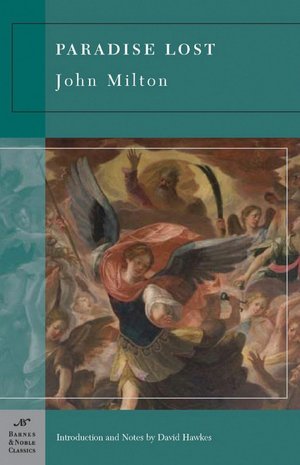
The Barnes and Noble Edition, ed. David Hawkes


The introduction in this edition was quite interesting. I have made notes on it here. Plenty of line-by-line footnotes are provided at the bottom of each page - they are helpful for comprehension of Milton's language. There are also more detailed endnotes. These go more deeply into background and context.

If you get this edition, be sure to buy a hard copy and not the ebook, because the end-of-page footnotes are very awkward on the Nook.


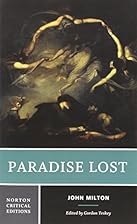
The Norton Critical Edition, ed. Gordon Teskey


The text of this book is easiest for reading. Teskey modernized the spelling and punctuation within the limits of Milton's syntax. Teskey says that the punctuation in the original printings shouldn't be assumed to be the poet's intention. At the time of publication, punctuation was the job of copyists and printers, not of poets. Therefore, modernized punctuation allows for greater clarity without losing Milton's original intent. 

Helpful line-by-line footnotes are provided at the bottom of each page. These help with comprehension of Milton's language.


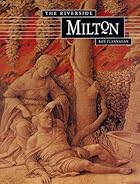
The Riverside Milton, ed. Roy Flannagan


This book includes all of Milton's major works. It has copious footnotes that are very helpful for understanding the background and context.


Paradise Lost & Paradise Regained, narrated by Charloton Griffon


Excellent narration! Highly recommended. Listening to this while reading helped immensely in my comprehension.  It comes with a 2 hour biography of Milton at the beginning. I liked this extra info, but it can be skipped if you don't want to listen to it. 


Additionally, I've got three lectures (or sets of lectures) from The Great Courses that I'm working with:

The Western Literary Canon, Lecture 22; Professor John M Bowers
Why Evil Exists, Lecture 18; Professor Charles Matthews
Life and Writings of John Milton; Professor Seth Lerer


Posts about Paradise Lost
Introduction to my quest to understand
Milton - Epic Evil
The Literary Background of Paradise Lost

Book 1, Lines 1-191 

Supplementary Books on Paradise Lost, Milton, or Historical Background
A Preface to Paradise Lost, by C. S. Lewis

Mentions or Retellings of Paradise Lost
The Subtle Knife, by Philip Pullman
The Amber Spyglass, by Philip Pullman
The Bells, by Edgar Allan Poe
The Philosophy of Composition, by Edgar Allan Poe
The Invisible Man, by H. G. Wells

Helpful Links
Darkness Visible


The Subtle Knife, by Philip Pullman


2012 Book 47: The Subtle Knife, by Philip Pullman (3/11/2012)

Reason for Reading: Interested in the Paradise Lost allegory

My Review: 3/5 stars
Lyra has traveled to a parallel universe, where she meets Will—another traveler of universes. They team up when they find that Lyra’s quest to find out more about dust and Will’s quest to find his missing father are intertwined. This is a difficult book for me to review. The first time I tried to read this book, I gave up about a quarter of the way through because I didn’t like being beat over the head with an anti-religion Message. It really lacked subtly in this book, and I hear it is even more brutal in the third book. However, I decided to give this book another try because I learned that it was a retelling of Paradise Lost, and I was interested in seeing what he did with that. My final conclusion: I still feel that I was being beat over the head with a Message; however, I think Pullman is a VERY creative author. SPOILER ALERT: I was a little off-put by the pointless waste of lives at the end of the book. But perhaps the third book will elucidate the reasons for these deaths.

A Preface to Paradise Lost, by C. S. Lewis


2012 Book 41: A Preface to Paradise Lost, by C. S. Lewis (2/29/2012)

Reason for Reading: Wanted to better understand Paradise Lost. I'm not very good at poetry.

My Review: 4/5 stars
In this preface, Lewis first outlines what an epic poem is and what Milton was trying to do with Paradise Lost. Then he discusses his views on how Milton's theology played a role in this epic. Lewis debunks the view that Milton had compassion for Satan. It was a good introduction, which I read before the poem because I thought it might help me comprehend the poem while I'm reading it. It was helpful, though it managed to make me more skeptical that I'll comprehend Paradise Lost.

(TO SEE MORE ABOUT PARADISE LOST, GO TO MY MASTER POST)