Showing posts with label Science Fiction. Show all posts

Wednesday, January 7, 2015

Fire & Ash


Fire & Ash, by Jonathan Maberry

Reason for reading: This is the fourth and final book in a series that I've been reading. I'm making a goal this year to get farther in / finish as many series as possible

Summary: In this fourth and final book in the Rot & Ruin series, Benny, Chong, Lila, and Nix battle the genocidal Reapers while keeping the zombies at bay. But they might have to become monsters to fight monsters. And who is more of a monster: The zombies or the humans? 

Thoughts: This book was filled with action and adventure with a dash of intrigue. Like most Maberry books that I've read, the action got a little too much at times, to the point of feeling a little B-rate. But Maberry has some interesting plots and his philosophy about who really is the monster is quite interesting. Overall, a good finale. If you liked the first three books, you'll like this one as well.

Saturday, August 16, 2014

Storm Thief, by Chris Wooding


The Storm Thief, by Chris Wooding

Genre: Young Adult Dystopia, Science Fiction, Ages 11-14

Reason for Reading: This was my bookclub book for this month. 

Summary: The island city of Orokos has been trapped in isolation for so long that the idea of a "world outside Orokos" had become a dream for only the naive and the fanatics. There is nothing outside of Orokos, and Orokos is nothing but city, ghetto, and the ruling Protectorate. Chaos storms wreak havoc upon Orokos and its inhabitants - picking people up and dropping them elsewhere; crippling some people while giving life to others. Even eyeshadow isn't too small to be overlooked by the probability storms.

When Rail and Moa make a snap decision to hide an expensive artifact from their Thief Mistress, they must flee with an assassin hot on their trail. While running, they come across a golem, Vago, who'd been misplaced by a probability storm before he had any idea of who he was, where he was from, or why he was made. Where can these refugees go when the Protectorate rules with an iron fist - keeping ghetto-folk away from the city? Their path is simply a series of coincidences strung together...leading, where?

My Thoughts: I really enjoyed this book. The characters were simple enough to flow well in a book for young teens, but each character had an interesting mixture of strengths and weaknesses. My favorite character was Vago, the Golem, whose process of self-discovery throughout the story made him intriguing. 

I loved the philosophical underpinnings of this story. It reminded us that the random power of entropy will always win. It always destroys what we have worked to build. Entropy is a non-stoppable machine. So why do we continue fighting it? Why do we continue dreaming of that "other world" when we have so much evidence that it doesn't exist? Why do we clutch hopefully to mere coincidences and use them to fuel our dreams? 

Slight spoilerish material
This is a book about hope as well as one about chaos. One character, who was "fanatically" willing to risk the lives of her people in pursuit of a seemingly impossible dream said: "We can stay here with our dreams just out of reach, or we can risk everything to reach them." Even after having finished the book, I'm still not certain which was the right thing to do - was it better for her people to risk everything in pursuit of their dreams? Or was it foolish? Is it better to keep yourself safe by being cynically aware of the brutality of the world, or is it better to hope, dream, or love?

To me, the lasting message of the book is: your life might be nothing more than a series of coincidences that are out of your control, but how you respond to the world defines who you are - and YOU decide how you respond. I'm not sure whether I agree with this philosophy or not. Lately, I've had a bit of a faith crisis - which makes the life-is-a-random-string-of-coincidences theory sound rather rational. But I know what everyone expects me to say is that God is in control, it's not a string of coincidences. ;) 


Tuesday, February 11, 2014

The Many-Colored Land, by Julian May


The Many-Colored Land, by Julian May

Genre: Science Fiction / Fantasy Mesh (Adult)

Reason for reading: I read this book a long time ago and always intended on picking up the rest of the series. This year, I convinced my real-life book club to read it. So hopefully I'll get to the rest of the series soon!

Synopsis: In the near future, an alien federation called the Galactic Milieu has intervened on Earth, and welcomed humans into the its fold. For most of humanity, the Milieu is a blessing. Long life, health, an ethical law system, the adventure of space travel - these are the perks that humans enjoy. But some feel confined by the rules of the Milieu and yearn for a simpler life. And some are too sociopathic to be accepted in the Milieu's society. These people can go into Exile - they are sent back in time to the Earth's Pliocene epoch. The Many-Colored Land follows the story of one group of exiles as they discover what lies on the other end of the time-portal. Life isn't as simple as they expect, and they are soon swept up in a world of war and conspiracy. 

My thoughts: I must have read a lot more hard-core science fiction when I was a teenager, because I don't remember this book being as heavy as it felt this time around. All the descriptions of futuristic technologies / cultures slowed me down because I don't read enough science fiction to be used to the terminology. It may have been slow reading for me, but I felt refreshed by the newness of the plot. This is a very complex book, with many layers of hidden foundation. Superficially, I think the characters could have used a little more development - but I'm sure they grow throughout the series. This first book in the Pliocene quartet was mainly world-building. We were introduced to the alien cultures - both the good and the bad aspects. We got a hefty background on the Pliocene epoch. And we got some hints of how these events in the Pliocene might have impacted humanity's development millions of years later. It's a fascinating set-up, and I'm eager to see how the rest of the series plays out. I've heard so many good things about it.

Wednesday, January 29, 2014

Wool, by Hugh Howey


Genre: Post-apocalyptic dystopia for adults, short stories

Reason for Reading: This was the choice for my real-life book club several months ago, but I only finished it this month. I had a bit of a reading slump in there, but I prevailed! 

Synopsis: In this collection of related novellas, we explore a post-apocalyptic world in which everyone is living in a "silo" spanning downwards into the earth, instead of up into the sky. There, they are safe from the toxic fumes that ravage the earth's surface. However, it's not at all clear how humanity got into this underground silo, why the people of the past have revolted so many times, and...slowly...new evidence arrives to suggest that possibly the people in power are hiding something nefarious. This set of novellas follows several different characters as they independently discover secrets of the silo.

My Thoughts: This book had a really slow start for me since I prefer novels rather than short stories. I like the character and plot development that is only possible with a novel-length story. Wool is a long book, but it is a collection of loosely connected novellas rather than one continuous story. This creates an intriguing atmosphere of mystery, and allows for different characters to discover different types of secrets of the silo - which is a refreshing turn from most dystopic literature these days in which one character manages to discover all. I guess this format is more believable in that way. But the format slows down plot and character development. The book started picking up about half-way through for me, though. This is when it started focusing on certain characters for longer. Thus, more character development. Also, about half-way through the book is when I started to realize that perhaps Wool was ideologically different than most dystopias. I began to wonder if maybe the choices the government was making really were protecting the people. Maybe ignorance - though abhorrent - was necessary in this case? I'm not going to say what my final conclusion on this subject was...you'll have to find out for yourself. And I probably still need to read the prequel, Shift, and the sequel, Dust, in order to come to a conclusion.There's still a lot of mystery to me about the silo.

Tuesday, May 21, 2013

John Dies at the End, by David Wong

 John Dies at the End

Written by David Wong, Narrated by Stephen R. Thorne

Reason for Reading: Real Life bookclub

Genre: Quirky adult horror


Review
This book is the king of unreliable narration. Presumably, this book is about David and John, two friends in a Midwestern town who need to fight off evil forces when a new drug (soy sauce)  opens a door to a parallel universe. Although it's clear that David exaggerates a good deal for the sake of story-telling, it is up to interpretation whether David and John are really kicking the EF from PU butt, or if they're hallucinating. Either way, it's a wild, crazy, and very humorous ride. The humor is very dark, dry, and sometimes witty. It was my favorite part of the book. The plot was fairly non-existent, though. The book was more about action and weirdness - the story was just too wild to actually have a coherent plot. During the middle of the book, I was starting to regret that it was so long because I'm more of a plot-driven than situational-driven reader. But I'm glad I hung in there, because I got some great laughs and may view the world a tiny bit differently after listening to this book. 

You wouldn't think this book would lend itself well to audio format, but Stephen R. Thorne did an amazing job. His delivery of the dry humor and action was spot on. I'm happy that I took the risk on audio. :)

Monday, May 13, 2013

Airman, by Eoin Colfer

Airman, by Eoin Colfer

Reason for Reading: Seemed like a good idea

Genre: YA Steampunk

Review
Conor Broekhart has grown up as the best friend of the princess of the Saltee kingdom (an imaginary kingdom off of Ireland). But when he discovers a conspiracy to kill the king, the real traitor captures him and sends him to a prison camp to mine diamonds in obscurity. Conor must use his genius for flight to escape the prison and rescue the princess. Conor is much like a 19th century steampunk Artemis Fowl. Colfer delivers his usual book - fun, delightful, and humorous. Definitely a treat for fans of non-dystopia non-paranormal-romance YA. (YAY! for something different!) I'd say this book is appropriate for 5th - 8th graders. 

Friday, March 15, 2013

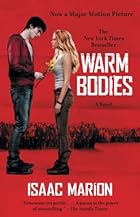
Warm Bodies, by Isaac Marion

Warm Bodies, by Isaac Marion

Reason for Reading: Loved the movie and trying to kill reading slump.

Review
R is an above-average-intelligence zombie (he can speak 4-6 syllable sentences!) who is living a doll-drum life in an abandoned airplane - but his un-life gets a sharp slap in the face when he meets Julie, who by all rights he should have eaten. Instead, he takes Julie home and tries to communicate with her. This small act of curiosity on R's part ignites a chain event of new perceptions. The world must crawl out of it's stagnant existence and remember what it was to live.

I admit that I watched the movie first. I generally don't do that, but it just happened that way. I LOVED the movie and had to rush out to get the book. This is one example where I'd say I liked the movie and the book equally. :) Warm Bodies is unquestionably a retelling of Romeo and Juliet (right down to the balcony scene), but it was certainly the most unique retelling I've read. Additionally, I interpreted the book as a parody of YA paranormal romance - I took it very tounge-in-cheek. So I got a LOT of laughs while reading it. But what I thought was most interesting was the allegory. The zombies symbolized passionless people who have simply accepted life as directed by the ruling body (Bonies, in this case). And R was a zombie who just couldn't quite conform. I loved the idea that a renewal of passion (and I don't just mean romantic passion) could revive R's potential as an individual. One simple act of individuality could change the course of history. On the other hand, I got a little tired at the end of the book of the cheesy internal dialog (and I DO mean internal dialog and not monologue). I think Marion was laying on his philosophy a little too thick. It would have been much more elegant to leave these philosophical discussions out - anybody who was willing to see Marion's philosophy would be able to do so without cheesy dialog. But that was my only complaint about this funny, quirky, and delightful story. :)

Tuesday, February 26, 2013

Noughts and Crosses, by Malorie Blackman

Noughts and Crosses 

Written by by Malorie Blackman, Narrated by Syan Blake and Paul Chequer

Reason for Reading: Group read for my Social Justice February theme (which didn't go so well this year due to a month of hospital runs....but things are looking more perky now!)

Review
Callum McGregor and Sephy Hadley have been best friends for as long as they remember. But recently their feelings for each other have begun to develop into something...stronger. Unfortunately, Sephy is a member of the dark-skinned upper class of Cross, and Callum is a pale-skinned, low-class Nought. The teens' romantic problems intensify when Callum's family gets caught up in a terrorist liberation organization that Sephy's father (a politician) has sworn to stamp out. Sephy and Callum must learn to love each other in a tumultuous world of hatred. Does this scream out "star-crossed lover" to you? But soft, what light through yonder window breaks? (I got the same Romeo and Juliet vibe from Warm Bodies, which I just finished reading. I think it's fun when the cosmic net of connected concepts captures me.) 

I've heard fantastic things about this book, but I wasn't as impressed as I thought I'd be. Maybe it's just because I wasn't in the mood to read depressing race-relations books (and they're all a bit depressing, aren't they?), but this book wasn't a slap in the face of my preconceived notions.  It was just another book about racism, much like a book written about a white girl and teenaged member of the Black Panthers. The whole skin-color switcharoo seemed like an unnecessary literary device to me. Now, don't get me wrong, I'm not saying it was a bad book...I was just expecting more amazingness, that's all. It was a tragically-sweet love story about a very important issue - racism, and the ease with which we can be swept away by other people's causes. But I think the book would have been more powerful if she'd focused on  the realism of the story instead of trying to build a new world that was simply too similar to our own to justify the effort of creation.  

What do other people think? I imagine there are people out there who think the skin-color switcharoo added to the story? If so, please let us know. :)


Tuesday, December 18, 2012

The Fox Inheritance, by Mary E. Pearson

2012 Book 169: The Fox Inheritance

Written by Mary E. Pearson, Narrated by Matthew Brown

Reason for Reading: It's the second book in the Jenna Fox Chronicles.


Review 
After 260-years of purgatory, Locke Jenkins awakens with a body that seems familiar - yet somehow changed. His friend, Kara, who died in the car crash that killed Locke, also has a achingly similar body...but her mind isn't quite right. Locke and Kara soon learn that their minds had been downloaded and saved centuries ago by the father of Jenna Fox - another victim of the fatal crash. Although Jenna had been given a new life right away, the copies of Locke's and Kara's minds had collected digital dust until Dr. Gatsbro brought the teens back to life in this brave new world. But Dr. Gatsbro's motives are not altruistic. Locke and Kara make a desperate attempt to escape the doctor's nefariousness clutches...and are jettisoned into the foreign world of the future. But can Locke keep Kara from making a terrible mistake?

When I read The Adoration of Jenna Fox years ago I really liked it, but as I was reading The Fox Inheritance, I realized that I remembered almost nothing of the first book (perhaps it wasn't so great after all?). I had to rely on spoiler reviews of the first book, and on the hints-of-what-came-before in the second book to remember. This made the first part of the book rather confusing. I'd recommend familiarizing yourself with The Adoration of Jenna Fox before starting The Fox Inheritance. Although I enjoyed this book, I wasn't as impressed as I had been after reading the first in the trilogy. The Fox Inheritance had some world-building and good characters. It brought some interesting moral issues to the table: Is it ethical to bring someone back to life after they're dead - and risk changes? Is it ethical to use a sentient being that of human-creation for our own purposes, or do they deserve civil rights? These are intriguing questions, but they've been explored in many other books/movies. So, in the end, I liked this book. It was a fun read. I'll probably pick up the third book when it comes out. But I would have been perfectly happy if this trilogy had stayed as ONE standalone book. And I'm pretty sure I'll forget the plot of this book within a few weeks.

Tuesday, December 4, 2012

Crossed, by Ally Condie

2012 Book 164: Crossed

Written by Ally Condie, Narrated by Kate Simses and Jack Riccobono

Reason for Reading: Second book the the Matched trilogy


Review

Cassia has been at a work camp for months now, but she hasn't had the chance to find her lost love, Ky. So, when an opportunity arises for her to be sent "accidentally" to the Outer Provinces she snatches it up. Upon landing in the Outer Provinces, Cassia and her new friend Indie run away from Society, following Ky's path. Meanwhile, Ky has also run away from Society with a couple of new friends. Will they find each other before Society or The Enemy find them? I thought Matched was a cute book - nothing amazing, but not disappointing. Crossed was pretty much the same. This story is more about world building than action or teenanged angst. That makes it unique in the YA dystopia genre right now. I look forward to reading the third, but it's not going to be in my hands tomorrow, by any means. :)


Tuesday, October 30, 2012

Assassin's Code, by Jonathan Maberry

2012 Book 150: Assassin's Code

written by Jonathan Maberry, narrated by Ray Porter

Reason for Reading: 4th book in the Joe Ledger series. Figured the brainless action would be entertaining for a long car ride. Also, it fits in nicely with the Halloween theme. :)


My Review
In this fourth installment of Joe Ledger's story, Ledger kicks the @$$ of evil Iranians, a Romanian? weirdo cult, and a group of religious doomsday vampires...all while trying to figure out where the mysterious group of psychotic women fit in to this mess. This book is brainless military sci-fi/horror action at its best. I only gave the book three stars because I started to get bored of all the bad @$$ military action. And it waxed a little too political for me at times. This is also a book that you shouldn't think too deeply about--for instance, why the heck did he bring his DOG for a mission in Iran (when clearly the dog wasn't being used for the mission)? Certainly, the dog HAPPENED to come in handy at times, but it seems poor planning to bring a dog and then leave him pointlessly in the hotel during the mission, so that if things didn't go as smoothly as planned, Ledger would have to go back and get his dog before getting out of harm's way. I also felt some of the "intrigue" plot was rather overcooked. Really? Intrigue in the Catholic Church? Gasp! Never seen THAT in a book before! So, like I said, this book is great if you're interested in some mindless action...just don't think too much. :)

If you liked the rest of the Joe Ledger books, then this is more of the same. If you liked the first and felt "meh" about the rest, then this book is similar to the rest of the sequels. If you haven't read any of the others, pick up Patient Zero (it's good!) and then keep in mind that the rest of the books are less intelligent, but just as much pulpy action.


Friday, September 28, 2012

Who Fears Death, by Nnedi Okorafor


2012 Book 139: Who Fears Death
written by Nnedi Okorafor, narrated by Anne Flosnik

Reason for Reading:
 This is my fourth book for The Diverse Universe blog tour, in which we are reading speculative fiction books written by authors-of-color. Who Fears Death was a Nebula nominee in 2010 and won the World Fantasy Award in 2011.


My Review


This book takes place in a post-apocalyptic Sudan, which is peopled by two races--the dominant Nurus and their "slaves" the Okekes. Onyesonwu Ubaig-Ogundiwu (whose name means "Who Fears Death?") is a the daughter of an Okeke woman who was raped and brutalized by a Nuru sorcerer and his genocidal army. Onyesonwu was considered "Ewu," a mixed-race child who brings bad luck and violence wherever she goes. Despite Onyesonwu's mother's lucky marriage to a kind man, the girl spent most of her younger years feeling insecure and angry at the world. However, as Onyesonwu grew, she inherited the powers of a sorcerer...angry powers that she couldn't control without the help of a teacher. This story is the coming-of-age of a young sorcerer destined to wreak vengeance on a violent father. 

I am having a really difficult time deciding what rating to give this book. Okorafor's writing was powerful (as was the reading by Flosnik). The story was compelling, though a few sections dragged for me--these parts could have been cut out to make a shorter book with no loss to the story. The genocidal violence and rape were described in disturbing detail, though these details were tactful and necessary. Okorafor used a post-apocalyptic setting to write a powerful story about issues (like genocide, female circumcision, and oppressive sexism) that are current problems in parts of Africa today. In fact, the most powerful part of the story (the consequences of human brutality) were disturbingly realistic and representative of the world many of us Westerners choose to ignore today. But, as disturbing as this book's content was, there was also a ray of hope and optimism. And behind all of this darkness and light, there is the story of a girl who wants nothing more to love her man, her friends, and her mother despite all odds. (Well, ok, she also wants revenge...)

About the Author:
Nnedi Okorafor is the American-born daughter of Igbo Nigerian parents. She holds a PhD in English from the University of Illinois, Chicago. She is a professor of creative writing at Chicago State University. She has written several YA fantasy novels. Who Fears Death is her first book for adults.  

Wednesday, September 26, 2012

Zone One, by Colson Whitehead


2012 Book 138: Zone One

written by Colson Whitehead, narrated by Beresford Bennett


Reason for Reading: I read Zone One for A More Diverse Universe blog tour, which aims to increase awareness of authors-of-color...-of-speculative-fiction. (Is that the correct punctuation for that term?) Zone One is particularly fitting for this blog tour, since it is being considered for this year's Hurston/Wright Legacy Award. Though this book is a "literary" zombie novel, so of course it is, by definition, genre defying. ;) I also read this book for a the Surreal September LibraryThing theme read, and for the  R.eaders I.mbibing P.eril VII challenge.


My Review

This post-apocalyptic book takes place in on Manhattan Island (Zone One), where Mark Spitz and his colleges work as "sweepers." Their job is to remove all the straggler-zombies from the area and bag them for disposal. This book isn't plot driven so much as world-building-driven. Whitehead uses beautiful prose to describe the "reconstruction" of America. As spell-binding as his sentences are, however, this flowery language distracts from the few action scenes...making this book not so much about zombies as about compulsive and overwhelming mediocrity. I don't mean that Whitehead's writing is mediocre--not in the slightest!--but that the book is about mediocrity. The mediocrity of Mark Spitz is described in beautifully pregnant prose. In fact, Mark had "unrivaled mediocrity" and all the "advantages this adaptation conferred in a mediocre world." The zombies themselves were a metaphor for the mediocre masses of Manhattan. Many of them harmlessly flipped non-existent burgers over ovens that had broken down long ago. They window shopped in front of boarded up displays and vegged in front of dead televisions. Thus, the book had a rather dark view of humanity...that we are descending irrepressibly into mediocrity. 


On top of that mediocre metaphor, Whitehead flirts with an allegory for the post-Civil War reconstruction. He compares the "untold Americans" who were not a part of the reconstruction to "slaves who didn't know they'd been emancipated." I pondered the meaning of this slave metaphor for a long time. Did Whitehead mean that these slaves hadn't been told about the reconstruction? That there were untold numbers of them? That nobody would ever tell their story? Maybe he meant all of that? Following through with his mediocre-zombie metaphor, it seems that Whitehead meant that America is filled both with mediocre masses who live like zombies and their slaves...slaves of technology, slaves to the whim of the mediocre masses, slaves to the unpredictability of a fickle universe. 


I had a hard time reading this book because of all the flashbacks and literary musings--I don't recommend people listen to the audiobook version due to these unexpected and frequent changes. I probably would have enjoyed it much, much more if I had physically read it. :) I think this is an excellent work for its meaning and its prose, but it's going to get bad reviews from the zombie-fiction-lovers out there, because, in the end, it's not really about zombies. 


P.S. After writing that review, I've decided to give it 4 stars because it made me think...I was originally going to give it 3.5 stars because it was difficult for me to get through, and I didn't immensely enjoy it. :) But that may have been the fault of my choice of medium (audiobook).

About the Author
Colson Whitehead was born in New York City in 1969, and he grew up in Manhattan. After graduating from Harvard, he wrote for magazines and has published five novels. On top of that, he's quite handsome. :D


Saturday, September 15, 2012

The Martian Chronicles, by Ray Bradbury


2012 Book 135: The Martian Chronicles
Written by Ray Bradbury, Narrated by Peter Marinker

Reason for Reading: Fantasy and Science fiction Coursera Course


My Review 
This is a collection of Ray Bradbury's Mars colonization stories which were originally published in pulp magazines over a period of a few years. They are independent of each other in plot, but it is fascinating how Bradbury managed to pull them all together in a cohesive whole which told a story in itself. This book is considered the bridge between classic pulp science fiction (which targeted lowest-common-denominator audiences) and the more thoughtful and sophisticated modern science fiction. The stories have the same raw imagination as pulp, but each one tackles one or more social issues as well. The stories are fast and fun, and yet intriguing.

My favorite story is about two missionaries bent on saving the Martians from sins that we humans haven't even imagined yet. The philosophical discussion of sin and the ironic use of Christian symbolism meshed surprisingly well with the sf-pulpy imagery. Bradbury also touched on evils-of-colonization, race-relations and xenophobia, and politics...to name but a few issues. I was also impressed by Bradbury's expectations of "the future" (1999 - 2020). Unavoidably, some of his themes were dated--we no longer worry about nuclear holocaust and (I hope!) lynch mobs are very rare in the US these days. He didn't foresee the civil rights movement or the cooling of the arms race. Despite this lack of foresight, he showed that humans never change. We may think we're living in an enlightened age, but xenophobia still exists and we're still willing to destroy the history and of an old land in order to set up our new world. Yes, I did feel that the stories tended to be a bit on the dreary side, but for some reason it didn't bother me so much because it was made palatable by Bradbury's fantastic imagination.

This is a fantastic classic that any science fiction fan should read. 

Friday, September 14, 2012

Herland, by Charlotte Perkins Gilman

2012 Book 134: Herland, by Charlotte Perkins Gilman 9/14/2012

Reason for Reading: Fantasy and science fiction Coursera

My Review:

On an exploratory trip in "savage" lands, three young American men find a country composed entirely of women. As these men learn about the history and culture of Herland, they are at first dismayed but later impressed at the asexuality and absolute social perfection of these women. For the first time, they notice the flaws in their own society and feel ashamed. 

I'm having a really hard time deciding what to think about Herland. I tend to prefer plot-driven novels, or at the very least character-driven novels. Herland was neither plot- nor character-driven...it was concept driven. Gilman was trying to convey a set of principles using an allegorical dialog. Gilman felt that women are subjugated by their sexuality. Because their economic happiness depends on their ability to attract men, they resort to jealousies and obsessions with fripperies. In Herland, there are no men...therefore they do not depend upon their sexuality to land them a desirable place in life--they depend only upon hard work and virtue. Since there are no men, they have no reason to be jealous, catty, gossipy, or hysterical. Thus, they are perfect. 

My major shock was that I'd previously had the impression that Gilman believed in the healthiness of sexuality. I believed this partly because of a comment in the introduction to the Charlotte Perkins Gilman Reader, ed. Ann J. Lane, which suggested that Gilman was deeply sexually attracted to her first husband, but that he had felt overwhelmed by her expressions of desire in their Victorian-valued home. However, the women in Herland are completely asexual. They have no sexual desires at all (not surprising, since they have no men). I find it disturbing that Gilman might have been suggesting that sexual desires (outside procreation) may be a male phenomenon? It's also possible that Gilman felt the men had something to teach the Herlanders after all...they could teach them about healthy sexuality. At first, I interpreted the story this way. But after further thought, I decided that useful men are completely out of character in this book. I think she actually intended to convey the idea that sexuality-only-for-procreation was the most sensible and healthy alternative. But I could be wrong. The jury's still out on that one. :)

In her comments on Herland, Fence objected to the focus of the women on maternity. This issue (like the sex-only-for-procreation issue) is in stark contrast with the views of today's feminists. There's nothing wrong with maternal feelings, but most feminists feel that women should have a choice about maternity...and they may not WANT to be mothers. I think there's a little irony with Gilman's focus on maternity in Herland. She, herself, suffered from the censure of society after she left her daughter under the care of her first husband. Of course, the fact that she divorced her husband for "no good reason" exacerbated the censure (for more on that, read my comments on "The Yellow Wallpaper"). Perhaps the focus on maternity in Herland was expressions of guilt for her inability to care for her daughter due her own illness. I know depressed people DO tend to be wracked by misplaced guilt. 

At some level, I approved of the socialist views displayed by Gilman's allegory. I thought it was wonderful how everything was shared among the whole...there was no poverty and there were no insanely rich. This made the socialist education system work perfectly. Educating the children was considered fun by both the children AND the adults. Education was not a burden, but a joy which all members of society shared. However, I think the only way a socialist society like that would work is if everyone is equal in skill, and devoid of individuality and self-serving jealousies. These women WERE devoid of such horrific traits, but they were also really boring and annoyingly perfect.

For the most part, I did not enjoy reading Herland. I found the dialog grating due to the sickening perfection of the women and the irksome sexism of the men. The men's characters were very flat--their purpose was simply to present a contrast to the perfection of Herland. The three men came in three stereotypical varieties: gentlemanly to the point of sexism, brutishly sexist, and imperfect-but-somewhat-objective observer. Other than these characteristics, the men had no personality at all. The women also lacked character partly due to their obnoxious perfection, but also due to their nature as a social "we" instead of being unique individuals. In other words, the perfection and socialism merged them into one character with many names (with the slight exception of Alima who  brought Terry's brutish behavior on herself by having a "far-descended atavistic trace of the more marked femaleness, never apparent till Terry called it out.") In other words, the presence of men brought out the bad characteristics of women? Of COURSE they did. ;) 

See? Herland needed these men so that they could catalyze atavistic femaleness. This trait could then be bred out of the next generation. Men ARE useful after all! 

Seriously, though, the eugenics of Herland was a little disturbing. The officials of Herland apparently got to decide who was worthy of giving birth to none, one, or *gasp at the honor* TWO children. The officials also got to choose how much influence the mother had over the child's rearing. I didn't view this process as racist since I assumed they were all of the same race (at least, they were all white by the time the men arrived), but according to Wikipedia, "Gilman also believed old stock Americans of British colonial descent were giving up their country to immigrants who, she said, were diluting the nation's reproductive purity." So I can't discount the possibility that she DID mean that the women of Herland bred out the "less desirable" races. 

I think Herland was an interesting thought experiment, but I personally didn't enjoy reading it. If your'e interested in concept-driven allegories, especially feminist and socialist allegories, then this is the book for you. :D


Monday, September 10, 2012

Matched, by Ally Condie


2012 Book 131: Matched, by Ally Condie (9/9/2012)

Reason for Reading: Needed something light to get rid of all that "meaning" that's been invading my mind from all those "meaningful" books I've been reading. This one was sufficiently fluffy, and was one of my top 5 LibraryThing recommendations. (LT seems to think that I love YA dystopia, which isn't particularly true, but oh well.)

My Review
Cassia is thrilled about her matching ceremony, in which the officials of her government choose her perfect match...her future husband. But when she views her match, she is perplexed--TWO faces show up on her screen. Because of this "mistake" Cassia is thrown into a confusion of emotions and falls for the "wrong" boy. She begins to question the right of her government to make so many choices for their citizens. Perhaps no one is free in this seeming utopia? This was a cute book, and I certainly am eager to read the rest of the series. I appreciate it as one of the few non-violent YA dystopias out there on the market. On the other hand, love triangles are getting rather blase, aren't they? And it's not really possible to write a unique YA dystopia at the moment. Everything's been done over and again. That said, it was certainly a quick, fun read; and it had very likable characters.

Saturday, September 8, 2012

A Princess of Mars, by Edgar Rice Burroughs


2012 Book 131: A Princess of Mars, by Edgar Rice Burroughs (9/8/2012)

Reason for Reading: Coursera Science Fiction and Fantasy course. :) 

Review
In the post-Civil War era, John Carter enters an Arizona cave and is unexpectedly whisked away to Mars. There, he witnesses the depravity of a "highly developed" race of people who, because medicine helps them to live long lives, they perform population control by warring with each other. In some ways, though, they're happier than people on Earth, because they have no lawyers. John Carter takes Mars (and a Princess's heart) by storm. I'm not a huge fan of pulp fiction, so I expected very little out of this book. Because of that, I was impressed at how "not bad" it was. Actually, it was sort of interesting in a history-of-science-fiction sort of way. It did have some rather racist comments about Native Americans (an artifact of when it was written), and the Princess was a weak annoying little thing whose only virtues were rare beauty and a penchant for getting into trouble so that we could witness the excitement of her rescue (this is an artifact of being pulp). Overall, not too shabby. But not literature, either. I DID wonder whether John Carter was meant to be some sort of pulpy Christ figure. He was very good at saving people. And he had the right initials. ;)

Monday, September 3, 2012

The Country of the Blind, by H. G. Wells


SPOILERS OF THEMATIC RATHER THAN PLOT-SPECIFIC NATURE

As another Coursera Fantasy and Science Fiction assignment, I've finished reading H. G. Wells' short story "The Country of the Blind," first published in 1911. In this story, a mountaineer has an accident and falls into a valley inhabited by blind people who have been separated from humanity for fourteen generations. They do not believe that there is a sense called "sight." Likewise, the mountaineer discovers that the blind people have strengthened hearing and smell which make them much less helpless than he'd imagined. 

This story is deeply meaningful on many levels, and I had difficulty grasping exactly what to say about it. I could see that it was an allegory in perception...but what was he REALLY trying to say? One student on the class forum suggested a novel with a similar theme of questionable perception: Flatland: A Romance of Many Dimensions, by Edwin A Abbott, first published in 1884. I haven't had time to read it yet, but it, too, introduces the concept that what we perceive might only be shadows of reality--there may be more dimensions out there that we are blind to. 


A few other students noticed the similarity of Wells' story to the "Allegory of the Cave" in Plato's Republic.  I should have seen this myself, but apparently I am blind. ;) This metaphor pops up often. The best-known reference in today's popular culture is probably The Matrix--which I suppose can be considered cyberpunk Plato with a Christ figure. :)


The allegory is a conversation that Plato attributed to Socrates with Plato's brother Glaucon. The idea is this: People are chained to chairs in a cave and cannot even turn their heads. Their whole lives, they've been watching shadows of the real world which are cast on the cave wall by the light of a fire behind them. To them, these shadows ARE the real world. But imagine the confusion of someone who is untied from his chair and introduced into the real "real world." After suffering from shock of seeing direct light for the first time in his life, he grows accustomed to the light. Then he is amazed by all that he learns. He wants to share his new knowledge with those in the cave, but when he returns he is blinded by darkness. This blindness is true of the mind's eye, as well. Both upon walking into and walking out of the light, a person is confused and blinded. I believe Plato meant for the light to be goodness of spirit or divine contemplation.  

Like the people in the cave, the blind people have lived their entire lives without the sense of sight...indeed, without knowing that sight existed. They can't even imagine what sight is when the mountaineer describes it to them. The mountaineer sees them as blind (literally and figuratively) to the "real world." Thus far, the allegory fits with Plato's. However, because the blind people had heightened smell and hearing, I don't feel that they were in "darkness" and the mountaineer in "light." I think they were all equally in the dark because they assumed that their OWN world view was the correct one. 

That was the reason I thought this story might be an allegory about the evils of colonization. The mountaineer is like the white man who tries to "enlighten the savages" by forcing "civilized" customs and religions on them. Finally, the mountaineer realized that "you cannot even fight happily with creatures who stand upon a different mental basis to yourself. " He couldn't convince them of something that their own senses told them was impossible. In order to fight, you have to be in the same plane of reality.

Sunday, September 2, 2012

The Star, by H. G. Wells

Image taken from a NASA Google+ post*

"The Star" is an apocalyptic short story written by H. G. Wells in 1897. According to Wikipedia, it founded a science fiction sub-genre of post-apocalyptic fiction in which two celestial objects crash into each other. The description of apocalypse-on-Earth was probably rather original for its time--it was vivid and striking. It also had a very powerful message that was told in a rather unique way. I was reminded of a book I read recently, Half of a Yellow Sun, by Chimamanda Ngozi Adichie...not in narrative style (not in the slightest!) but in underlying message.

Spoilers start here:
While I was reading "The Star" I was distracted by the detachment of it all. We seemed to be observing it from afar rather than experiencing it through the eyes of tortured souls. At the last sentence, I realized WHY he made the story so detached. He was writing with the detachment of a far-away observer. Of someone who's just reading about the events in a newspaper. We see the murders, the famines, the plagues; but we don't FEEL them. This reminded me of a touching novel about the Biafra / Nigeria civil war: Half of a Yellow Sun, by Chimamanda Ngozi Adichie. In this gut-wrenching, but beautiful book Adichie asks the question "were you silent when we died?" 

Spoiler-free zone commences:
I think it's horrible how we can watch news of horror and tragedy from afar and simply shake our heads and say "that's too bad...." and not worry about it any more. The idea of such uncaring thoughts (literally) brings tears to my eyes. And then the biologist in me rears her ugly head and says: this detachment is necessary for our own individual sanity. We have to, at some level, separate personal tragedy from the tragedy of people who have no impact on ourselves. If we didn't, we would be constantly overwhelmed by emotions that distract us from our own lives and do not provide any personal advantage. I suppose if I were constantly overwhelmed with emotion about distant tragedies, I'd be on the far-opposite end of the autism spectrum. :) I think we should honestly consider the pain of other people and, if we can, do something about it. But where do we draw the line for emotional involvement? I suppose this is something that each individual must answer for him or herself.


The Invisible Man, by H. G. Wells

2012 Book 128: The Invisible Man, by H. G. Wells (9/1/2012)


Reason for Reading: Coursera fantasy and science fiction course


My Review
In H. G. Wells' classic novel, a scientist turns himself invisible and wreaks havoc in rural England. This book is a versatile classic because it could be read by someone who is young or who simply wants to read fluff, but it can also be appreciated by more careful readers who are looking for undercurrents of meaning. It's a tragi-farcical romp in 19th century England, but it's also a warning about what people might do simply because they can get away with it. This is a classic that anyone interested in science fiction should read.


Essay on The Invisible Man, by H.G. Wells for Coursera Fantasy and Science Fiction. May contain spoilers!!!

In his 1897 novel The Invisible Man, H. G. Wells portrayed a tragic anti-hero, a trend which had become popular among romantic writers following in the footsteps of Milton. Well's character Griffin isolated himself from humanity at first because he wanted all the glory of his discoveries. Later, he was driven to isolation by a fear of discovery. Finally, he was driven mad by the effects of his self-imposed isolation. 

Wells used two narrative styles for this novel. One style was Griffin's first person narrative. This style not only established Griffin as the protagonist of the story, but it also painted him in a tragic light: he was naked, hungry, and alone; facing the unforeseen difficulties of invisibility. He had striven diligently for success only to have it wrenched away as he recognized his own impotence in isolation. Only upon this dreadful realization did he seek out compatriots. However, he faced rejection not only from the general populace, but also from his chosen companions. Like Satan in Paradise Lost, Griffin had rebelled against the social order, and been mortified by his own failure. Like Satan, he failed to recognize his own fault in his fall, and instead sought revenge.

The other narrative style used in The Invisible Man was that of a semi-omniscient reporter/observer who told the story as seen through the eyes of individual characters. This style was distanced from the motivations of characters, resulting in the farcical effect of watching people rushing after flying objects and thrashing wildly at thin air. This narrative style made Griffin's plight seem pathetically silly. It is reminiscent of the comic debasement of Satan at the end of Paradise Lost. It suggests that Griffin doesn't deserve the tragic grandeur of a real hero--because he's just a sad little man with poor morals and no friends.