Showing posts with label Adventure. Show all posts

Tuesday, March 25, 2014

Blood Ties, by Garth Nix and Sean Williams


Blood Ties, by Garth Nix and Sean Williams

Genre: Middle Grade Fantasy / Adventure Series

Reason for Reading: I'm already reading this series, of course, but I was happy that Scholastic provided an ARC through Netgalley in exchange for an honest review. 

Synopsis (May contain some light spoilers for earlier books in the series): Meilen has run away from the Greencloaks to search for her father in her homeland of Zhong. Conor, Abeke, and Rollan quickly follow - they hope to recover their friend and get the Slate Elephant talisman from Dinesh, the Great Elephant. But Zhong has been conquered, so the kids must fight through armies of enemies to find what they seek. The Devourer is gaining power, and he will stop at nothing to take over all of Erdas with his nature-defiling bile. 

My thoughts: Another great installment of the series. And they just keep getting better and better! (Not, of course, because the authors are changing, but because the plot and characters are developing as the series progresses.) Like in the earlier books, Blood Ties shows the power friendship - of working with your team rather than trying to fight evil alone. It encourages trust - of your partners, your friends, and the power of Good to conquer Evil. Most of all, the story is fun. It's a delight to watch as the kids' distinct characters develop, and how each character adds to the dynamics of the team. The world-building is also a lot of fun - it has both a familiar and a novel taste. For instance, Zhong is the Erdas-equivalent of Asia. The comparison is undeniable, and yet Zhong's culture and scenery are also delightfully unique. And, of course, this book is filled with adventures, intrigue, and battles - which any lover of middle grade fantasy / adventure books craves. I'm looking forward to the release of the next book in the series, Fire and Ice, in July.

Tuesday, March 4, 2014

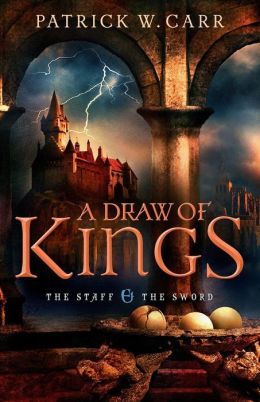
A Draw of Kings, by Patrick W. Carr


A Draw of Kings, by Patrick W. Carr 

Genre: Teen / Christian Fiction / Fantasy

Reason for Reading: This was a galley copy provided by the publisher through Netgalley in exchange for an honest review. This is the third book in a trilogy that I have been enjoying. 

Synopsis (May contain slight spoilers for previous books in the trilogy): In this third, and final, book of the Staff and Sword trilogy, the war for Illustra begins. In order to maintain order within the Judica, Errol must retrieve The Book that was left behind in Merakh. Meanwhile, Adora and Liam must journey to the Shadowlands to make a pact with these newly discovered allies. A feeling of dread descends upon everyone, as the people of Illustra realize they are surrounded by vast armies of enemies and demon spawn. They must discover who their king and savior is - or else the barrier will never be restored and the demons will destroy Illustra.

My Thoughts: This book was every bit as good as the previous two - and it tied off most of the loose ends quite well. For fantasy fans, this book was packed with battles, intrigue, foreign lands, and ranging demon-spawn. I was also quite impressed with Carr's ability to write religious allegory. He deftly got his message across by showing it within the story instead of writing lectures into the dialog as many authors do. In fact, I bumped this book up an extra half a star (something I rarely do) because I admire how much finesse it takes to write a good allegory without sermonizing. 

One of the allegorical issues presented is the fallibility of humans (as well as the organizations that we create). The church, in Carr's world, was composed of many good men (as well as a few villains) who often made mistakes and were suffering under misunderstandings of God which had accumulated after the loss of their religious book. This is the message that I originally interpreted as criticisms of the Catholic Church in my review of Hero's Lot, though after reading this book the criticism feels more forgiving. The message is: no one is perfect, we are all human, and we're going to make mistakes. We can't judge everyone in a group based upon the mistakes of some of its leaders. I'm not sure if this is the message that Carr intended, but it is how I felt when I read A Draw of Kings. 

The other allegorical message that I felt was done tremendously well related to faith and doubt. There was a moment when Adora as climbing a cliff and Liam was behind her, and even though she knew Liam was there to catch her if she fell, she suddenly doubted that he was there at all - that he had ever been there. And then he carried her. I'm sorry if that is a spoiler, but I couldn't help but point out the beauty of that moment. Because it's so true, isn't it? It's so easy to lose faith - even though this loss of faith is irrational when viewed from the outside-the-moment.

My interpretation of this story has evolved so much while reading this third book, that I feel I ought to go back and revise some of the criticisms I made about the second book. Of course, I always have to include criticisms, but.... Which brings me around to my criticisms of A Draw of Kings. My first complaint is how violent it was. I felt that the good guys (Adora especially) were sometimes more violent than they ought to have been. Of course, this could simply be another way in which we are only human - and therefore fallible. So this is only a small criticism. The other criticism is that I felt threads were dropped in relation to the countries other than Merakh. There needed to be a little more tie-up after that much build-up. But that, too, is only a minor issue since the major threads were tied up wonderfully.

Overall I was greatly pleased with this book, and I will recommend it to all of my friends who read books of this genre. In fact, I'm hoping it wins some awards - it's well-deserving of the Christy Award for Young Adult literature.

Tuesday, February 4, 2014

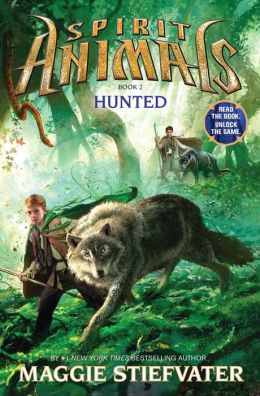
Hunted, by Maggie Stiefvater


Hunted: Spirit Animals Book 2, by Maggie Stiefvater

Genre: Middle School Fantasy / Adventure

Reason for Reading: This is the second book in a so-far excellent series

Synopsis: (May contain slight spoilers for book 1). Conor, Abeke, Meilin, and Rollan hike across Eura on quest to capture the talisman of the Great Boar before the Conquerors get their hands on it. But the Conquerors have a few surprises up their sleeves - they are now able to force an unnatural bond between humans and animals! They now have the advantage of superior numbers of bonded warriors. In order for our heroes to survive, they must learn to trust one another and fight as a team. 

My Thoughts: This was an excellent follow-up to Brandon Mull's Wild Born (reviewed here). The characters are developing - and so is the philosophy. In this book, our heroes struggle with trust. It's a story of strengthening ones bond with friends - how such a bond can never fully be broken, even when trust fails. It's a story about following your heart, even when your heart leads you astray from logic (a fitting theme given my thoughts on doubt last month!) I'm eagerly awaiting the third book in this series, Blood Ties, which comes out in March.

This is my first book by Maggie Stiefvater, and I'm eager to pick up some more now! I like the way this series is designed - with a different author for each book. That way, I am introduced to authors that I might otherwise never gotten around to reading. :)

Friday, January 24, 2014

The Mark of Athena, by Rick Riordan

The Mark of Athena, by Rick Riordan

Genre: Middle School fantasy / adventure

Reason for Reading: This is the third book in a series that I've already started. 

Synopsis: In this third book of the Heroes of Olympus series, 7 heroes - Percy, Hazel, Frank, Jason, Piper, Leo, and Annabeth - set out on a dangerous quest to Rome. The Romans and the Greeks must cooperate if they are to quell the rise of Gaia, but war is brewing between the two camps. Our heroes must try to postpone war while saving Rome from apocalypse-hungry giants and following the Mark of Athena - an ancient clue that only Annabeth can decipher. 


My Thoughts: I'm not a huge fan of Riordan's writing, though I think this series is a heck of a lot better than the Percy Jackson series. While reading this book, I finally figured out what it is about Riordan's writing that bothers me - the audience is too childish. All the adults in these books talk as if they were kids. That grates on me. I guess I prefer kids books where adults sound like adults - even if they sound like silly or disinterested adults (which is often the case in middle school books). Despite my dislike of the style, though, I found this book well-researched and interesting. The plot isn't very complex, but there's a lot of action and some good humor. I'm not rushing to Barnes and Noble to buy a copy of the next book, but I'm planning on reading it "some day." (Which probably means I'll wait until the NEXT book comes out and reminds me that I still haven't read House of Hades...which is what happened with Mark of Athena.) One thoughtful question about this book - and maybe this will be answered in House of Hades - is why did Riordan only write first person narrative from the Greek heroes' points of view? Is he hiding something about the Romans?


Sunday, November 10, 2013

Spirit Animals: Wild Born, by Brandon Mull


Spirit Animals: Wild Born, by Brandon Mull

Genre: Children's Fantasy, appropriate age range 8-10.

Reason for Reading: Brandon Mull is one of my favorite authors, and so of course I had to read this book as soon as it came out. 

Review
In children's eleventh year, they undertake a ceremonial transformation into adults by calling their "spirit animals." Most children fail to call any animal at all, but none in history have ever called one of the Great Beasts. So when four children call the spirits of the four Great Beasts who died years ago in a brutal war to save humanity, the kids are quickly swept up into an adult world of conspiracies and danger. 

This is an adorable first book in a series. It is appropriate, both in maturity and reading level, for an 8-10 year old - and it would be equally enjoyable to boys and girls. The children's adventures are exciting, but not violent or scary. Some interesting questions of ethics are brought up: for instance, should we support the people who have always been in power and who appear to fight for "good," even when they haven't ever helped us? 

I look forward to the rest of the books in the series. 

Thoughts
Although this book was in no way overtly religious, it definitely has the savior vs. super-powerful-creature-of-evil allegory which is common in epic fantasy. I doubt there is any explicit religious intent with this allegory, and I think it's fascinating how this allegory slips into our literature so smoothly. It seems that our minds are programmed to search the world for saviors and for physical manifestations of evil. One could as easily interpret such naturally occurring patterns either as the cause or the effect of religious beliefs. I mean, it's as easy to say that we search for a savior because in our hearts we know He is out there as it is to say that we believe in a Savior because that's the mechanism our brains have developed to cope with life's difficulties. But whichever way you believe (and most people have an opinion on the subject), it is undeniable that we crave such stories. 

Thursday, June 27, 2013

How to Train Your Dragon, Cressida Cowell

How to Train Your Dragon, by Cressida Cowell

Reason for Reading: Trying to keep up with my nephew's reading. :)

Genre: Children's Fantasy

Review
Hiccup Horrendous Haddock, the famous Dragon-whisperer of lore, had to learn about dragons somehow - and this book chronicles his growing pains. He and a team of similarly-aged kids must capture and train baby dragons in order to be accepted into their Viking clans as adults. They face expulsion if they fail! But Hiccup's dragon simply isn't cooperating. First of all, it's tiny and toothless - which is humiliating for the dragon of the son of the Chief. Second, it has an attitude problem: it refuses to be trained. It looks like Hiccup might be expelled from his Viking clan! But then some sea-dragons emerge from the depths of the ocean - and only Hiccup (well, with help from his dragon and his friends) can save his people. 

This was a hilarious book. My nephew, who isn't a fan of reading, just gobbled this one up. He even sounds excited to read the next one. :) There are funny pictures drawn throughout the story, and the narration itself is laugh-out-loud funny it a childish way. I really enjoyed this book. 

I also loved the 2010 movie which was VERY loosely based on the book. The basic setting was the same - a Viking boy named Hiccup must save his clan from destruction at the teeth of hungry dragons - but that's about all that's the same. In the movie, dragons are creatures to be hunted. They aren't kept as pets. Both the book and the movie are very cute and very funny. But in order to enjoy both, you need to be the type of person who is willing to accept that just because the plot is different, doesn't mean the story is bad. (This is difficult for many people to admit!)


Saturday, June 22, 2013

The Stonekeeper's Curse, by Kazu Kibuishi

The Stonekeeper's Curse, by Kazu Kibuishi

Reason for Reading: My nephew loved this series :)

Genre: Children's Fantasy Graphic Novel

Review
In this second book of the widely popular children's graphic novel series Amulet (see the review for the first book here), Emily and Navin's mother is still in a poison-induced coma, and the kids must journey to a dangerous forest to find the cure. They are led by a fox-man Leon Redbeard, who says that it is his job to bring them safely to a lost city of guardians. They are chased by the Elf King's son Trellis, whose loyalties are questionable. This was a cute second book in the series - though the plot is still very childish and light. The kids (especially boys!) love it. :)


Monday, June 3, 2013

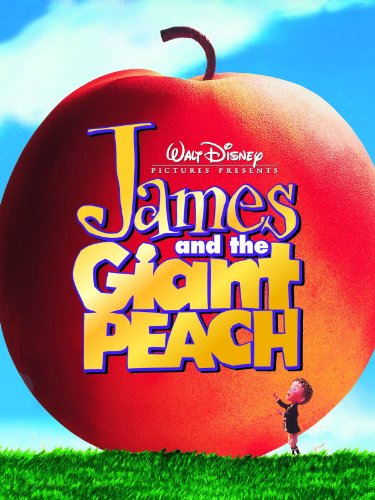
James and the Giant Peach, by Roald Dahl

James and the Giant Peach, by Roald Dahl

Reason for Reading: To keep up with my nephew's book reports

Genre: Children's Adventure / Fantasy

Review
After the tragic death of his parents, James has been living with his horrible neglectful, hateful aunts Sponge and Spiker. One day James is given a magical bag by a mysterious stranger - and in his excitement he trips on the root of a peach tree and dumps all the magic on the tree. Soon a peach larger than a house has grown out of the tree. James crawls into the peach and begins the adventure of a life-time. 

This is another classic kids story that I read as a child and haven't picked up since. I'm glad I had a reason to pick it up again, because it was really funny and silly and it had a lot of nostalgia for me. Dahl has just the right amount of humor and whimsy in his books. :)


After reading the book, my nephew and I watched the 1996 stop-action movie. It was a cute movie that followed the basic story-line well enough. But it was a bit too sentimental and it lacked the dark humor of Roald Dahl's story. Cute for an hour's entertainment, but nothing I'm going to watch again and again. 
 

Saturday, June 1, 2013

Lone Wolf, by Kathryn Lasky

Lone Wolf

Written by Kathryn Lasky, Narrated by Erik Davies

Reason for Reading: I rather liked the Ga'Hoole books, so I thought I'd try this series out, too. 

Genre: Juvenile Fantasy / Anthropomorphism

Review
As an infant cub, Faolin was taken from his mother and abandoned to die. He was found by a bear who nursed him through childhood. Now as a young wolf, Faolin is once again on his own and he must find a way to rejoin his own kind. This was a cute little story, and I enjoyed it. But I don't think I would have enjoyed it half as much if I hadn't read the Ga'Hoole books first. Although the story of Faolin is independent of the three story lines in the Ga'Hoole series, Lasky's world-building in this book was a bit dependent upon the other books. The world would have seemed confusing and frustrating to me if I didn't already know all about it from the Ga'Hoole books. This is why I gave the book only 3.5 stars even though I thought it was really sweet. I will continue with this series myself, but I recommend to all of you - continue with this book if you loved the Ga'Hoole books as I did. But if you haven't read the Ga'Hoole books, start there. :) 

Monday, May 13, 2013

Airman, by Eoin Colfer

Airman, by Eoin Colfer

Reason for Reading: Seemed like a good idea

Genre: YA Steampunk

Review
Conor Broekhart has grown up as the best friend of the princess of the Saltee kingdom (an imaginary kingdom off of Ireland). But when he discovers a conspiracy to kill the king, the real traitor captures him and sends him to a prison camp to mine diamonds in obscurity. Conor must use his genius for flight to escape the prison and rescue the princess. Conor is much like a 19th century steampunk Artemis Fowl. Colfer delivers his usual book - fun, delightful, and humorous. Definitely a treat for fans of non-dystopia non-paranormal-romance YA. (YAY! for something different!) I'd say this book is appropriate for 5th - 8th graders. 

Sunday, May 12, 2013

The Testing, by Joelle Charbonneau

The Testing, by Joelle Charbonneau

Reason for Reading: This book was provided by the publisher through Netgalley in exchange for an honest review. This book will be released in June 2013.

Genre: Young Adult Dystopia

Review
Cia wishes more than anything that she will be chosen for the testing procedure - leading to a university education. But the testing procedure turns out to be more than she'd bargained for. The other kids are literally cut-throat competitors, and the testing officials are cruel and calculating. Will Cia be able to hang on to the person she is and still pass the test? Does she even want to pass the test anymore? What dire consequences really do follow failure?

This book was a fantastic addition to the popular young adult dystopia genre. It took me a little while to get in to the story because there was little to distinguish it from all the other YA dystopias I've read lately, but after about 50 pages I was really sucked in and wanted to know where Charbaonneau was taking the story. I had an inkling what might happen in the end - sort of a "wow, I hope it goes in this direction, because that would make the next two books really interesting." And it DID go in that direction. So, the ending wasn't unpredictable, but it was unique, and I was in suspense for the entire book which way it would go. I hope she really works that aspect in the second and third books. To me, that's the aspect that will make this trilogy stand out from the crowd. Another thing I liked is that although there's potential for a love triangle, that aspect wasn't focused on. As I'm really tired of the triangle, the lack thereof was very refreshing. I hope the trilogy stays that way. The violence might be a bit off-putting to some young readers, but I'd say it's about the same as The Hunger Games - maybe a little less.

Overall, a fun quick read. I hope this trilogy is popular. :)

Wednesday, April 24, 2013

The Stonekeeper, by Kazu Kibuishi

The Stonekeeper (Amulet Book 1), by Kazu Kibuishi

Reason for Reading: Helping my nephew with his book report.

Review
When their father dies, Emily and Navin must move with their mother to a run-down house in the middle of nowhere - an inheritance from a great uncle they've never met. On their first night in the disturbing old house, their mother is  kidnapped by a gigantic squid-thing and the kids must rescue her with the help of a talking amulet that they've found in a dusty room. 

I read this because my nephew really loved it, and he's a very reluctant reader. I can see why he liked it - there's lots of pretty pictures and very few words. It's a book appropriate for middle-graders both in vocabulary and in plot. It was a cute, fast read, and I'm sure I'll read the rest in the series. However, it's not a book that would appeal to me for any other reason than bonding with my nephew. The premise and plot are simply too unsophisticated to be of much interest to most older kids or adults. On the other hand, the book seems to be VERY popular with the younger crowd, and I highly recommend The Stonekeeper for reluctant readers. 

Monday, January 7, 2013

Call It Courage, by Armstrong Sperry

Call It Courage, by Armstrong Sperry

Reason for Reading: This book won the Newbery Medal in 1941. It's been sitting on my shelf for years.

Review
Mafatu is afraid of the ocean because he almost drowned when he was a boy. But in his culture, fear is scorned and laughed at. Mafatu feels that he must redeem his good name and prove that he is not afraid anymore. He climbs in a boat and goes on a voyage, but he soon finds himself shipwrecked on an apparently-deserted island. There, he keeps himself alive by making all of his own tools, weapons, and a new canoe. He battles a tiger shark, an octopus, and a boar. He defies the cannibals when they return to their island. But will he be able to return home? This was a cute book, and I enjoyed the adventure - though it's very short and all the adventure is packed in at a very unrealistic pace. Regardless, I really enjoyed the couple of hours I spent with it. I think a young reader might find this book fun. It's appropriate for someone reading at maybe the 3rd grade level. 

Friday, January 4, 2013

The Last Battle, by C. S. Lewis

The Last Battle, by C. S. Lewis

Reason for reading: This is the seventh (and final) book in the Chronicles of Narnia, which I've been reading in order-of-publication. I plan on rereading them all in chronological order using Planet Narnia: The Seven Heavens in the Imagination of C. S. Lewis, by Michael Ward as a guide.

Review
The final book in The Chronicles of Narnia depicts the apocalypse of Narnia. When a shrewd monkey teams up with Calormen to trick the Narnians into thinking Aslan has returned - and they are his spokespeople - Narnia is cut to ruins. Forests are destroyed, Narnians begin to doubt Aslan, and cities fall to heathen invaders. I'm afraid to say this was my least favorite of the Narnia books (though I still liked it quite well!). Intellectually, I know Lewis had to have an apocalypse - whatever begins must also end - but it was still a bit dreary.  So although I understand why the apocalypse had to come, I still liked the other books so much better. Not only because they were much more cheerful, but also because they had more fun-filled adventure.


However, despite my misgivings about uplifting-yet-dreary endings, I want to address Philip Pullman's opinions about the Narnia series (which I first mentioned in my blog post about The Amber Spyglass). WARNING: This commentary will have spoilers for the Narnia series! In his 1998 article in The Guardian, The Darkside of Narnia, Pullman stated his opinion about the Narnia series: “there is no doubt in my mind that it is one of the most ugly and poisonous things I've ever read.”   Pullman is an atheist, and he believes that the being-dead-in-Heaven-is-better-than-being-alive-on-Earth philosophy is "life-hating." It is unsurprising, therefore, that he feels The Last Battle is "one of the most vile moments in the whole of children's literature." Happily, I disagree with his anger at this belief in Heaven. Even though I found The Last Battle to be a bit dreary, I appreciated the message of love and Heavenly gift that Lewis was portraying.

Pullman continues to say:
But that's par for the course. Death is better than life; boys are better than girls; light-coloured people are better than dark-coloured people; and so on. There is no shortage of such nauseating drivel in Narnia, if you can face it.  
I agree that Narnia conveys some rather sexist and ethnocentric views, but that's what English literature of that period was like. Lewis (and the Narnia books) are a product of their time.

I don't think any of those arguments is strong enough to merit my discussion alone. The reason I felt moved to discuss Pullman's opinions are in this paragraph (which I unfortunately read before completing the series):

And in The Last Battle, notoriously, there's the turning away of Susan from the Stable (which stands for salvation) because "She's interested in nothing nowadays except nylons and lipstick and invitations. She always was a jolly sight too keen on being grown-up." In other words, Susan, like Cinderella, is undergoing a transition from one phase of her life to another. Lewis didn't approve of that. He didn't like women in general, or sexuality at all, at least at the stage in his life when he wrote the Narnia books. He was frightened and appalled at the notion of wanting to grow up. Susan, who did want to grow up, and who might have been the most interesting character in the whole cycle if she'd been allowed to, is a Cinderella in a story where the Ugly Sisters win.  
When I read this paragraph, I wondered what Lewis actually did do with Susan in the book. But when I read the book, I interpreted those events differently than Pullman: Susan wasn't allowed into Heaven at that time. It was made clear that Susan was in one of the silly stages of life, but it was just a stage. She still had a chance to grow out of it. She hadn't been rejected from Heaven permanently, and it wasn't her time to die. Susan lived. And Susan had the ability to change (just as Pullman points out). Lewis wasn't saying that grown-ups can't go to Heaven. After all, the kids' parents went to Heaven, didn't they? Lewis was saying that Susan was in a phase where she idolized material things - and had thus turned away from her spiritual health.

Also, I'm not certain Susan really is the most interesting character. By Pullman's definition (he-who-changes-is-most-interesting) I believe Eustace's character developed much more than Susan's character. Why is Pullman ignoring Eustace?

What do other people think about Susan's character? Do you think Lewis meant for her to be denied Heaven permanently?

Tuesday, December 4, 2012

Crossed, by Ally Condie

2012 Book 164: Crossed

Written by Ally Condie, Narrated by Kate Simses and Jack Riccobono

Reason for Reading: Second book the the Matched trilogy


Review

Cassia has been at a work camp for months now, but she hasn't had the chance to find her lost love, Ky. So, when an opportunity arises for her to be sent "accidentally" to the Outer Provinces she snatches it up. Upon landing in the Outer Provinces, Cassia and her new friend Indie run away from Society, following Ky's path. Meanwhile, Ky has also run away from Society with a couple of new friends. Will they find each other before Society or The Enemy find them? I thought Matched was a cute book - nothing amazing, but not disappointing. Crossed was pretty much the same. This story is more about world building than action or teenanged angst. That makes it unique in the YA dystopia genre right now. I look forward to reading the third, but it's not going to be in my hands tomorrow, by any means. :)


Saturday, November 3, 2012

Harry Potter and the Chamber of Secrets, by J. K. Rowling

2012 Book 152: Harry Potter and the Chamber of Secrets

written by J. K. Rowling, narrated by Jim Dale

Reason for Reading: I'm rereading these books along with Lost Generation Reader. 

My Review*****
Harry hopes his second year at Hogwarts School for Witchcraft and Wizardry will be calmer than last year's. However, even before the school-year begins, Harry meets a house elf who is determined to keep Harry from even STARTING his school year. Harry perseveres, however, and delves into trouble yet again when the Chamber of Secrets is opened and some stealthy beast begins to petrify his classmates. Will Harry and his friends be able to stop the beast before it manages to kill someone? Harry also gets his first taste of xenophobia in the wizarding world, when he learns a new naughty epithet (the m-word). And I bet you'd never guess which bratty little villain uses the word? I'll give a hint. He's blonde. ;)

This second installment of the Harry Potter series is just as delightful as the first. It, like its predecessor, is aimed at the younger end of the YA spectrum, which suits me just fine. The narration by Jim Dale is quite enjoyable--in fact, I liked this narration better than his narration of the Sorcerer's Stone. He's got different voices for each of the characters, and his voice definitely engaged me. 

The entire Harry Potter is a popular book on the "banned and challenged" lists released by the ALA. Personally, I didn't see anything objectionable in this book. Accusations of "satan worship" and "encourages interest in the occult" are silly. There isn't any language or objectionable morals that I can see--other than the fact that Harry, Ron, and Hermione steal, lie, and generally disobey rules. Of course, they do these things with the best intentions, and often because they feel the adults don't listen to them. Also, they don't hurt anyone with their antics (though they certainly endanger themselves). But let's be honest with each other. Would YA books be interesting to ANYBODY if the protagonists were perfect little angels who allowed the adults to take care of all the important stuff? Of course not. 


Thursday, October 11, 2012

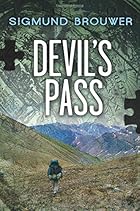
Devil's Pass, by Sigmund Brouwer


2012 Book 145: Devil's Pass, by Sigmund Brouwer

Reason for reading: This book was provided by the publisher through the LibraryThing Early Reviewers program. The thoughts expressed in this review are mine, and I receive no benefit from giving a good review.


My Review:

When 17-year-old Webb's grandfather dies, he leaves a list of seven mysterious tasks to be completed by his seven grandsons. Webb's task is to hike out into the Northwest Territories on a mission to find a buried secret. While on this trip, Webb struggles with his own identity, and the changes he's seen in himself ever since his widowed mother remarried an abusive husband. On this trip, Webb learns a lot about his well-loved grandfather...and a lot about himself. This is part of a series of seven books, about the seven grandsons--each with a task from his deceased grandfather. In order to give each grandson an entirely unique personality, the series was written by seven different authors. This is the only book in the series that I have read. Technically, it's the fifth book in the series, but since the story of each grandson is completely independent of the other books, they can be read in any order. 

I was pleasantly surprised by this little book. Not that I expected bad things from it, but I didn't expect to be caught up in the action. Brouwer has worked in some interesting action scenes right at the beginning of the story, and by the time the action has slowed to a pace more suited for plot and character development, I was already quite interested in the book. I read it in only a couple of sittings. This would be an excellent book for boys in the 5th or 6th grade age range, even though the main character is 17. 


Character Thursday:

Fanda at Fanda Classiclit has organized a weekly blog event in which we can provide a detailed character analysis of a book that we've been reading. I thought I'd try my first character analysis out on Webb. I thought he'd be an interesting character to start with because his identity is developing throughout the story. The following information will contain more details than I usually provide in my review, but I'll try not to include any plot-vital spoilers. 

When Webb was 5th grade-ish, his widowed mother remarried a man who was abusive to Webb, but apparently not to Webb's mother. So Webb was manipulated and threatened into keeping the abuse a secret. Eventually, at maybe 16 or 17, he ended up living on the streets. This is where he was when his grandfather died and the adventure begins.


Because of the abuse in Webb's past, he adopted a protective role for other victims of abuse. At the beginning of the story, he saw a young woman being beaten by her boyfriend, and in order to defend her, he ended up in a fight with this very dangerous man. 


At first blink, you'd see Webb's behavior as "good." He was using his own experience to help a woman in trouble. But soon you find out that as Webb gets angrier and angrier, he loses his logic...he wants to seriously hurt this man. A rational part of his brain says that seriously hurting people in self defense isn't necessary, but that rational part of his brain isn't working once his rage has fired up. So Webb is a protector of the weak, but he's also teetering on the brink of violent, hateful jerk himself. The identity crisis that Webb struggles with throughout the book is where to draw the line between protector and wrathful avenger? 


Webb didn't think that his grandfather knew about Webb's troubles. But his grandfather is more astute than Webb expected. Webb was left with two Nietzsche quotes to ponder during his hiking trip in the Northwest Territories. The first was: That which does not kill us makes us stronger. The second was: He who fights with monsters must take care lest he thereby become a monster. And if you gaze for long into an abyss, the abyss gazes also into you.


Webb had already experienced and accepted the meaning of the first quote. But he was puzzled by the second quote. It made him question what he was becoming...whether he needed to become that...and what the alternatives were. 


Webb's identity crisis was, granted, quite straightforward and clearly-laid-out for the readers. That's because this book was written for 5th graders, who aren't as attuned to subtlety as they will be as adults. I think Webb's identity crisis allows someone of the appropriate reading age to learn something new about how the world affects their personalities...and how their personalities can affect the world. Thus, Web was a fascinating character, and I'm happy I met him. :)


Friday, October 5, 2012

Harry Potter and the Sorcerer's Stone, by J. K. Rowling


2012 Book 142: Harry Potter and the Sorcerer's Stone


Written by J. K. Rowling, Narrated by Jim Dale


Reason for Reading: This is my third book for Book Journey's blog tour for Banned Books Week, and this time I decided to try something familiar. Since Lostgenerationreader is having a Harry Potter readalong, I decided to join in and read the first HP book for Banned Books week. :) This is probably my third time reading this particular book, but it will be my first time reading the series "in one go."


My Review:
Harry Potter has been living with his neglectful and emotionally abusive parents ever since his parents died when he was a baby. But on his 11th birthday, everything changes. He finds out that his parents were a witch and a wizard and that he, himself, has been accepted to Hogwarts, a school for witchcraft and wizardry. He is thrilled to feel comfortable and welcome for the first time in his life, but he soon discovers that not all the teachers at Hogwarts are looking after his best interest. Can Harry and his adventurous friends save the Sorcerer's Stone from being stolen and used for nefarious purposes?


Of course, you all know the answer to that question. If you don't, then you probably aren't interested in the answer and I'm surprised you've gotten this far into my review. Any comments I make about my appreciation for this book will fade in the wake of the raving of others. Therefore, I'll only comment on the Jim Dale narration (which was the narration released in the US, but which is apparently no longer for purchase--I'm not sure if they intend on putting out a different narration? Releasing the Stephen Fry narration in the US would be a kind, generous, and profitable move!) Jim Dale did a pretty good job on the narration--If I didn't already have a very set impression of what all the characters should sound like, then I'd have been much more happy with this rendition. Unfortunately for Dale, however, most anybody who would listen to this audiobook today already has a very set impression of how a centaur should sound and how to pronounce "Voldemort." This isn't Dale's fault, but I suspect his reading has been taken off the market because of these issues. However, I was quite able to ignore this rather amusing issue and enjoy the audiobook. :) I will continue with the rest of the Dale narrations.


My comments on book banning

Harry Potter is #1 Top 100 Banned/Challenged Books: 2000-2009 AND #48 on 100 most frequently challenged books: 1990–1999.  As several people commented, Harry Potter was banned for similar reasons as The Headless Cupid, which was my first Banned Books Week review. Parents are concerned that their (apparently not-very-bright and way-too-malleable) children will be driven to the darkside of the occult and Satan worship by this book. I'm afraid I have to disagree and say "that is hogwash." Harry Potter and the Sorcerer's Stone had a very clear good vs. evil message. Loyalty, bravery, and camaraderie are emphasized as important traits in the characters of Harry Potter. Love stands out as pretty much THE most powerful force of good available to humanity. That seems to be a pretty healthy message, even to a fundamentalist Christian. On the other hand, "doing ANYTHING to succeed in life" is portrayed as an undesirable characteristic. Killing or taking advantage of the innocent is touted as the most sinful act possible. People whose views of good and evil have faded away to "there's-only-the-weak-and-the-powerful" are portrayed as demented. Again, the views of "evil" that are communicated in this book are in fitting with Christian views. This is NOT a morally ambiguous book! So why are the fundamentalists so worried? Just because their kids might use their imaginations a little bit? 


Friday, August 17, 2012

Riptide, By Douglas Preston and Lincoln Child


2012 Book 122: Riptide, by Douglas Preston and Lincoln Child (8/8/2012)

Reason for Reading: It was there 

My Review
Malin Hatch has avoided Ragged Island, Maine ever since he had witnessed a disaster there as a child. But when a treasure hunter finally convinces him that it's time to delve into the mysteries of the Ragged Island Treasure once again, he signs on as the team's physician. The team must wend their way through a booby-trapped tunnel to find the treasure. This book was a quick, light read without much substance. It's much like Douglas and Preston's other adventure novels (and rather like Michael Crichton)--a mixed team of scientists gathers for the "big find" and ends up with more than they bargained for. I felt that the characters made poor decisions throughout the book, but I guess gold has that effect on some people. If you like Preston&Child, you'll probably like this book.

Inheritance, by Christopher Paolini


2012 Book 120: Inheritance, by Christopher Paolini (8/7/2012)

Reason for Reading: Fourth and final book of the Inheritance Cycle

My Review 
I can't claim to actually have READ this book. I only burdened myself with it because I wanted to know how Galbatorix was killed (assuming he was, of course). I read the first 300 pages, skimmed the next 350 pages, and skipped the last 100 pages. :) I got what I wanted out of it, which is the important part. All I can really say to those of you who are interested: Paolini's writing got significantly better in this book. Still not fantastic, but he's got potential. He did a much better job of pacing (though it could have been shorter), and the style flowed better than the last two books--it was less pedantic. If you're a more patient person than me and are interested in how the story ends, I think it's worth a read. :)