Monday, November 12, 2012

Hamlet: Act I, Scene i

BBC's Dramatic Works of Shakespeare Collection
Image taken from Hyperion to a Satyr
Act I Scene i: 

Setting: Sentinels stand on the battlements of the castle

Characters

  • Barnardo, Marcellus, and Francisco of the King's guard. 
  • Horatio, an educated gentleman, skeptical of ghosts, friend of Hamlet

Summary:

Twice recently, Barnardo and Marcellus have had their watch interrupted on the stroke of 1AM by an apparition in the form of the recently deceased King Hamlet. Fearing to speak to the ghost themselves, they had invited the skeptical scholar Horatio. Upon the tolling of the hour, the ghost appears, and Horatio calls out, charging it to speak. But the ghost stalks silently away. Our skeptical scholar (and therefore our audience) is now convinced that the ghost is not a fantasy. Aggrieved, Horatio suggests that the ghost is an ill omen. 

The three men then begin gossiping about an upcoming war, for which the ghost might be a portent. Thus, the audience is educated: Many years before, the late King Hamlet had slain in battle Fortinbras, the King of Norway. King Hamlet had confiscated some treasures and lands in that battle, which were given to young Hamlet upon his father's death. The son of the late King Fortinbras, also named Fortinbras, has decided (after brooding for 30 years) to avenge his father's death and seize the lands back from young Hamlet. He's been gathering a band of misfits to wage war on Denmark. (This band of misfits apparently morphs into a well-organized army by the end of the play...nice to have footnotes to point out all the inconsistencies!) 

Gossip-fest complete, the ghost reappears and Horatio calls out, commanding it to speak. The ghost is about to answer when the cock crows. The ghost starts, and fades away as on a dreadful summons. Horatio decides that perhaps the ghost didn't speak because it wants young Hamlet. The men resolve to tell Hamlet about the ghost.

My thoughts: Suspenseful first scene. I think it's fascinating the way Shakespeare has managed to introduce several very important points into the scene, without distracting from the ghost. We now know that Horatio is a skeptical scholar, that the ghost is likely the spirit of the dead king, and that Denmark is about to be attacked by the vengeful young King of Norway. All that information flowed so smoothly into the dialog that the audience wouldn't even realize they were being educated. I also like the suspense. What does the ghost want to say? We'll have to wait and see.

See all my posts about Hamlet on my Hamlet Master Post.

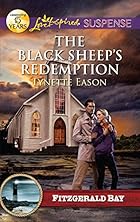
The Black Sheep's Redemption, by Lynette Eason


2012 Book 157: The Black Sheep's Redemption, by Lynette Eason


Reason for Reading: This is one of November's picks for the American Christian Fiction Writers Association online book club. Anyone is welcome to join. Discussions start on the 20th, and this book only takes a couple hours to read.


My Review
In this sweet little Christian romantic suspense from the Harlequin, Charles Fitzgerald has been accused of the murder of his nanny, and the only woman who is willing to replace the nanny is Demi Taylor, a young woman who recently suffered a head wound and can't remember who she is. Fitzgerald's family, who pretty much runs the town, is suspected of hiding evidence on the case. Will they be able to clear his name to everyone's satisfaction? And just who IS Demi, and why does she feel someone is stalking her?

This book is the penultimate book in a romantic suspense series about the Fitzgerald family (who apparently has a very suspenseful and romantically inclined few months during the murder investigation). Although I hadn't read any of the previous books in the series, this book had all of the information needed to understand what was going on. However, there are several loose ends in the book, leaving an opening for us to explore the romantic inclinations of Ryan Fitzgerald AND to discover *dum dum dum* the murderer. (At least I certainly HOPE we discover who the murderer is.) :) I really needed some fluffy reading at the moment that I picked this book up, and this certainly delivered. Light, quick, fun, romantic, and suspenseful. I'm glad I read it, and I'll probably pick up some of the others in the series.

Sunday, November 11, 2012

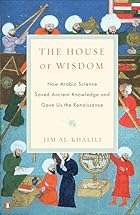
The House of Wisdom, by Jim Al-Khalili

2012 Book 156: The House of Wisdom, by Jim Al-Khalili

Reason for Reading: Science, Religion, and History group read on LibraryThing. 

Review
Many of us were taught that the origins of science were in Ancient Greece but that the Western World fell into the "Dark Ages" where science was lost and no progress was made. This traditional story concludes that the Western world rediscovered the Greek philosophies thus spurring on the Renaissance. A few months ago, I reviewed The Genesis of Science, by James Hannam, which was meant (partly) to dispel our notions of the Middle Ages as a time of darkness, a mire of progress. Hannam then describes how in the early years of the Renaissance, old scientific documents were rediscovered and translated. He only only briefly mentions the fact that those rediscoveries (and the ability to translate them) came from revitalized contact with the Arab world. The House of Wisdom fills that gap, by describing the ways in which the Arab world built upon the science of the Greeks, thus building the foundation for the scientific progress made during the Renaissance. I don't mean to say that Al-Khalili's book is only a gap-filler in the other book, but that the two books complement each other. The weaknesses in each are fortified by the strengths in the other. 

The House of Wisdom is an engrossing description of Ancient Arab history of science. Al-Khalili discusses the development of math, optics, medicine, chemistry, and philosophy by sketching descriptions of major scientific figures and their accomplishments. While Hannam's book tended to have a lot of gossipy digressions about the scholars, Al-Khalili tended to focus on facts that were more to the point. This makes Al-Khalili's book more informative, but less entertaining, than Hannam's book. For relief, All-Khalili inserts little passages about his own experiences in Iraq, which were helpful for lightening the mood. One thing I didn't like about Al-Khalili's book is that he is still stuck on the old-fashioned belief that the Western Middle Ages were dark and progress-free. And neither book covered the development of science in China or India. 

Overall, if you're interested in reading about Arabic science, I think this book is an excellent place to start. :)

Saturday, November 10, 2012

Harry Potter and the Prisoner of Azkaban, by J. K. Rowling

2012 Book 155: Harry Potter and the Prisoner of Azkaban

Written by J. K. Rowling, Narrated by Jim Dale

Reason for Reading: I read this for Lost Generation Reader's Harry Potter Readalong. On which I'm falling catastrophically behind. But at least I'll get some of them read before the end of the readalong.


My Review *****
Harry Potter thinks he's in big trouble when he accidentally blows up his aunt, but luckily for him the powers-that-be are distracted by the shocking escape of Sirius Black from the wizard's prison Azkaban. Black is purported to be "You-Know-Who's biggest supporter." (Though I'm not certain what made everyone decide that Black was the most dedicated supporter, rather than the one who'd made the biggest bang? But let's not question the Rowling.) With the dementors out in force - ready to snatch Black up the moment he rears his unkempt head, Harry, Ron, and Hermione don't have much chance to misbehave. Will they catch Black before Black kills again? I loved this book more this time around than I did the first time. (Mainly because I have a fondness for the entire story now, whereas when I read it, I was just continuing a series that I'd started.) I DID notice, however, a few snafus that made me chuckle. Just little inconsistencies here and there. I didn't notice anything like that in the first two books. Usually I ignore little inconsistencies in YA lit, but these surprised me because I'd always thought Rowling had done an amazing job tying up all the loose ends. I suppose inconsistencies are almost impossible to avoid this TIME around though. ;) I remember reading some comments a while back that said that Rowling's writing developed from a bit amateurish to more skilled as the series progressed. Now I see what they mean. I'll keep an eye out for loopholes in the future, now that I know she has them. :p I'm curious if she gets a lot better at avoiding them in the later books. Overall, though, excellent stuff. I'm enjoying Dale's narrations more and more now that I'm getting used to his style. 


Thursday, November 8, 2012

Shakespeare's Hamlet - Notes on Introduction by Harold Jenkins


I'm reading the Arden Shakespeare version of Hamlet, edited by Harold Jenkins. Harold Jenkins' Introduction had a LOT of information, and I highly recommend it to someone who's serious about reading this play. Jenkins started by discussing the date of original release. Apparently there is some controversy among scholars about when the play first came out. There's about 2-3 years wiggle room of uncertainty. Apparently, this is an important question since there is a play that was released around the same time called Antonio's Revenge. Either Hamlet or Antonio's Revenge was plagiarized. We're talking the plot, the circumstances, and some of the dialog--all copied. Jenkins comes to the conclusion from his three-paged discussion about dates that Hamlet was released first. Originally, it was generally accepted that Antonio's Revenge was released first and that it was used as "source material" for Hamlet. I wasn't entirely convinced by Jenkins' argument, and am not certain whether most scholars today agree with him or accept the original conclusions that Hamlet was the later play (though I suspect the former). After so much time has passed, and considering that plagiarism wasn't as big a deal in the 16th century as it is now, I hesitate to give Shakespeare all the credit simply because he's Shakespeare. However, Jenkins did provide one argument that I found convincing. Shakespeare was basing his play on a well-known Danish tale. He shouldn't have had any use for an unrelated secondary source like Antonio's Revenge. On the other hand, Marston would have been searching for ideas for a sequel to his earlier play, Antonio and Mellida, and would have had more need for source material.

Jenkins then spends a good deal of space discussing the publication of Hamlet and the differences between existing manuscripts. I skipped that section, but it certainly contained a good deal of information that a serious scholar would find interesting.

The sources of Shakespeare's Hamlet are then discussed. Apparently, it is generally accepted that the major source of Shakespeare's Hamlet was a contemporary play dubbed by today's scholars as Ur-Hamlet. This play was never printed, so we can't compare it to Shakespeare's work, but Shakespeare would certainly have been familiar with the play since it was put out by his own company. The story that we now call Hamlet was first published in Saxo's Historiae Danicae, written at the end of the twelfth century and published in 1514. The story was then retold by the Frenchman Belleforest--translations (or the original French version) were probably what the author of Ur-Hamlet used when writing his play. It is clear that Belleforest was the source material, rather than Saxo's original work, because that Belleforest introduced some dramatic elements to the story which were present in Hamlet. For instance, the adultery of Amleth's mother was Belleforest's idea. Although it is clear that Belleforest is the source of Hamlet, it is unclear whether Shakespeare read Belleforest himself, or simply inherited the allusions from Ur-Hamlet


There were, of course, elements in Hamlet that were not evident in Belleforest's work. For instance, the complexity of Hamlet's character was Shakespeare's doing. Also, the ghost of Hamlet's father is only hinted at in Belleforest. During the revenge scene in his tale, Belleforest made passing reference to the shade of Amleth's father--that it may now rest in peace. The leap between a metaphorical shade and a full-fledged haunting was made somewhere between Belleforest and Shakespeare. Jenkins' introduction contains a lot more information about the little differences between Belleforest and Shakespeare with some speculation about Ur-Hamlet, but I'll leave all of that unsummarized so you have a reason to read the Introduction yourself. ;)

Finally, the Introduction ends with a critical analysis of Hamlet. It has been so long since I've read Hamlet, that I feel I need to go back and read this critical analysis after re-reading the play. I'll post more detailed comments on it later. The only thing that really jumped out at me during this first perusal of Jenkins' critique is that he believes that Ophelia died a virgin. I'd always heard that Ophelia and Hamlet had had relations at some point before the action commenced. The difference between these two interpretations changes Ophelia's character immensely. I'll read very carefully this time and come to my own conclusions.

Another thing that struck me while I was reading the introduction (though it wasn't directly discussed by Jenkins) is that when I first read Hamlet as a teen, I never questioned the reason why people considered the relationship between Gertrude and Claudius to be incestuous. But now I wonder. Why is it incestuous to marry your brother's widow?


This subject also came up in Wolf Hall, by Hilary Mantel. There was much discussion about Henry VIII's relationship with Catherine being incestuous because Catherine MIGHT have consummated her marriage to Henry's brother Prince Arthur. I don't recall which Bible passages were quoted in those discussions, but I remember thinking it odd that such a marriage would be considered incestuous. 

I wondered at what point did it become incestuous in Christian culture for a man to marry his brother's widow? If I recall correctly the Hebrew Bible says that thou shalt not have relations with the wife of your father, but thou must marry the widow of thy brother. Well. Maybe it was phrased differently...but I'm pretty sure that was the general idea. I don't recall anything in the New Testament saying that a man shouldn't marry his brother's widow, so where did this idea of incestuousness come from? 

I asked this question on my LibraryThing thread, and my father came up with this answer: 

Complex subject. First off, reference Leviticus 25:5


"If brethren dwell together, and one of them die, and have no child, the wife of the dead shall not marry without unto a stranger: her husband's brother shall go in unto her, and take her to him to wife, and perform the duty of an husband's brother unto her.


The duty of a surviving brother to carry on his brother's family was very important--but the issue would be his late brother's child and not his own. Thus the story of Onan in Genesis 36. Onan went to Tamar, the late Er's wife. But he withdrew early and "cast his seed upon the ground." For that, Yahweh decreed capital punishment, so Onan died as well. But the brother did not strictly marry his sister-in-law. He just got her pregnant, and it was known as a Levirate marriage. Many readers considered Onan's crime as masturbation (aka Onanism) and considered masturbation a serious sin for centuries.


As to marriage to a mother-in-law, sister-in-law, etc., these people were considered part of a household, especially if they lived in the same manor. Marriages to such always had overtones of incest, but such overtones were easily overridden among the aristocracy. But then as now, there were strict conservatives, many who held places in the hierarchy who pronounced dire consequences for everyone who did not follow the conservatives' conscience. Especially if the conservative was opposed to the marriage for politiical or economic (his own economy) reasons. Monks and priests who vowed celibacy (whether they kept their vows or now) tended to look down their Pecksniffian noses at people who did not remain celibate. 
I also wonder (maybe there are some Shakespeare scholars reading this?)...if Shakespeare had strong feelings about the incestuous nature of marrying your brother's widow, does that imply that he questioned the legitimacy of his king, James I, who was grandson to Henry VIII's "incestuous" marriage to Catherine?


Things that make you go "hmmmm."

Edited to add that Alex (in comments below) has pointed out that James I was not the grandson of Henry VIII. That just shows you what I know.

Shakespeare's Hamlet: Master Post


I am reading Shakespeare's Hamlet. I've read this play twice before, but never as an adult. I imagine my understanding of the play will be VERY different this time around. In addition to reading the play, I'm going to watch some movies, read critiques, and try out a couple of re-tellings. Not all of this will happen in only one month's time, so I will be making several posts over the next year. I will keep updating this master post each time I do so that everyone can keep track of my posts. :)

Notes on Introduction by Harold Jenkins
Act I, Scene i
Act I, Scenes ii - v
Act II
Act III


The Social Conquest of Earth, by Edward O. Wilson

2012 Book 154: The Social Conquest of Earth

Written by Edward O. Wilson, Narrated by Jonathan Hogan

Reason for Reading: Group read in our LibraryThing "Science, Religion, History" group


Review 
In The Social Conquest of Earth, Wilson expounds upon the theories that were set forth in his classic work Sociobiology. His main thesis is that group selection, not kin selection, drove evolution and helped us to develop societies. He compares the way human society developed to the way ant "society" developed (ants are his specialty). He suggests reasons why religion and xenophobia would have originally developed as protective characteristics of groups. This book covers a large swath of material...from ants to human prehistory, to history, to today. I think he did a pretty good job organizing the book considering what a wide topic he was covering. His theories were clear and for the most part convincing. I think Wilson is an atheist, but he did a pretty good job of stating his opinions in an agnostic sort of way to avoid insulting the faithful. The only statement that rather jarred me was when he suggested that there surely exist better ways to find spiritual fulfillment than total submission to God. This statement jarred me because it seemed he was saying that this religious process developed for a reason, but that reason is now obsolete. However, in an earlier chapter, he pointed out that homosexuality developed for a reason, so homophobia is not helpful to society. I wholeheartedly agree with him that homophobia is hateful and ignorant. But it is not particularly scientific to say homosexuality developed for a reason, therefore it's good...religion developed for a reason, but it's obsolete now. What are his reasons for deciding one is good and the other is obsolete? His reasons are emotional rather than scientific. But I'm just being nitpicky here. I think the book was well-written, interesting, and approachable by a non-scientific audience. I had no issues with Hogan's narration--he read the book well, but it wasn't anything worth raving about.