Showing posts with label Evolution. Show all posts

Thursday, November 8, 2012

The Social Conquest of Earth, by Edward O. Wilson

2012 Book 154: The Social Conquest of Earth

Written by Edward O. Wilson, Narrated by Jonathan Hogan

Reason for Reading: Group read in our LibraryThing "Science, Religion, History" group. 


Review 
In The Social Conquest of Earth, Wilson expounds upon the theories that were set forth in his classic work Sociobiology. His main thesis is that group selection, not kin selection, drove evolution and helped us to develop societies. He compares the way human society developed to the way ant "society" developed (ants are his specialty). He suggests reasons why religion and xenophobia would have originally developed as protective characteristics of groups. This book covers a large swath of material...from ants to human prehistory, to history, to today. I think he did a pretty good job organizing the book considering what a wide topic he was covering. His theories were clear and for the most part convincing. I think Wilson is an atheist, but he did a pretty good job of stating his opinions in an agnostic sort of way to avoid insulting the faithful. The only statement that rather jarred me was when he suggested that there surely exist better ways to find spiritual fulfillment than total submission to God. This statement jarred me because it seemed he was saying that this religious process developed for a reason, but that reason is now obsolete. However, in an earlier chapter, he pointed out that homosexuality developed for a reason, so homophobia is not helpful to society. I wholeheartedly agree with him that homophobia is hateful and ignorant. But it is not particularly scientific to say homosexuality developed for a reason, therefore it's good...religion developed for a reason, but it's obsolete now. What are his reasons for deciding one is good and the other is obsolete? His reasons are emotional rather than scientific. But I'm just being nitpicky here. I think the book was well-written, interesting, and approachable by a non-scientific audience. I had no issues with Hogan's narration--he read the book well, but it wasn't anything worth raving about.

Saturday, September 8, 2012

Creationism: A Worldwide Phenomenon?

I was rather shocked today to see this in my Scientific American newsfeed: Science and Archaeopteryx Overcome Creationism in South Korea, by Soo Bin Park (reprinted from a Nature publication). I had no clue classroom rejection of evolution in favor of creationism is a world-wide phenomenon! I figured it was something that stubborn ultra-Christians clung to only in the US. I suppose that's just my Americentric mind at work again. I wonder how wide-spread this problem is?

This issue reminds me of a forum conversation that's been going on at my favorite book-social-network LibraryThing. We've been discussing the movement of some parents to decline immunization for their children--for fear of unproven (and unlikely) threats like the autism-due-to-vaccination scare. These parents fail to appreciate the pain and suffering and endless fear of their parents' parents during epidemics such as for polio in the early 20th century. Out of sight, out of mind, as it were! By not vaccinating their children, these people are not only risking the health of their own children, they're risking the health of others' children AND the health of our already-fragile medical system here in the US. 

Furthermore, there is a discouraging trend in the US for ultra-conservatives to take an anti-science stance. They want our kids to be world leaders in the classroom, but they also want them to be taught that evolution and global warming are "just theories" for which there is scanty evidence. Furthermore, they often approve of huge funding cuts for scientific research. Although I've posted a couple of times about studies where I asked "really? my tax dollars paid for that?!" I think funding for scientific research is an investment that the US needs to make if we want to continue as a world power. If we don't stoke the fire, it's going to die. I have personally witnessed the changes that have occurred in academia due to the funding lapses during the Bush administration, and the temporary relief that the Obama administration provided. Unfortunately, this relief came too late and academic (rather than for-profit) scientific research is on the decline. It's harder and harder for professors to get tenure, so more and more of them enter "industry," where the "evil" drug companies take over their souls. ;) 

I don't know what the right solution is, but we mustn't let academic science research go on a decline. We must nip the anti-science movement in the bud before it impacts our global position (and the quality of our health system) irrevocably. 

I am also reminded of this article in the Scientific American newsfeed: Obama and Romney Tackle 14 Top Science Questions. Romney isn't as supportive of science as I'd wish, but at least he's not leaning too far in the anti-science direction. There's a (very small) blessing. I DID get a chuckle about how Romney made almost all of his answers about how Obama is a failure, whereas Obama actually focused on the questions at hand. 

Monday, June 25, 2012

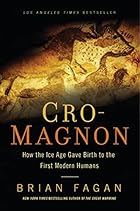
Cro-Magnon, Brian Fagan


2012 Book 93: Cro-Magnon, by Brian Fagan (6/24/2012)

Categories: Science

Reason for Reading: Interest in the evolution of humans

My Review 4/5 stars
Cro-Magnon, by Brian Fagan introduces what is currently known (and speculated) about Cro-Magnons and Neanderthals. Fagan spices up his narrative with imaginative vignettes of Neanderthals and Cro-Magnons as they may have lived. I imagine such vignettes would appeal to most everyone in the general public, including teens, though they may be a little irritating to a hard-core scientist who isn't interested in imaginative speculation (just a guess...I loved them!). Another excellent feature of this book is that it has incorporated historic scientific discoveries about prehistoric peoples with modern science like mitochondrial DNA tracing. Again, this feature would be of interest to most of the general public, but isn't meant for experts--there are a lot of simplifications for the sake of clarity. I think this book is an excellent introduction to prehistoric peoples that could be enjoyed by both adults and teens (even precocious pre-teens).

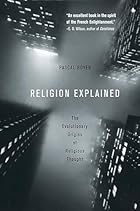
Religion Explained, by Pascal Boyer


2012 Book 92: Religion Explained, by Pascal Boyer (6/24/2012)

Categories: Other

Reason for Reading: Science, Religion, and History group read with the 75ers

My Review 2/5 stars
The intent of this book is to use anthropology and cognitive science to "explain" why religious beliefs developed (and are still common) in humans. I started reading this book with the expectation that it was intended as popular science; but it assumed that the reader already had a background in anthropology and cognitive science. Boyer made his explanations using terminology that was unnecessarily complex; and although the meaning could be discerned from the context, it made the narrative into very heavy reading. Furthermore, he made many bold statements without providing evidence, possibly because he figured his readers had a background in this area and knew where he was coming from. The examples he did provide often fell short for me as a scientist--I felt there were too many obvious loopholes to the experiments described, and it was unclear whether these loopholes were addressed. Overall, I think this book may be interesting to someone who has already read a lot of literature in this field, but I wouldn't recommend it to someone with a casual interest, nor as introductory material.

Tuesday, May 1, 2012

Calculating God, by Robert J. Sawyer


2012 Book 18: Calculating God, by Robert J. Sawyer (1/29/2012)

An alien lands in Toronto with hopes of studying the ROM’s fossil collection; meanwhile she provides “scientific evidence” for the existence of God. This book had a good idea with poor execution. Sawyer completely ignored the “show-don’t-tell” rule of novel-writing. The book is a clod of sci-religious dialog decorated with a thin veneer of plot. The scientific evidence consisted of debates about: 1)What are the odds? and 2) Where did altruistic behavior come from? Neither argument is fresh, but it’s interesting to have it all thrown into the mouth of an alien (who is also using facts that only the fictional aliens know to support her pro-God arguments). The second argument falls flat since cooperative behavior (i.e. “altruism” as Sawyer was defining it) has evolved in more than just humans. Also, Sawyer adds a short punt about abortion. Although I completely agree with his point of view, I don’t read novels to get a lecture on these views. SHOW-don’t-tell!!!! On the other hand, this book won the Audie award, which means it had a fantastic performance—which I enjoyed on a long car trip I just took. That made the book worth it for me. 3/5 stars

Lizzie Bright and the Buckminster Boy, by Gary D. Schmidt


2012 Book 2:Lizzie Bright and the Buckminster Boy, by Gary D. Schmidt (1/3/2012)

Lizzie Bright and the Buckminster Boy is a children’s historical novel about a minister’s son who must confront narrow-mindedness in the townspeople and even his own father when his family moves to a small town in Maine. This book gives a “realistic” look at how blinded people can be by their own prejudices. I listened to it as an audiobook, and found myself in the awkward position of tearing up in public while I was listening to it on a walk. Luckily I pretended it was the sharp winter air that was giving me the sniffles. This book’s reading level is appropriate for perhaps 5th graders, but the content is a bit mature. I hated depressing books when I was that age! I gave this book 3.5/5 stars (it lost half a star for making me cry!)