Thursday, January 10, 2013

Hamlet, Act III


Act III is the pivotal act in Hamlet. The Prince had been dragging his feet for months trying to force himself to avenge his father's death. At one time, he'd be certain that the ghost was truly the restless spirit of his father seeking revenge; another time he'd fret that the ghost may be a demon sent to tempt the Prince into a fatal and condemning act. In scene i, he had his famous "get thee to a nunnery" fight with Ophelia. Frustrated with his own impotence, he extended the blame of his mother's inconstancy to all women. Maddened at the thought of Ophelia's future marriage to someone else; maddened at what he saw as her certain inconstancy in the future, he demanded that she commit herself to a convent. His interaction with Ophelia was observed by Polonius and Claudius, who decided that he was dangerously addled and must be sent away to England (presumably with hopes that the distraction would clear his mind). 

In scene ii Hamlet made pointed remarks during a play, hoping to draw out Claudius' guilty response. Hamlet succeeded in drawing out Claudius, who angrily retorted at the content of the play and stomped out of the room. In the immediate rush of  fear at Hamlet's knowledge, Claudius suddenly felt his own guilt. He regreted killing his brother - not because it was a treacherous act in itself, but because he had been found out and might suffer consequences. He knelt down and prayed that God help him; he asked forgiveness while simultaneously acknowledging that he's not really sorry that he got the Crown and the Queen, but he was very sorry that Hamlet found out about the murder. The Prince discovered Claudius praying and at first set his mind upon killing the King here (when the royal back is turned). But then Hamlet worried: if he killed Claudius now, while praying, the King's soul would be clean and he would be dispatched to heaven. Hamlet wanted Claudius to be damned, like the late King Hamlet. The prince decided to wait.

In the final scene, Hamlet was summoned to the Queen's chambers, where she tried to talk sense into him. There, Hamlet swelled again into his accusatory rage at the inconstancy of women. Polonius, who had hidden himself behind the curtains upon Hamlet's entry, thought to rescue the Queen from her raving son - but when he called out, the infuriated prince stabbed at the curtains and slayed Polonius. With this act, Hamlet's path of revenge was cemented. He had killed once, he had no choice but to continue with his revenge quickly or fail entirely. Shakespeare punctuated this pivotal act with the ghost of dead King Hamlet - who only the prince can see. Prince Hamlet's shock at the escalation of events and the sudden appearance of the ghost muddled his already maddened state, and he ranted wildly while the terrified Queen tried to calm him. The act ends with Hamlet lugging the body of Polonius off stage.

(TO SEE MORE ABOUT HAMLET GO TO MY MASTER POST)

Hamlet and Ophelia
Hamlet (1996)
Directed by Kenneth Branagh
Act III, Scene i: The King and Polonius decided to observe Hamlet as he interacted with Ophelia. They told Ophelia to linger where she was sure to meet Hamlet, and the two men hid. Before noticing Ophelia, Hamlet was deep in his own meditations. To be or not to be? Apparently, Hamlet was considering suicide. Did he know the King was watching? Or was his doubt genuine? There is no indication that he knew the King was near. Personally, I think Hamlet was genuinely considering suicide. He'd experienced some terrible blows in the last few months - his father died unexpectedly, his mother married her brother-in-law, and Hamlet was being haunted by the ghost of his father who was making shocking demands of the Prince. Hamlet was tortured by a feeling of failure that he hadn't avenged his father, stress at the idea of killing the King, and doubt about the nature and intentions of the ghost. That's enough to make any sane person consider suicide. The sudden appearance of Ophelia reminded him of yet another failure in his life. 

Like Claudius and Polonius, I observed Hamlet very closely in this scene because I wanted to consider the age-old question: was Hamlet mad or was he faking it? I saw no signs of actual insanity, despite Hamlet's nonsensical word-play and his irrational anger at Ophelia. He seemed genuinely enraged at Ophelia's perceived inconstancy, and he blamed her for future inconstancies which she had not yet committed; but sane lovers can also be irrational in this way. 

Another question I pondered during this scene was whether Hamlet meant to imply that Ophelia wasn't a virgin (since Harold Jenkins, the editor of my edition, claims that there is no evidence that Ophelia and Hamlet had any pre-action action). And, frankly, I have to agree with Jenkins. There is a lot of double-meaning innuendo during this scene (and the next), but that doesn't prove that they'd been together. Men are quite capable of innuendo in the company of maidens. That proves nothing in itself. So I leave that one open to interpretation.


The Play
Hamlet (2009) Royal Shakespeare Company
Directed by Gregory Doran
Act III, Scene ii: In this scene, the troupe of traveling actors put on a play which closely resembled the murder of King Hamlet. The Prince made continual jibes and probes at the King until Claudius angrily announced that he'd had enough and stomped out of the room - which was exactly the guilty reaction that Hamlet was hoping for. Now Hamlet could avenge his father's death with confidence that Claudius is guilty.

This scene is scrutinized closely by critics. The play began with a dumbshow which silently portrayed the murder - but Claudius apparently didn't respond to this dumbshow. The King only responded upon seeing the murder in the spoken play. Critics ask the question: did the King see the dumbshow? Why wasn't he offended by it? Why did he wait until the second enactment of murder before retorting? Some directors believe that Claudius didn't see the dumbshow. They have him turned away from it, chatting with a neighbor. Others believe that Claudius saw the dumbshow, and silently blanched, but wasn't truly provoked until Hamlet's comments during the second enactment. Harold Jenkins (forever the literalist) believes that neither of these two things happened, because otherwise it would have been mentioned in the stage directions. :) A sophisticated connoisseur of Hamlet apparently watches Claudius during this scene in hopes of determining which interpretation the director has chosen.


Hamlet almost kills Claudius
Hamlet (2009) Royal Shakespeare Company
Directed by Gregory Doran
Act III, Scene iii: Shocked by the realization that Hamlet knew Claudius' guilt, the King prayed for help from God. Hamlet discovered Claudius praying, and almost killed him there...but then decided that if he killed Claudius when his soul was cleansed by prayer, Claudius would achieve salvation. Hamlet wanted Claudius to be damned, so he waited a better opportunity for revenge.

The question I asked while reading this scene: Was Hamlet just procrastinating, or did he really not kill Claudius in prayer because he wanted to damn Claudius' soul? Personally, I think he was procrastinating. He had resolved that he must kill Claudius, but he didn't have the nerve to do it in cold blood. 

Hamlet in the Queen's Closet
Hamlet (2009) Royal Shakespeare Company
Directed by Gregory Doran


Act III, Scene iv: Hamlet ranted at the Queen in her chambers. Polonius, hidden behind the curtains, moved to assist the Queen, and Hamlet stabbed him. Hamlet seemed rather surprised to discover that he'd killed Polonius. What did he expect? That the King was hidden behind the curtains? Personally, I think he wasn't thinking. He had worked himself up into a frenzy talking to the guilty Queen, and was surprised by Polonius' sudden call. He stabbed the curtain, not knowing what lay behind it, and only afterwards asked "Is it the King?" His confusion at finally having spilled blood - though the wrong person's blood - was compounded by the sudden appearance of the ghost. This is the first scene where Hamlet truly appeared, to me, to have lost his wits. He was acting violently without thought of consequence or purpose. His speech was confused. He was utterly out of his depth. 

Wednesday, January 9, 2013

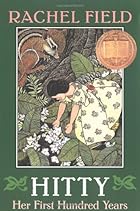
Hitty: Her First Hundred Years, by Rachel Field

Hitty: Her First Hundred Years, by Rachel Field

Reason for Reading: This book won the Newbery Medal in 1930 and has been sitting on my shelf for years. 

Review
While sitting idly one evening in her antique shop, Hitty, a 6-inch-long doll carved out of Mountain Ash wood, decides to write her memoirs. She begins her narration with her birth into the brave new world of 1830's Maine. Her little girl drags her on many adventures beginning first with their village and ending in a far-off land...where she finds a new owner. Follow Hitty's adventures over a hundred years as she changes hands and lands and occupations. This is an adorable little classic of historical fiction for 8-9 year-old girls. The story is sweet and generally easy to read (though some of the historical references went over my head, and the book succumbed to the racial stereotyping common for books written around the turn of the century). I'm glad I finally picked this one up. 

Monday, January 7, 2013

Call It Courage, by Armstrong Sperry

Call It Courage, by Armstrong Sperry

Reason for Reading: This book won the Newbery Medal in 1941. It's been sitting on my shelf for years.

Review
Mafatu is afraid of the ocean because he almost drowned when he was a boy. But in his culture, fear is scorned and laughed at. Mafatu feels that he must redeem his good name and prove that he is not afraid anymore. He climbs in a boat and goes on a voyage, but he soon finds himself shipwrecked on an apparently-deserted island. There, he keeps himself alive by making all of his own tools, weapons, and a new canoe. He battles a tiger shark, an octopus, and a boar. He defies the cannibals when they return to their island. But will he be able to return home? This was a cute book, and I enjoyed the adventure - though it's very short and all the adventure is packed in at a very unrealistic pace. Regardless, I really enjoyed the couple of hours I spent with it. I think a young reader might find this book fun. It's appropriate for someone reading at maybe the 3rd grade level. 

Saturday, January 5, 2013

The Hour Between Dog and Wolf, by John Coates

The Hour Between Dog and Wolf: Risk Taking, Gut Feelings, and the Biology of Boom and Bust

Written by John Coates, Narrated by Paul Michael Garcia

Reason for Reading: This book was shortlisted for the Wellcome Trust Book Prize. 

Review
In this Wellcome Trust shortlisted book, Coates describes his research into the feedback loop between testosterone and success in the financial market. When a person has high levels of testosterone, they are prone to risk taking - which generally promotes the market; however, success raises their testosterone levels, which increases their risks and creates bubbles (like the dot-com bubble) which are unnatural and eventually pop. Loss of money leads to decreased testosterone levels and release of stress hormones - which, if sustained for long periods of time can lead to a depressed, risk-averse market. This is when the government should step in and perk up the market themselves. (You can probably guess Coates' politics from that statement, but the book is generally apolitical.)

I found Coates' research quite fascinating, and his writing was engaging to someone who's interested in the topic. I, unfortunately, am not generally interested in finance and so my attention wavered a bit during the finance-heavy bits. But the book was written in an approachable way such that I (who know nothing of the matter) could understand the financial/market bits and that someone who knows very little medicine could understand the science bits. In fact, it was shortlisted for the Wellcome Trust Book Prize because because it makes medicine approachable to the general population. For anyone interested in how hormones/neuroscience/psychology can affect the market, this would be an excellent book to pick up. An easy and interesting read. 

Friday, January 4, 2013

The Last Battle, by C. S. Lewis

The Last Battle, by C. S. Lewis

Reason for reading: This is the seventh (and final) book in the Chronicles of Narnia, which I've been reading in order-of-publication. I plan on rereading them all in chronological order using Planet Narnia: The Seven Heavens in the Imagination of C. S. Lewis, by Michael Ward as a guide.

Review
The final book in The Chronicles of Narnia depicts the apocalypse of Narnia. When a shrewd monkey teams up with Calormen to trick the Narnians into thinking Aslan has returned - and they are his spokespeople - Narnia is cut to ruins. Forests are destroyed, Narnians begin to doubt Aslan, and cities fall to heathen invaders. I'm afraid to say this was my least favorite of the Narnia books (though I still liked it quite well!). Intellectually, I know Lewis had to have an apocalypse - whatever begins must also end - but it was still a bit dreary.  So although I understand why the apocalypse had to come, I still liked the other books so much better. Not only because they were much more cheerful, but also because they had more fun-filled adventure.


However, despite my misgivings about uplifting-yet-dreary endings, I want to address Philip Pullman's opinions about the Narnia series (which I first mentioned in my blog post about The Amber Spyglass). WARNING: This commentary will have spoilers for the Narnia series! In his 1998 article in The Guardian, The Darkside of Narnia, Pullman stated his opinion about the Narnia series: “there is no doubt in my mind that it is one of the most ugly and poisonous things I've ever read.”   Pullman is an atheist, and he believes that the being-dead-in-Heaven-is-better-than-being-alive-on-Earth philosophy is "life-hating." It is unsurprising, therefore, that he feels The Last Battle is "one of the most vile moments in the whole of children's literature." Happily, I disagree with his anger at this belief in Heaven. Even though I found The Last Battle to be a bit dreary, I appreciated the message of love and Heavenly gift that Lewis was portraying.

Pullman continues to say:
But that's par for the course. Death is better than life; boys are better than girls; light-coloured people are better than dark-coloured people; and so on. There is no shortage of such nauseating drivel in Narnia, if you can face it.  
I agree that Narnia conveys some rather sexist and ethnocentric views, but that's what English literature of that period was like. Lewis (and the Narnia books) are a product of their time.

I don't think any of those arguments is strong enough to merit my discussion alone. The reason I felt moved to discuss Pullman's opinions are in this paragraph (which I unfortunately read before completing the series):

And in The Last Battle, notoriously, there's the turning away of Susan from the Stable (which stands for salvation) because "She's interested in nothing nowadays except nylons and lipstick and invitations. She always was a jolly sight too keen on being grown-up." In other words, Susan, like Cinderella, is undergoing a transition from one phase of her life to another. Lewis didn't approve of that. He didn't like women in general, or sexuality at all, at least at the stage in his life when he wrote the Narnia books. He was frightened and appalled at the notion of wanting to grow up. Susan, who did want to grow up, and who might have been the most interesting character in the whole cycle if she'd been allowed to, is a Cinderella in a story where the Ugly Sisters win.  
When I read this paragraph, I wondered what Lewis actually did do with Susan in the book. But when I read the book, I interpreted those events differently than Pullman: Susan wasn't allowed into Heaven at that time. It was made clear that Susan was in one of the silly stages of life, but it was just a stage. She still had a chance to grow out of it. She hadn't been rejected from Heaven permanently, and it wasn't her time to die. Susan lived. And Susan had the ability to change (just as Pullman points out). Lewis wasn't saying that grown-ups can't go to Heaven. After all, the kids' parents went to Heaven, didn't they? Lewis was saying that Susan was in a phase where she idolized material things - and had thus turned away from her spiritual health.

Also, I'm not certain Susan really is the most interesting character. By Pullman's definition (he-who-changes-is-most-interesting) I believe Eustace's character developed much more than Susan's character. Why is Pullman ignoring Eustace?

What do other people think about Susan's character? Do you think Lewis meant for her to be denied Heaven permanently?

Thursday, January 3, 2013

Losing Christina: Fog, by Caroline B. Cooney

Losing Christina: Fog, by Caroline B. Cooney

Reason for Reading: I had hit a reading slump and wanted to perk myself up by reading something "exciting." I was browsing through the ebooks at my library, and found this. I remembered how much I loved it when I was a child and thought "I wonder how bad it could be?" So I borrowed it. :) I'm rather glad I did!

Review
Christina is excited because this year she is 13 and she gets to leave the island she grew up on and attend junior high on the mainland in Maine. Despite her excitement, she is torn by worry about whether she'll be bullied by the mainland kids, who think islanders are stupid and poor. But those worries soon take second place when she realizes that the owners of the bed and breakfast where she and her islander friends lodge are using psychological torment to suck the souls out of girls. She's terrified as she watches the beautiful and brilliant senior Anya fade away. And soon the psychopaths are after her own mind. 

When I was pre-junior high I used to gobble up these Point Horror books like a turkey dinner. (haha. ok, I know that wasn't funny. Just work with it.) There are very few of those books that I actually remember liking though. This is one that has really stuck with me through the years. When I found it in the library recently I thought: "I wonder..." And I'm glad I did, because I found this book terrifying. When I was a teenager, I think I found the spooky psychological aspects of going insane scary. Now, the book is even more terrifying, but for a different reason. Those psychopath adults who have FULL control over those poor children were horrible! They were charming, and fantastic liars, and those kids' parents weren't around to see what was going on. They just believed whatever the adults told them rather than believing their own children. And the things those psychopaths said to the kids! Ohhhhh shudder. Yes, the book lacked subtlety. But the fact that it terrified me even now gets it four stars in my blog! My only complaint (besides the lack of subtlety - which is really due to its target audience) is that it ended in a cliffhanger. This is a trilogy of short books. It really should be one longer book. Even combined, I think the book would still be reasonably short. But it WAS Point Horror, after all. They had to be short.

Tuesday, January 1, 2013

The Magician's Nephew, by C. S. Lewis

The Magician's Nephew, by C. S. Lewis

Reason for Reading: I'm finishing up the Narnia chronicles in order-of-publication. This is the penultimate book. :) I chose to read this book NOW because of the Classics Children's Literature Challenge.

Review
When Digory's evil magician uncle tricks Polly into entering another world,   Digory must rescue her. Their adventure heightens when they discover an evil witch and then witness the creation of Narnia. This is the first time I've read this adorable classic. I've heard it was the book that Lewis meant to start the series with, but it was so difficult to write that he put it off until he had developed Narnia a bit more. It's probably good that he did, because I enjoyed seeing references to the earlier books...like the story of how the light-post ended up in the middle of a forest in Narnia. :) I look forward to re-reading this book later (this year?) when I read them in chronological order. :D